

Not All Beef Cuts Are Equal For BBQ — Here's Why Front Cuts Stand Out
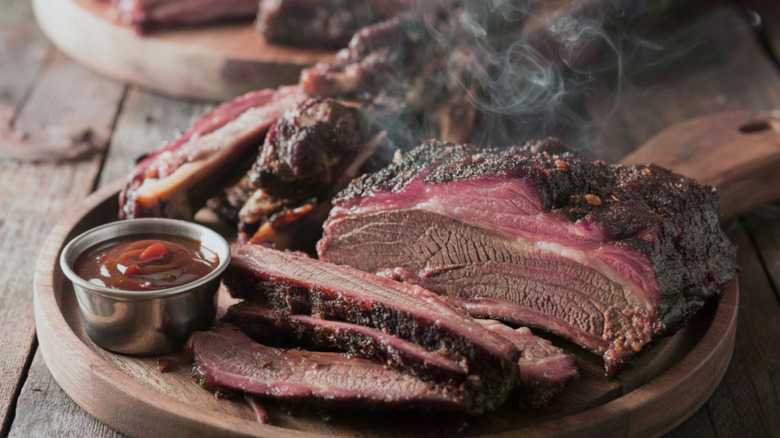
You may have noticed that when it comes to beef BBQ, you tend to see the same cuts over and over again. The most classic is brisket, but beef ribs have become more popular, and chuck roast is also a very underrated cut for smoking that can be turned into the beef equivalent of pulled pork. Yet there are obviously tons of delicious beef cut options that rarely end up on the menu at a BBQ joint. So what do these cuts all have in common? They come from the front half of the cow because the way cows develop over their lives gives meat from the front half several unifying characteristics that make it ideal for low-and-slow BBQ cooking, including more fat and collagen.
There are two big factors that influence a cut of beef — and both matter a lot for BBQ. There is how much work that area does, and how close to the front of the animal it is. The front-to-back position is important for BBQ because cows fatten in that direction. The larger sections of the cow, which are called beef primal cuts, are separated into several categories, with the front two being the chuck, around the shoulder, and then the rib section. After that comes the loin, and then the round or rump of the cow, with the round being home to the leanest cuts of beef you can get. There are three smaller primal sections on the bottom of the cow, with the brisket being the closest to the front. Fat is important to BBQ because first off, fat means flavor no matter how you cook, and because it helps keep the meat moist during the long smoking process.
Cuts of beef from the front of the cow tend to have more fat and collagen than the rear cuts
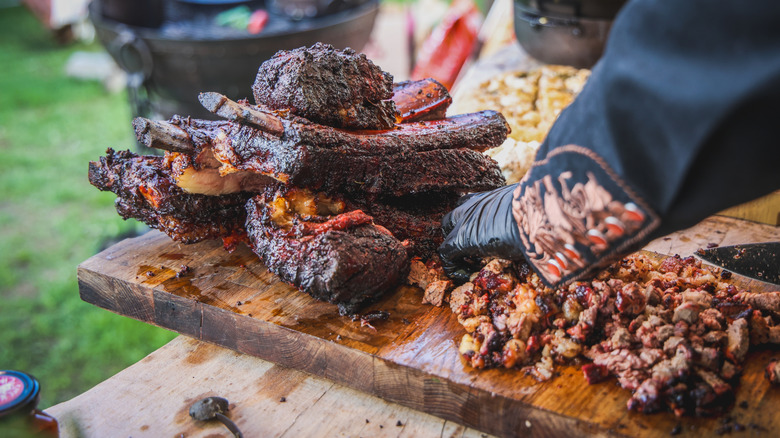
The amount of work each area of the cow does while it's alive affects the final cut of beef because parts that work more develop tougher meat. That's why steaks around the middle of the cow, like ribeye and tenderloin, are so tender, because that section gets little movement and doesn't bear much weight. Toughness is normally not a plus, but it's actually great for BBQ because the low-and-slow cooking style turns a weakness into a strength. Toughness comes from both muscle fibers and connective tissue like collagen that develops around them. At high temperatures muscle fibers contract and squeeze out moisture, which is part of what makes them tough, but the low temperatures of BBQ don't have as much of an effect, so they stay more tender.
But just as important is collagen, which starts off tough but starts melting into rich gelatin around 140 degrees Fahrenheit. This is what makes perfectly cooked beef ribs and brisket so buttery and tender. However, even in the right temperature range it can take hours for most of the collagen to break down, which is why cuts like brisket are cooked at temperatures as low as 225 for hours on end. Front cuts of beef start off tough, but are rendered juicy and tender by hours of slow cooking, while the same process would dry out leaner cuts and turn more tender beef to mush. That's the reason cooks have been barbecuing the same front cuts of beef for generations.