

Why You Should Always Shop For 'Air-Chilled' Duck For The Best Quality
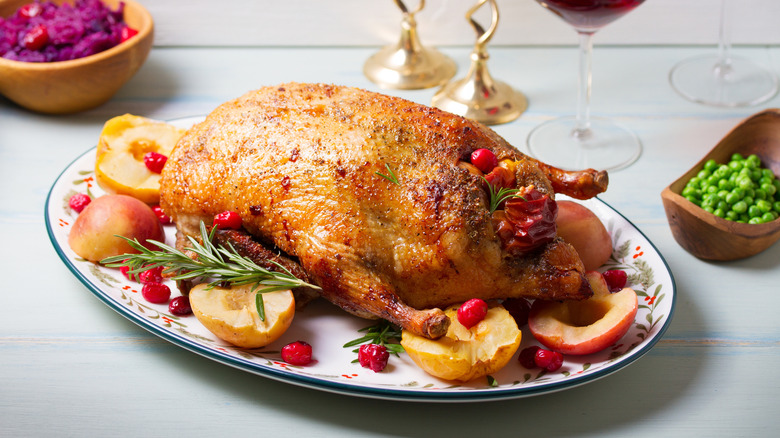
If you've been interested in changing up your poultry game and stepping away from staples like chicken or turkey, you may want to consider duck. It has come a long way since its traditional French bistro "a l'orange" era (although a good duck a l'orange recipe is always a treat when prepared well). Duck has been a top restaurant protein in recent years for many reasons. Its sustainability comes from using all parts of the bird; its rich flavor rivals a good cut of pork or steak, and it has health benefits from omega-3 fatty acids and B vitamins. Duck is also becoming easier to find in grocery stores. But how do you know what to look for when buying one?
Air-chilled duck (duck that is hung and circulated in a cold space) is your best bet for crispy skin, richer flavor, and more evenly cooked poultry. We spoke to Garrett Brower, chef de cuisine at Washington, D.C.'s Bresca, who explained the difference between air-chilled and water-chilled duck.
"Air chilled is a premium product due to its sanitation," Brower said. "After harvesting and butchering poultry, there are two ways to rapidly chill the meat: submerging in a chilled water bath or placing it in a freezer of sorts with fast-moving, purified air. The communal water bath is a more hazardous environment for cross-contamination and the spread of bacteria." In fact, it's probably a good idea to avoid water-chilled poultry in general if you want flavorful, chlorine-free meat.
How to find air-chilled duck
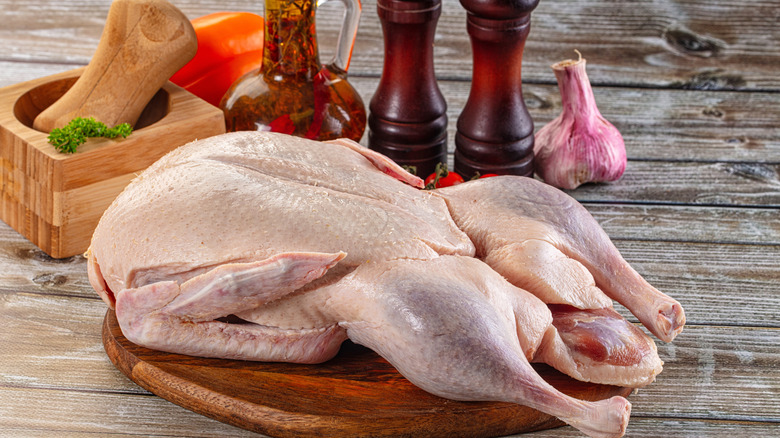
The first step to picking out air-chilled duck at the store is to simply look at labels. Good packaging will include the words "air-chilled," but you can also look closely at the ingredients. If you see elements like broth, saline, or retained water, the duck hasn't been air-chilled. Another tip when perusing the packaging is to look for the word fresh, which indicates that the bird hasn't been previously frozen. Most grocery butchers can help you with selecting duck, which may be behind the counter rather than up front with the other poultry. It also may be frozen, particularly if it's just the duck breast. Fresh is optimal, but frozen can be acceptable if you thaw the duck properly. It's best to find a fresh duck that hasn't been vacuum-sealed.
"I'm not sure flavor is lost in vacuum-sealed packaging, but I'd be concerned about texture," Chef Garret Brower said. "Previously frozen meat has a softer, mushier texture (very different from what we consider 'tender') and meat is often vacuum-sealed before freezing." Choosing a fresh, air-chilled bird can help ensure you avoid mistakes when cooking your duck. Without the extra moisture that comes with water-chilled poultry, you'll be reaping the benefits of a dry surface that produces a crispy skin. Air-chilling also guarantees a more tender bird, reduces the risk of cross-contamination, and results in a rich, concentrated flavor that dark meat lovers covet.