

The Real Difference Between Soda And Tonic Water, Explained
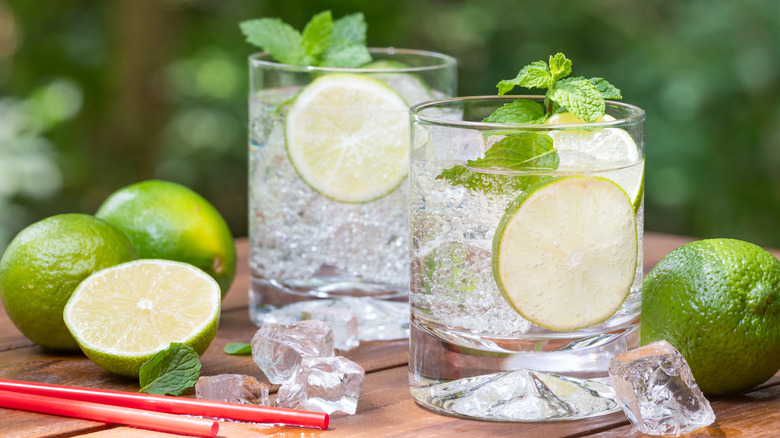
Most people could be forgiven for assuming that there is no difference between all the carbonated water options like soda, seltzer, and tonic water. If you aren't a dedicated mixologist who needs to understand the subtleties of their flavor or a professional who understands the history, the small differences between the options could be chalked up to the difference between the flavor of any two brands of sparkling water. But soda water and tonic are truly two fully unique products, as similar as they are, and tonic water in particular has a distinct flavor coming from the ingredient quinine, which has quite a bit of history behind it.
Soda water itself is distinct from sparkling water or seltzer, which are just carbonated water. Soda water also starts as carbonated water, but has added CO2 and bicarbonate of soda, also known as baking soda. This gives it a slightly different taste than plain sparkling water. Then there is club soda, which is a variety of soda water. Club soda starts the same way, but has additional salt and mineral additives for flavor, including things like sodium bicarbonate and potassium sulfate. Essentially, club soda is an attempt to mimic the flavor of natural mineral water using additives. While some brands of club soda may have added sweeteners or flavors, it is normally an unsweetened, zero-calorie drink. The additives give it a slightly salty, more complex taste, which is why club soda is favored in many cocktails compared to plain sparkling water.
Tonic water is a more bitter mixture made with quinine
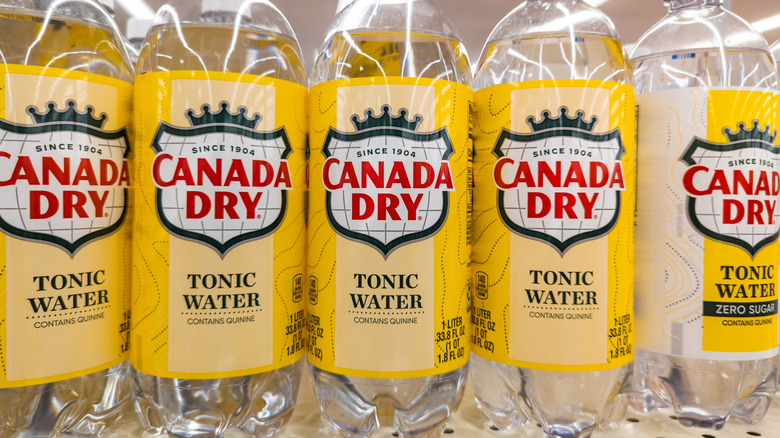
Tonic water has a few big additions that push it beyond the mineral flavor of soda water. The first you'll probably notice is sweetness, as it has added sugar or high-fructose corn syrup. The reason for the added sugar has to do with tonic water's other unique addition, quinine, which is also responsible for the drink's name.
Quinine is harvested from the bark of the cinchona tree, which is native to South America, and has a bitter flavor. In larger quantities, it's actually poisonous, but it was discovered that in small amounts, it has anti-malarial properties. The ability to cure malaria was a huge deal to Europeans who fell victim to the disease in the tropical climates of Africa and other continents, and so quinine was mixed with water and sugar to serve as a more palatable treatment for the disease. The mixture eventually got marketed as an all-purpose digestive and disease treatment in 19th-century England, where it acquired the name tonic water.
Because of its bitterness and added sugar, it's not a perfect substitution for soda water. However, good tonic water also has unique flavors that include herbal and citrus notes, which is part of the reason why it's such a popular pairing for the similar flavors in gin. Its extra depth compared to soda water also makes it great as a mixer in non-alcoholic drinks and mocktails, or as something to sip if you like a little bitterness. So next time you need something sparkling, don't make the mistake of thinking soda and tonic are interchangeable.