

Why Japan Banned Meat Dishes For Over A Millennium
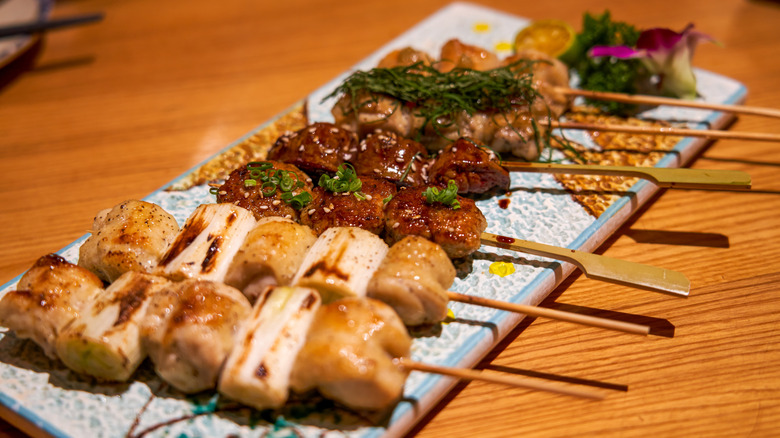
What do you think of when you think of an exquisite Japanese meal? An exemplary Wagyu steak. Katsu chicken. Donburi. Sukiyaki. Our list of 30 Japanese dishes you need to try at least once reads like poultry and meat heaven. Which makes it kind of hard to believe that until 200 years ago, meat-eating was banned in Japan. It wasn't a short ban either. It lasted over nearly 1200 years: from 675 AD, when Emperor Tenmu banned the consumption of cattle, horses, dogs, monkeys, and chickens, to 1872, when Emperor Meiji ended the ban by eating beef in public.
The origins of the ban are mostly linked to religion. Both Buddhism and Shintoism, widely practiced in Japan, forbade killing or harming animals. Buddhists, in particular, believed that humans could be reincarnated as animals, which added to the taboo around eating meat. Another factor was the landscape of Japan — a mountainous island nation where farmland was scarce, but fishing was plentiful.
People found ways to circumvent the ban. Some ate game meats like deer and wild boar, which they called mountain whales. Warrior clans in the 15th and 16th centuries ate pork for sustenance, with their strength attributed to their diet of "walking vegetables." Largely, however, Japanese cuisine grew around vegetables and fish through these centuries, the impact of which can be seen even today.
How the ban on meat impacted Japanese cuisine
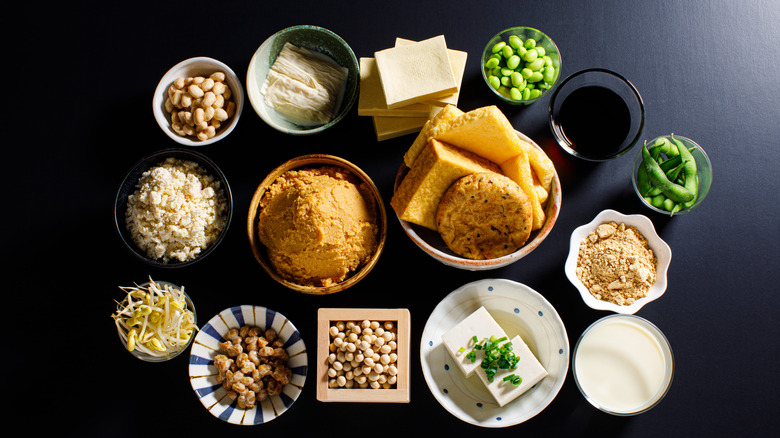
If you look past the meat-centric dishes in Japanese cuisine, you start seeing how much flavor they extract from plant-based foods. From mushrooms and seasonal vegetables to fermented soybeans, from tofu and edamame to miso and seaweed, Japanese vegetarian food has a deep and distinct flavor profile. This is tied into the culinary tradition called "shojin ryori" — Buddhist cuisine that's largely plant-based and known especially for incorporating local and seasonal ingredients.
Shojin ryori also follows a rule of five: five colors (white, green, yellow, black, and red), five flavors (sweet, sour, salty, bitter, and umami), five cooking techniques (raw, stewed, steamed, boiled, and roasted dishes) to create a perfectly balanced meal, and the five senses that should be engaged by the person eating them.
Another side effect of the meat ban is the level of sophistication that cooking with seafood has achieved in Japan. The mastery over seafood goes beyond sushi, their most well-known culinary export to the rest of the world (it's hard to imagine that sushi was still a novelty in America in the 1970s). From their awareness of the fattiness of fish to the preservation techniques that called for sake, salt, seaweed, and vinegar, seafood remains central in Japanese cuisine.
How and why the meat consumption ban ended
So how did a ban that lasted over 1200 years — and one that shaped Japanese cuisine in such a prominent way — finally come to an end? As we mentioned, from the masses to royalty, there were always people looking for a way to get past the ban. The average height of a Japanese man was 163 centimeters in the seventh century, and this shrank to 157 centimeters in the 19th century. This was blamed on the lack of meat in their diets.
The other significant development in the 19th century was that Japan opened its doors to the Western world after 200 years of isolation – and the resultant realization that people in the West were much larger and stronger. Again, this was attributed to their meat-based diets.
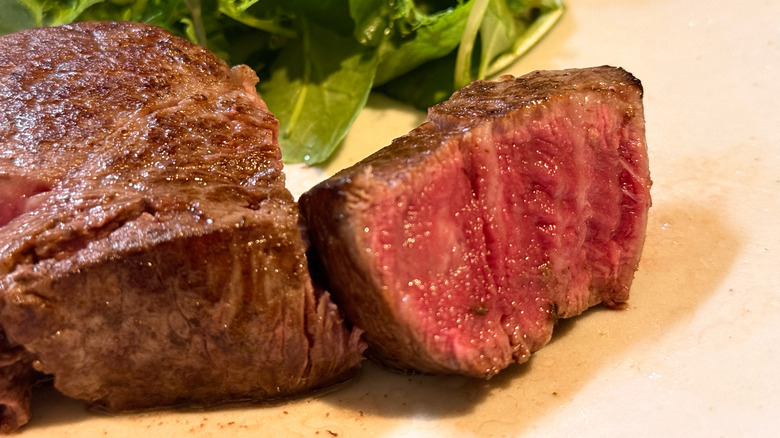
Emperor Meiji felt that to be a part of the modern world, it was essential that the Japanese started eating meat again and shook up the establishment by publicly consuming beef to break the millennia-long taboo. A group of monks charged the imperial palace in protest, and some of them lost their lives, but the emperor would not be moved. Suddenly, after 1200 years of being banned, eating meat was now a sign of being progressive. Beef production went up by 13 times, and breeds that were otherwise raised for agriculture became the source for some of the most premium beef in the world.