

White, Yellow, Vanilla, And French Vanilla Cake: What's The Difference?
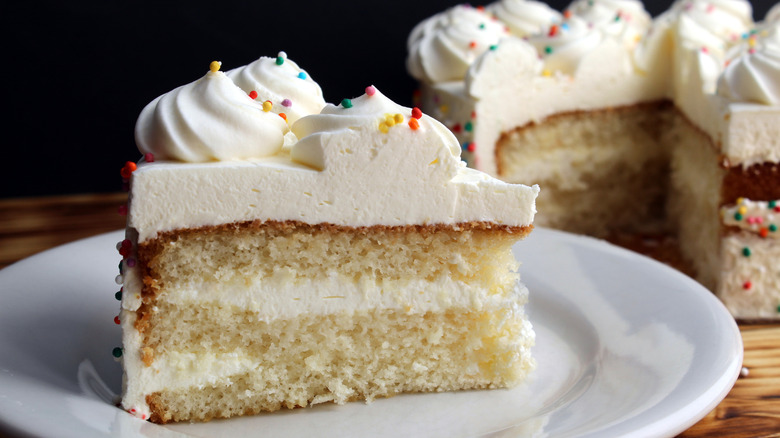
The baking aisle at the grocery store is filled with countless store-bought cake mixes (some of which are better than others). You might be surprised by the variation even for the plainest of cakes. Is there even a difference between white and yellow cake mix? Are they both vanilla, and if so, how does French vanilla come into the picture?
The primary difference between these cakes is color and the ingredients that provide said color, namely eggs. Yellow cake is made with both the whites and yolks; the latter of which is what gives it its pastel yellow hue. White cake, on the other hand, does not contain egg yolks, but it does contain the whites, which gives it a starkly white color. Technically, both white and yellow cake are vanilla cake, since they contain vanilla as an ingredient.
French vanilla is different from vanilla and isn't a type of vanilla bean (like Tahitian or Madagascar). Instead, it usually refers to a richer, more complex vanilla flavor that is more often associated with foods like ice cream (which explains why you may not find many French vanilla cake mixes in your baking aisle compared to other flavors). French vanilla ice cream uses a custard base, which is often what is associated with this flavor when it's found in other food products, like coffee creamers and, yes, cake mix.
Does the type of cake you choose matter?
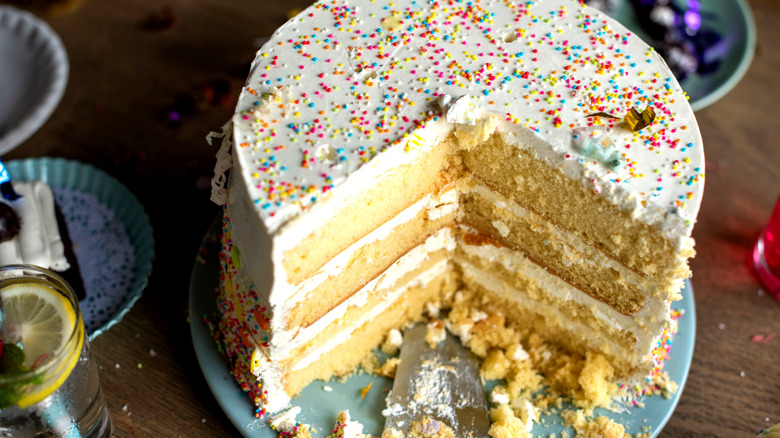
The nuances between these different types of cake are extremely slight. Many people opt for their ideal types of cake based on its look. For example, pairing a yellow cake with a decadent chocolate frosting will add visual appeal to the dessert, while standard vanilla cake works best when it's paired with a stark white buttercream frosting.
When deciding between French vanilla and regular vanilla cake, you may want to first consider the other fillings and ingredients you are using for your cake. An angel food cake, for example, is known for its mild vanilla flavor, which is why it would work best with a plain vanilla rather than a more robust French vanilla. The vanilla flavor shouldn't feel like it has to compete to stand out among other ingredients either, so if you are using a flavorful frosting or filling, plain vanilla cake will likely be your best bet. However, a boldly sweet vanilla loaf cake can get away with a French vanilla base, as there's nothing waiting to steal its spotlight.