

Why This Old-Fashioned Biscuit Method Stuck Around For So Long
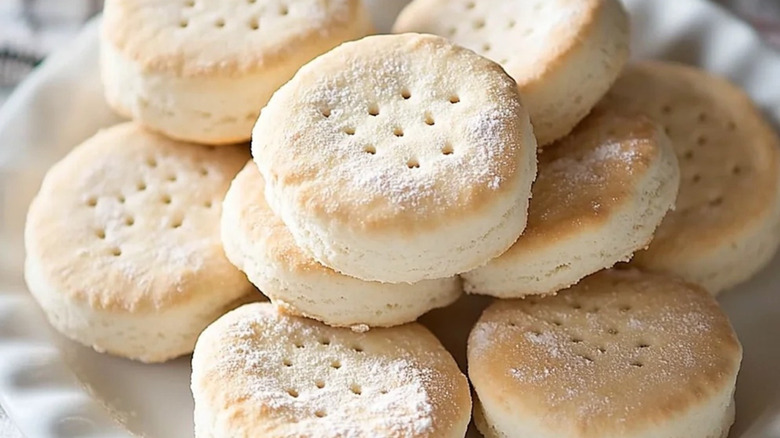
The term "biscuit" means different things to different people. For some, it means a hard cookie you eat alongside a cup of tea. For others, it's a fluffy, buttery roll perfect for breakfast sandwiches or sopping up gravy. In the South, however, another type of biscuit is famous — the beaten biscuit — and its name comes from exactly what you do to the dough.
Beaten biscuits were developed by Southerners during the Civil War era, when supplies to make bread, like yeast and baking soda, were scarce. Instead of relying on these leavening agents, home cooks would mix lard, flour, and milk to create a thick dough, and beat it with a rolling pin or hammer until soft. This process of beating and folding the dough created pockets of air to help it rise while baking. Annie Fisher, a daughter of former slaves, popularized beaten biscuits in the early 1900s by selling them through her successful Missouri catering business.
Since then, beaten biscuits have remained a popular Southern delicacy. Even with access to all sorts of quick leavening agents and easy ways to make soft bread at home, this old-fashioned method is still beloved by amateur and professional bakers alike. The endult is denser than biscuits we've come to know, and you may run the risk of ruining your biscuit dough by overworking it. When done right, though, they're perfect with thick slices of country ham sandwiched in between.
Texture and taste differences from regular biscuits
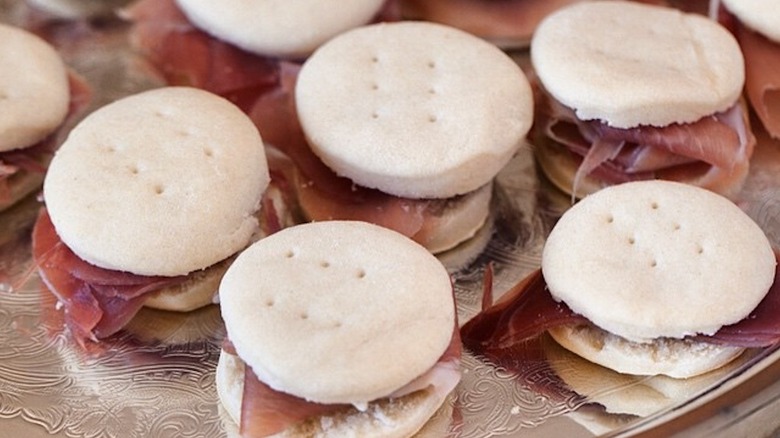
Beaten biscuits are typically smaller in size than regular biscuits, and have more of a cracker texture versus a bread or pastry. They aren't as crumbly as traditional biscuits, making them the perfect base for sandwiching meat, butter, jam, or any other delicious ingredients your heart desires. Thanks to the inclusion of lard, most will have a rich flavor similar to that of regular buttery biscuits, like the ones you'll find in our Biscuits and Herbed Sausage Gravy recipe.
Before trying out beaten biscuits at home, chefs say there are a few tricks to making them right. For starters, you'll need to beat and fold the dough for a while ... around 30 minutes or so. It's a labor of love, but it truly helps them become fluffier in the baking process. Also, you'll want to poke holes in the top of the biscuits with a fork or toothpick. This isn't just a cute decoration — it helps release steam when they're in the oven and maintains their shape. You'll appreciate this time-honored tradition, and equally enjoy their taste.