

Before Buying Peanut Butter, Check This Label To See If It's Actually Healthy
We may receive a commission on purchases made from links.
With the global peanut butter market valued at a staggering $8.3 billion in 2025 (per Precision Business Insights). Yet with a plethora of brands available to the American shopper, it can often be difficult to know which one to choose if you're looking for the best. That's why you should always check the label to find out how healthy your peanut butter actually is — and, ideally, the list of ingredients will be peanuts and nothing else.
When perusing the ingredients on the back of the jar, you will find peanuts are the first ingredient listed — this is because the ingredients will be listed in weight, and the FDA requires at least 90% of peanut butter should be comprised of peanuts. So, if for some reason the brand you are considering does not feature peanuts as its first ingredient, be warned that it is not real, FDA-approved peanut butter.
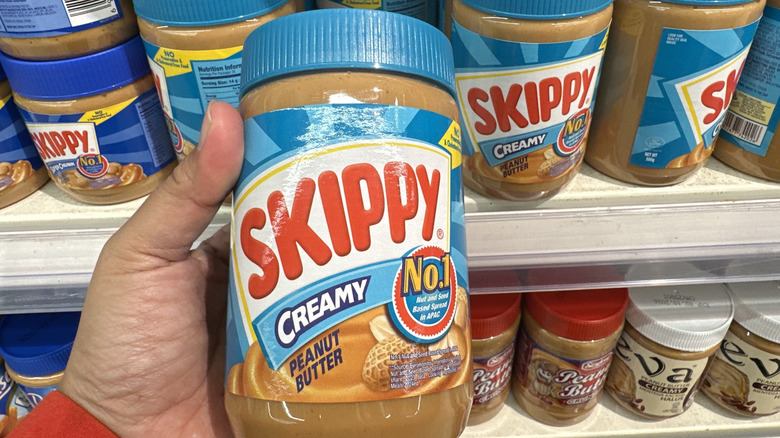
If the brand in question does feature ingredients beyond peanuts, they will likely include added sugar, salt, palm or hydrogenated vegetable oils, molasses, preservatives, and high-fructose corn syrup to improve flavor, extend shelf life, and prevent the natural separation of oil. Unfortunately, some of these ingredients will render peanut butter less healthy and should not be consumed excessively, so you should avoid peanut butters containing them if good nutrition is your priority.
The health benefits of a good peanut butter
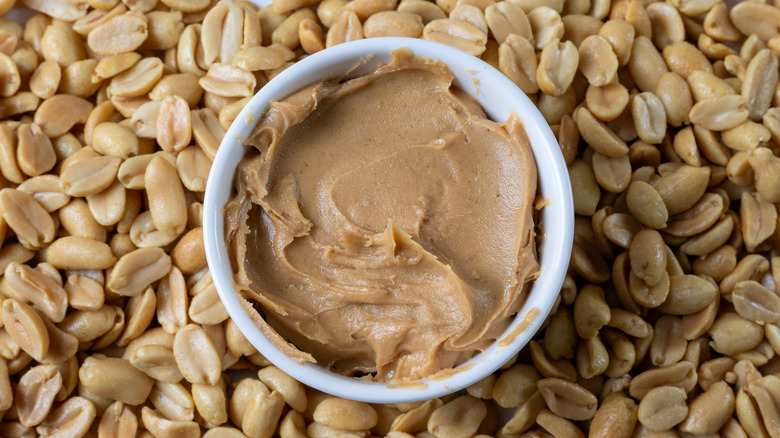
The health benefits of a good peanut butter are numerous. It is nutrient-dense, containing healthy minerals such as magnesium, zinc, iron, and copper, as well as vitamin E and the vitamin B group. Though peanut butter is low in essential amino acids, it is nevertheless a fine source of healthy fats, plant protein, protective plant compounds (which come with a protective antioxidant effect), plant stanols and sterols (which disrupt the absorption of cholesterol, helping to ward off heart disease), and fiber (which promotes good digestion and gut health). Even peanut butter's caloric load is not necessarily a negative, hence it being a key ingredient in the World Health Organization's Ready-to-use Therapeutic Food (RUTF), which is used to treat those with severe malnourishment.
So, if you're looking for a peanut butter with no unhealthy adulterants, what should you go for? While Jif Creamy came out on top of our taste tester's ranking of grocery store peanut butters, it unfortunately does contain added sugar, molasses, oil, and salt. However, Tasting Table's separate ranking of peanut butter brands with no added sugar or oils awarded first place to Just About Foods Organic Peanut Butter, winning high points for its smooth, creamy texture, and use of organic Mexican peanuts cultivated with regenerative agriculture. Alternatively, you could always make homemade peanut butter that fits your own nutritional preferences, making sure to roast the nuts for a superlative taste.