

The Menu Feature That Signals A Quality Seafood Restaurant
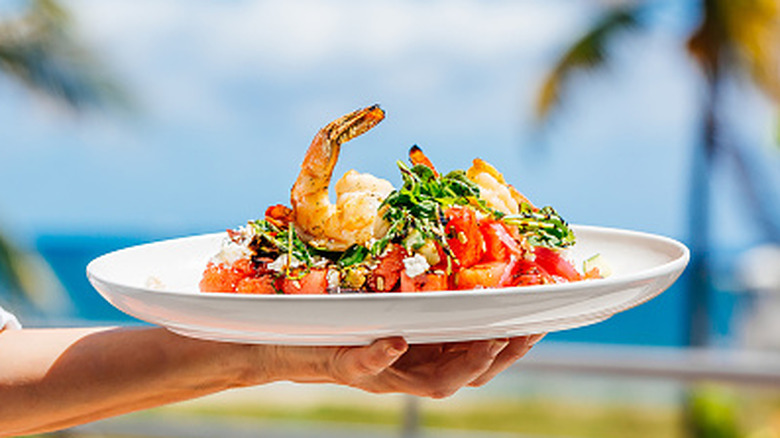
You simply can't beat a great seafood restaurant serving fresh, flavorsome dishes that showcase the best the ocean has to offer. It doesn't have to be fancy, but it does need to serve seafood in its peak state. Unfortunately, not all seafood restaurants are created equal, and for every exemplary one out there, there's another with a menu that's doing the restaurant more bad than good. Alan Gosker, executive chef for Lola in Nevada City, California, shared tips with Tasting Table readers about signs that you're eating at a quality seafood restaurant, to ensure you avoid a menu red flag. "A massive menu worries me immediately ... You genuinely cannot source multiple species fresh and execute all of them well," cautions Gosker.
Sooner or later you could end up at one of those seafood restaurants with phonebook menus, featuring dishes from more cuisines and using more types of seafood than you can even get your head around. While it might merely seem like an abundant seafood selection, offering too many options can mean that some link in the logistics or preparation chain requires compromise. Let's be clear — we're not knocking your favorite local diner that offers every comfort food you could ever want. We're specifically talking about quality-concerned seafood restaurants and the challenges of serving fresh fish without having to rely heavily on frozen ingredients. Gosker elaborates that "Fewer species done with real intention beats a long list done carelessly." A seafood menu that's short and sweet is far more likely to impress.
Why it's better to champion only a handful of seafood types
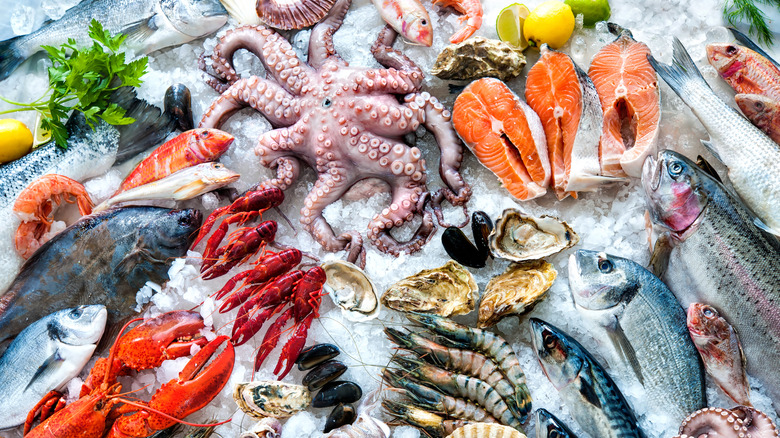
There are so many types of seafood, that restaurants and their customers are spoilt for choice. The challenge Gosker describes for restaurants spreading themselves too thin is that the proportion of fresh to frozen seafood might trend detrimentally toward the latter. Frozen seafood is not always a no-go; blast-frozen fish can preserve freshness without creating large crystals that damage cell walls and disrupt the texture, making fish or other seafood mushy.
The issue arises when a restaurant resorts to disproportionately using frozen seafood — but why does that matter? You don't know how long frozen seafood has been sitting in a freezer, or where it came from. Eating seafood that's never been frozen means (in theory) that the restaurant sourced it recently, and likely locally, entering into a chain of care to keep it as fresh as possible. Gosker offers another tip-off for identifying a heavy reliance on frozen seafood. "If I see a menu that is huge with multiple fried items, I know it's heavy on frozen products and not concerned with prioritizing fresh fish," he says.
Different types of seafood require different preparation methods, so featuring every option imaginable can either stretch a busy kitchen thin or result in shortcuts, which are not traits of a quality seafood restaurant. Establishments that champion a handful of seafood types ensure efforts focus on quality over quantity.