

Ketchup In A Tube? Why This Packaging Is Common In Parts Of Europe
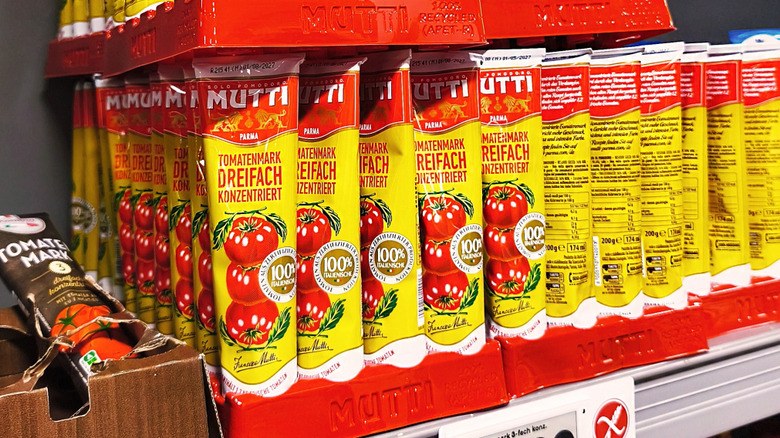
If you're a ketchup fan in North America, you're used to getting your favorite sweet, tomatoey condiment in one of three ways. Some restaurants provide a pump dispenser to squirt ketchup into a little paper cup. Others offer single-serve packets that you'll tear open, offering nowhere near enough ketchup for whatever you're eating. And finally, for home use, you can get glass or plastic bottles. In parts of Europe, you can get ketchup and many other condiments packaged in tubes just like toothpaste. But why the difference?
According to tube manufacturer Etma, food tubes make up about 8% of the European tube market, behind others used for toothpaste and beauty products. The entire market is worth nearly $13 billion, per Mobility Foresights. Etma cites ease of handling, resealability, lightweight design, and durability as reasons for its growing popularity. In particular, the barrier properties are called out as a strength for the food market. Tubes are impermeable to light, air, water, and bacteria, and they are nearly unbreakable. That means fewer preservatives are required. Portion control and less waste making for a more economical package are also considerations.
The smaller size of a tube makes it more convenient for transport and storage, too. The tube design lets you squeeze out the very last drop as you would with toothpaste, something a glass bottle can never let you do. One company even advertises the potential for creativity since you can use a tube like a piping bag.
Catching up with European ketchup
Food packaged in tubes is nowhere near as popular in North America as it is in Europe, but that doesn't mean it doesn't exist. You can buy tomato paste in a tube at Walmart. Considering how hard it is to get tomato paste out of a can normally, and how you may not want to use a whole can at one time, a tube with portion control is a good idea.
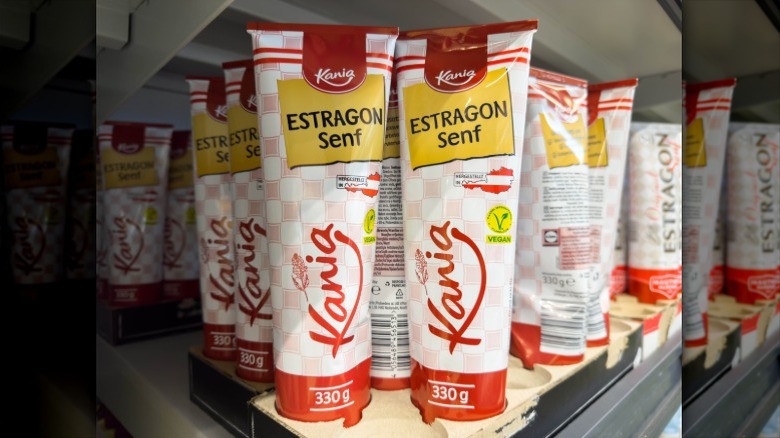
If your dishes need a kick of salt and umami, you can add anchovy paste, which also comes in tubes. Pesto, sun-dried tomato paste, harissa, and garlic paste can all be found in North America, too. Condiments are far rarer and, if you can find them, are typically imports available at specialty shops.
As to why the packaging hasn't caught on in America, people on Reddit offered some ideas when asked why tube condiments aren't available there. "We use a large amount of condiments, requiring a bottle of the stuff. Tube ain't big enough," one Reddit commenter said. Another Redditor added, "I'd rather buy a giant tub or bottle and not have to worry about running out for a while."
Packaging size might be the determining factor here. A tube of ketchup might only be 150 grams, while the most popular-sized bottle at Walmart is 20 ounces, or over 560 grams. You'd have to buy tubes in bulk or shop more often to match a Heinz bottle, and for some, that might be too inconvenient. That, combined with the relative convenience of a squeeze bottle, means tubes don't seem so desirable.