

This Affordable Glass Stovetop Cleaner Is Probably Already In Your Home
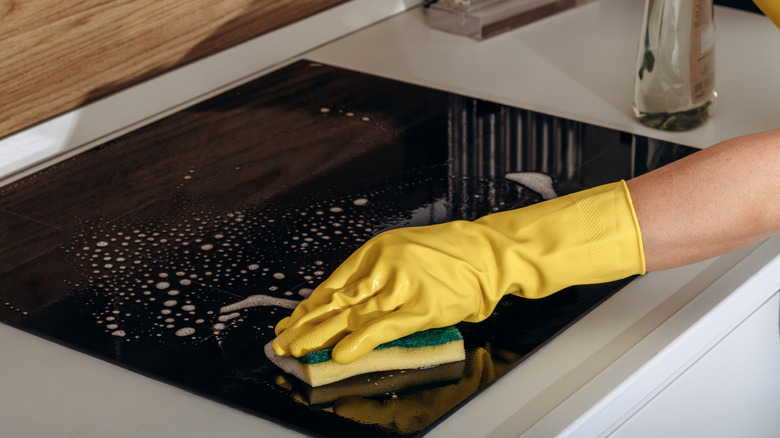
The internet is full of cleaning hacks for greasy stovetops. When it comes to a glass stovetop, you need something that cuts through grease without being abrasive so it doesn't scratch the surface. One solution you may never have tried before that's worth checking out is WD-40.
Most people keep a can of WD-40 on hand to lubricate squeaky hinges or help remove rusty bolts. It's also good for cleaning a sharpening stone in the kitchen. The name stands for Water Displacement 40th formula, and it's a displacement oil. Its original purpose was to act as a degreaser and rust-prevention solvent. Later, it was most often used as a general lubricant. These days, the company markets it as a multi-use product, and cleaning a greasy stove is one of those uses.
It's important to make sure your stove is turned off and cool to the touch before using WD-40 to clean it. Since WD-40 is flammable, it could cause a serious accident or injury if you use it while the stove is on. Once you're certain it's safe to proceed, give the can a shake. Spray the area to be cleaned with WD-40 and give it time to thoroughly soak into any greasy or crusty spots. Remember, this product was originally designed as a degreaser, so the formula is meant to break down buildup. You don't need to saturate the area to be cleaned, just make sure it's thoroughly covered. You'll need to wait a few minutes for the solvent to work.
Use the spray then wipe away
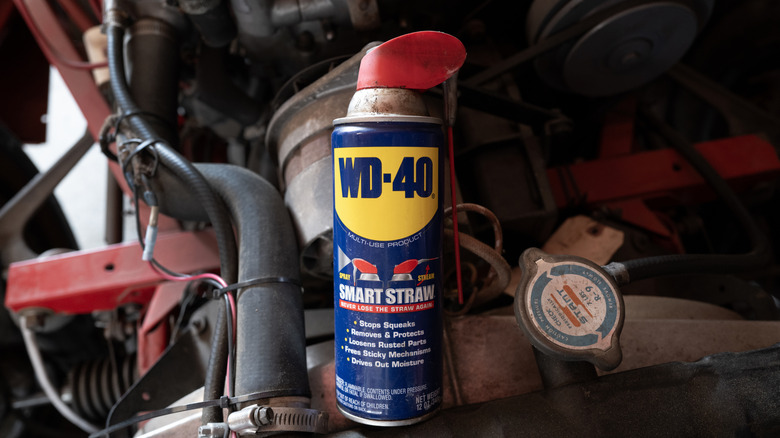
Several features make WD-40 useful as a stove cleaner. The solvent component is able to penetrate deeply into even the smallest areas to dissolve grease, what some call "creeping properties." On a glass stovetop, it can clean the surface as well as reach into scratches, grooves, and seams where grease builds up.
After waiting for the solution to work, you can use a paper towel or microfiber cloth to wipe the stovetop clean. Don't use a coarse scrubbing sponge since it can damage the glass. If there is thicker buildup or baked-on mess, you may need to repeat the process to ensure it comes off. You can also use a single-edge scraper at a 45-degree angle to remove serious, baked-on residue that can't be wiped clean.
Using a sponge and scouring with vinegar and baking soda may remove the mess faster, but it risks damaging the glass surface. One of the additional advantages of using WD-40 is that it's very gentle on a glass surface and won't cause damage. There are plenty of non-abrasive options for cleaning a glass stovetop that you can combine with it.
The final step when cleaning with WD-40 is to use a soapy cloth with warm water for a final wipe. This removes any remaining food residue or grease and clears away any residue left by WD-40. You want to make sure that's all wiped away before you turn on the stove again to avoid smoking or a potential fire hazard.