

This Simple Marinade Rule Ensures Your Chicken Is Evenly Coated
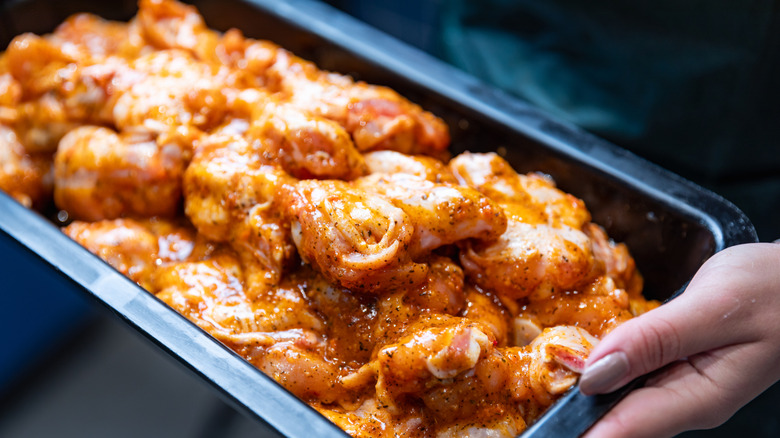
A marinade can completely transform a piece of chicken. Not only will a good one add a lot of flavor, but it can also help break down the proteins in the meat, leading to a more tender, juicy texture. Marinades can encourage browning, too, and certain ingredients should prevent the chicken from drying out during cooking. However, for all of this to happen, you need to make sure the chicken is evenly coated — and you can do so by following one simple rule.
It all comes down to using the right measurements. If you don't prepare enough marinade, you won't be able to completely cover the meat, which is necessary for a consistent flavor. If it sits in the fridge partly exposed, the surface could also dry out, which is great for crisp chicken skin but not so helpful for a saucy finish. On the flip side, if you make too much marinade, you're wasting ingredients, as it's not safe to reuse unless it's been boiled.
In general, a good rule to follow is to make at least ½ cup of marinade for each pound of chicken you plan on cooking. If you don't have enough of the ingredients you have on hand, you can place the chicken in the marinade, seal the container, and flip it every so often. This ratio should work for other types of meat and vegetables, too, but there are some specifics to follow for chicken.
How to make a chicken marinade
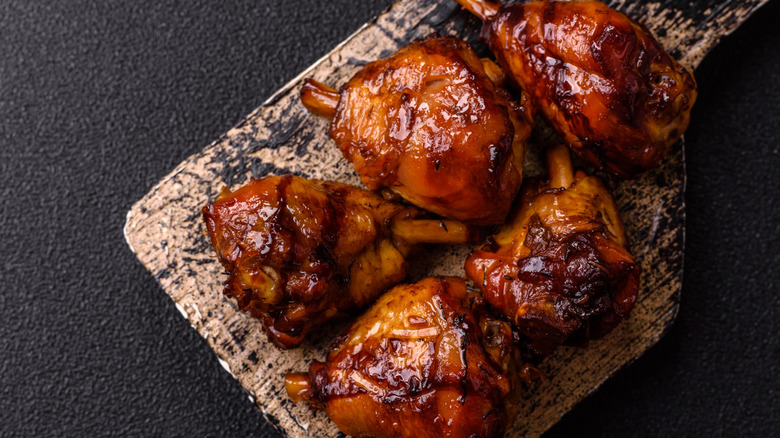
There are a few things you need for a good chicken marinade. The most important are a source of acid and a source of fat, for example, lemon juice and olive oil. The acid is the key to tenderizing the meat, while the fat helps to infuse the flavors of the marinade. The oil will also add moisture, which is important as poultry doesn't contain a lot of natural fat like red meat. The other big ingredient is salt, which is a natural flavor enhancer that penetrates much deeper than other seasonings.
There's a bit of a knack to pairing the right marinade with the right cut of meat, but for chicken, a marinade made of three parts oil to one part acid usually works. You'll want to add some herbs and spices, of course, like garlic, chili, parika, Italian seasoning, or cumin. Enzyme-rich ingredients like yogurt and milk can also help tenderize chicken, which is the secret to the best tandoori chicken. You can swap the lemon juice for lime or orange, or play around with soy sauce and sesame oil.
No matter what marinade you end up choosing, remember that chicken doesn't need to soak for as long as other types of meat. Ideally, you want to try to aim for about two hours for the best flavor and texture. Twenty-four-hour marinades aren't the best choice, but breasts will hold up just fine overnight.