

Why You Should Always Weigh Prepackaged Produce
Effective grocery shopping is an underrated skill. It might not seem like much, it certainly isn't something you would expect to hear anyone boasting about, but it is incredibly valuable to a household in a variety of ways. There is, of course, the cost-saving aspect of a shopper who knows how to find the best deals in the store. But equally important is someone who can pick the best products, like good quality produce. As Consumer Savings and Shopping Expert Andrea Woroch explains it, the meeting place of these two facets is one of special importance.
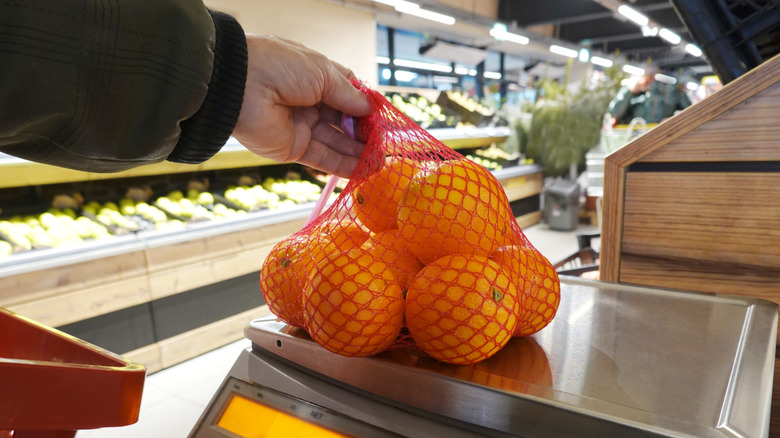
The produce department can be a difficult place to navigate in terms of comparative shopping. Some fruits and vegetables are sold by count, others by weight. It's easy to tally up the cost of the former category, but for the latter, one must take the item to a scale and then do some mental math with the weight and per-pound cost. This makes it especially tempting to grab pre-packaged, pre-cut, store-packed vegetables, so that you easily know exactly what it costs. According to Woroch, however, these items should also be taken to the scale.
"By law," Woroch explains, "prepackaged produce must weigh the amount advertised on the package and cannot be misleading." One assumes that these stores are operating fairly and trying to mark items accurately, but mistakes happen. To ensure that you are not accidentally overpaying, it's good practice to double-check by weighing the items yourself. There's more to it than that, however. Woroch notes that, "there may be some discrepancies in the consumer's favor."
What to do with inaccurately labeled prepackaged produce
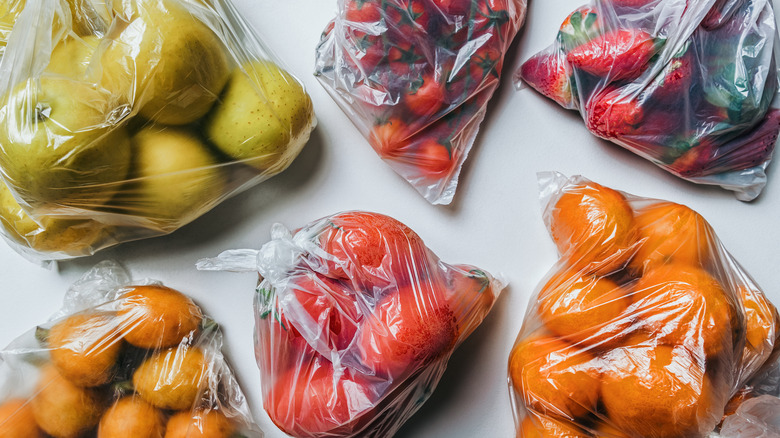
If you take the prepackaged produce to the scale and it comes up light, you have a couple of options. You can take the simple route, and just toss it back on the shelf as a bad deal for some other customer who doesn't go the extra mile, or you can talk to the staff. "Speak with a grocery store manager if the produce is under weight," Andrea Woroch says, "as this is not accurately advertised and there should be a discount applied to your purchase." If they do not offer a discount, then the product needs to be removed from the shelves and relabeled.
Talking to managers is not for everyone, though. It can be both time-consuming and uncomfortable. For those who would rather avoid that interaction, there is still a valuable produce-buying tip to be had here. "Always weigh the bags to ensure they're accurate," Woroch says, "but also look for any bags that may weigh more than what's advertised!" Mistakes from the grocery store go both ways. Some items might be underweight when compared to the label, and those are best discounted or removed from the shelves. "If it's overweight, though, you should definitely buy it," Woroch says.
In some cases, there may be items where the weight on the package is notably less than the actual weight of the produce. When those crop up, just think of the error as an accidental sale price. Even the best grocery store produce departments make mistakes, and savvy shoppers should feel no guilt about snagging a better price on their produce.