

Using Raw Eggs As Fertilizer? The Drawbacks May Make This Not Worth The Hassle
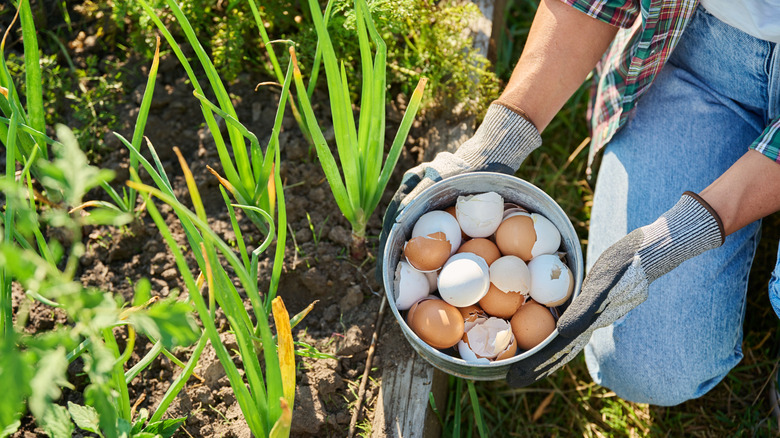
Growing a vegetable garden significantly changes your perspective on food. The process of consuming food begins to look like a circle, not a straight line that ends in waste. You become determined that all kitchen scraps can be repurposed, especially those that can further feed the garden. Raw eggs, for example, are an age-old natural fertilizer that can increase the production of your fruiting plants, such as tomatoes. The main idea is to bury at least one, whole raw egg at the base of the plant and let it work its magic as it decomposes. Though this might sound great and easy, the reality is not entirely sunny-side-up.
Just like there are drawbacks to eating raw eggs, there are drawbacks to using them in the garden. Yes, once the egg decomposes, the plant will receive nutritional benefits, but decomposition is a process that takes time. In the interim, the buried egg can start to smell, attracting hungry animals such as rodents, nearby cats, and even your own dog. The last thing you want is to find a precious tomato plant completely dug out because a raccoon made a midnight snack of the egg you buried underneath it.
There's also the potential issue of raw eggs containing salmonella and contaminating the soil, which means the pathogen could make its way into the produce. Per Nemis Technologies, "8% of 1,200 outbreaks caused by Salmonella bacteria in the United States between 1990-2015 were leafy vegetables," so it might be better not to gamble.
Eggshells are a safer choice for your garden than whole raw eggs
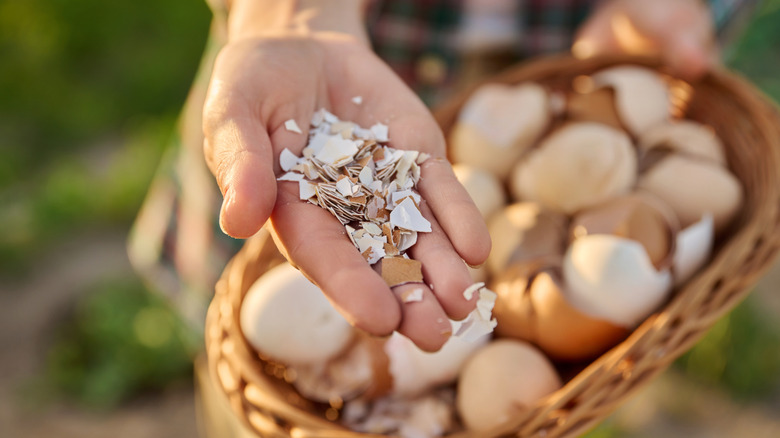
Using the whole raw egg as fertilizer might not fully be worth it, but that doesn't mean eggs don't have a place in your garden. In fact, most of the benefits that people expect will come from the buried egg can actually be accessed just through the shells. They're rich in calcium, which can help the plants grow stronger and healthier. But, you know what they say about too much of a good thing, so it's wise to do a pH soil test before adding the eggshells just to confirm that your soil really is deficient. It's possible that there's enough calcium as is, and a supplement isn't necessary.
If the soil test shows an addition of calcium would be beneficial, that's a green light for the eggshells. Even though we're only using the shells, it's still important to follow egg safety tips, because salmonella can still be present. One preventative step you can take is washing the eggshells before putting them in your garden, though you can also bake them in the oven at 200 degrees Fahrenheit if you want greater security. Once the eggs are clean, break them down into tiny pieces or, even better, grind them into a powder. This will speed up their composition once they're in the soil and allow your plant to benefit from the nutrients sooner.