

For Better Donuts At Home, Use This Flour
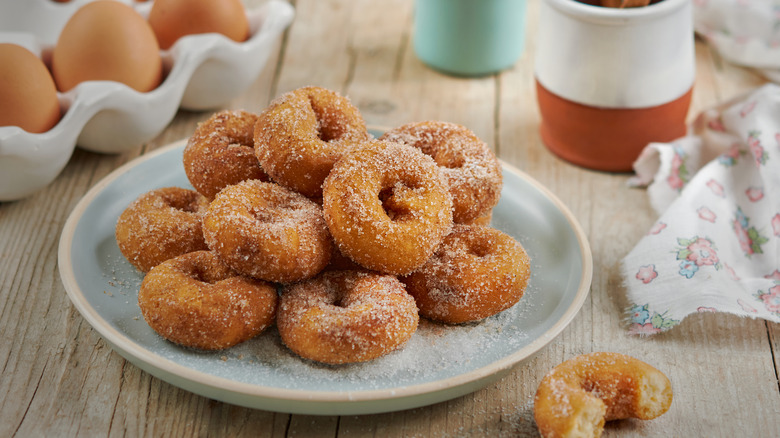
Donuts are a treat. While many people will visit their local Krispy Kreme or Dunkin' to stock up on their favorite flavors, there is something very satisfying about frying up your own batch at home. As an avid home baker (and donut enthusiast), I can tell you that they're not the easiest thing to make — especially yeasted donuts, which require mixing, proofing, resting, and frying — but as long as you have some helpful tips for making donuts at home, you can certainly pull it off.
The first tip that I can offer is centered around flour selection. Flour — and more specifically, the gluten it contains — is important because it's what gives donuts their structure and texture. If you use a flour that's too high in gluten (and/or overwork it), the donuts will come out more like chewy bagels. But if your flour doesn't have enough gluten, the donuts will fall flat or not trap air effectively.
When I make donuts at home, for both fried and baked varieties, I like to use all-purpose flour because its gluten content is right in the middle. You could get away with using a lower-gluten cake flour for cake donuts — as this will give you a more tender and softer bite — but my go-to has always been all-purpose flour because it yields consistent results from batch to batch (and honestly, most donut recipes use it, so that means you won't have to do a lot of legwork converting and substituting ingredients to try and mimic the right consistency).
The case for using other flours

Donuts are very versatile in that you can swap out one or multiple ingredients and totally change up their flavor. Playing with flour is an excellent way to switch up the texture of your donut, but it needs to be done intentionally and with an understanding of how that ingredient impacts others. Case in point: mochi donuts. This type of treat is made with glutinous rice flour, giving the donuts a chewy texture rather than a soft, plush one. Usually, you will use some amount of all-purpose flour in addition to the glutinous rice flour (which is not the same as rice flour... ask me how I know), which gives it a somewhat bread-like texture, but the heaviness and pastiness of the glutinous rice flour weigh down the whole donut.
You could also use a whole wheat all-purpose flour in your donut recipe. However, the nutty flavor of the flour would be easily overshadowed by frostings and sweet toppings, which is why I think it's better reserved for quick breads, muffins, and pie doughs. I've also found it doesn't hydrate the same as white flour, so you may have to make a dough more off of feel, adding more liquid as needed. In other words, get your bearings with classic, all-purpose flour before you go off experimenting with other types.