

How To Crack Eggs Like A Bakery Pro And Shave Time Off Every Dessert
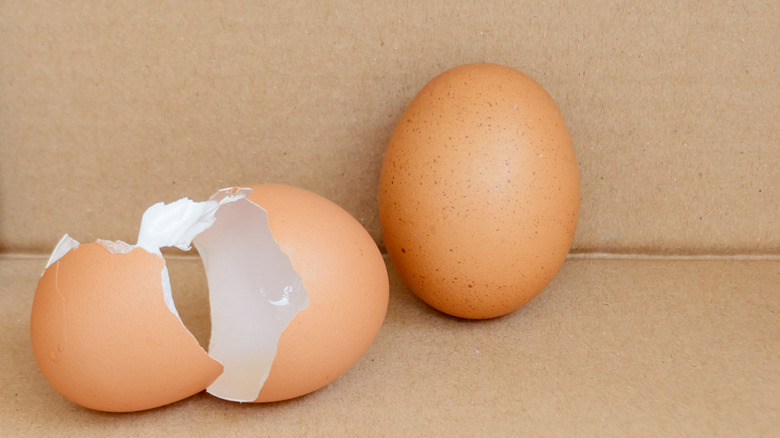
How do you crack your eggs? Against the counter? The rim of a bowl? Don't get us wrong, these are all absolute classics that are reliable and, more importantly, work. But let's say you're making two or three strawberry sponge cakes for a party and need to crack 20 eggs at a time. After the first dozen, it gets tedious — and slow. Instead, do what the pros do: Take two eggs and crack them into one another.
Hold an egg in each hand and tap them together. One shell cracks cleanly while the other stays intact. Sounds strange, but when one egg cracks, the shell no longer has enough strength or rigidity to break through the intact one. That gentler impact prevents the explosive shattering that sends shell pieces flying everywhere. Professional bakers swear by this because it saves time and keeps shells out of your mix. Pour each cracked egg into a separate bowl before moving to the next one. You will get into the groove after a few rounds of this and will promptly wonder why you haven't been doing this in the first place this whole time.
Some pro tips for clean, efficient egg-cracking
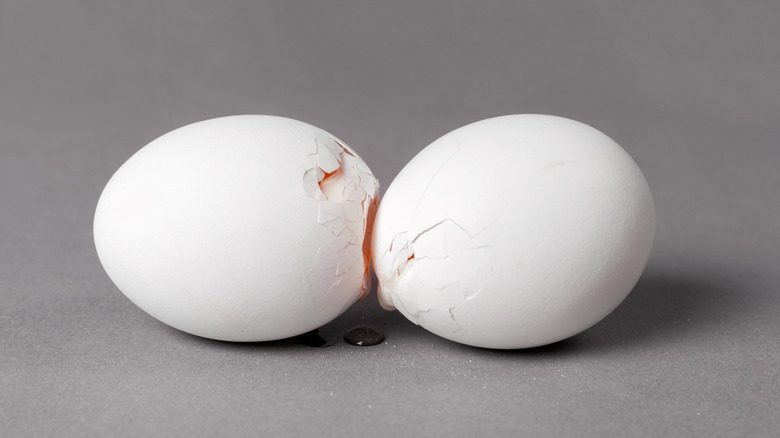
The egg-against-egg trick will minimize shell fragments, but it's not foolproof. Shells can still get through sometimes, especially if you need to deal with a lot of eggs. That is why you'll want to crack the eggs into a clear bowl rather than into a metal mixing bowl right away. When you're done, just hold the eggs up to the light — if there are any shell pieces inside, you'll spot them right away. Use the tip of a clean finger or, better yet, use Jamie Oliver's trick and use one of the empty eggshell halves to fish them out. The shell naturally clings to itself.
This inspection takes just a few seconds, but saves you a headache later. The last thing any baker wants to happen is enjoying their super-fluffy homemade angel food cake and suddenly getting the weird crunch of an intruding eggshell in their mouth. After a few rounds, it becomes automatic — crack, inspect, pour. When you get into the groove, you'll know precisely why professional bakers have used this trick for decades!