

The Vegetable That Looks Like Kale At The Farmers Market, But Packs A Sweeter Flavor
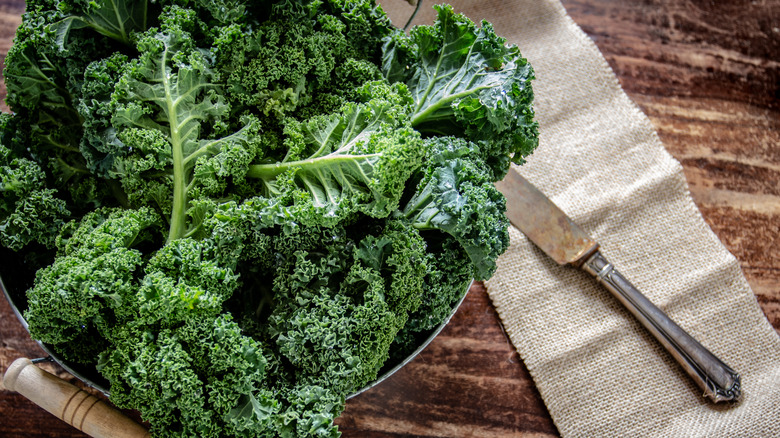
The farmers' market is where you usually find fresh kale, tied into verdant bundles, all set to get taken home for all of those hearty kale recipes you've been meaning to try out. Very rarely do you expect to come across something that looks just like it, only to find the familiar curly leaves attached to a bulbous root instead. If this does happen, don't worry, your eyes aren't deceiving you. That isn't kale, but a different cousin veggie from the same Brassica family called kohlrabi.
Unusual as it might be in the U.S. market, kohlrabi is actually quite common in Germany, Hungary, Romania, and certain Asian countries. In fact, its name is a German mash-up of cabbage (kohl) and turnip (rabi), which makes perfect sense considering the turnip-shaped bulb at the bottom. Stemming from that, however, are leaves that look uncannily like kale, with almost the exact size, in the same shade of green, and slightly looser curly edges.
The similarities in appearance obviously beg the question: Does kohlrabi also taste like kale? The answer is no, not entirely. Kohlrabi leaves have a mild, sweet flavor you wouldn't normally get from kale. However, what truly makes kohlrabi unique is the bulbous base, which shares the leaves' subtle sweetness and peppery hints, but is further elevated by a snappy, chewy, yet also smooth texture.
You can make a whole lot of dishes with the kohlrabi
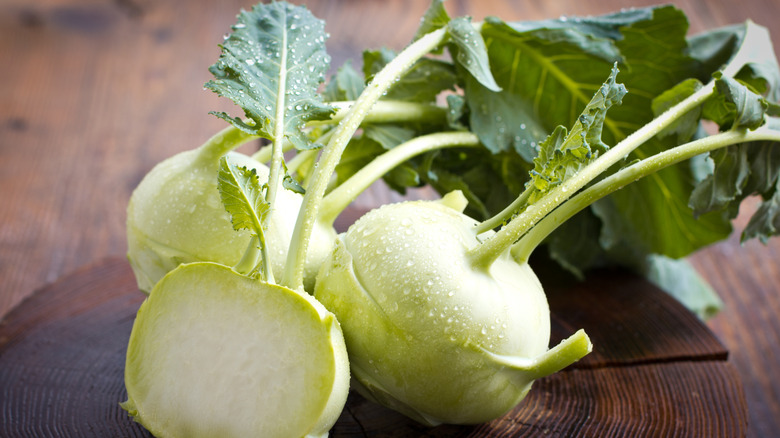
Most often, it's the khlrabi bulb that gets utilized. When raw, its mustardy kick is a bit more prominent, which bodes marvelously for slaws and dips that need an elevated taste. In Japanese and Vietnamese dishes, raw kohlrabi bulb, sliced into matchsticks, is also a bona fide salad staple. Meanwhile, in Korean cuisine, you might also occasionally find it in a fermented batch of kimchi.
The kohlrabi softens a bit as you cook, leaving behind a gentler, more well-rounded sweet taste. Sautéed with carrots, broccoli, etc., it takes on a delectably savory undertone. Simmered in a spice-laden broth, it absorbs flavors while adding crunchy bites in between spoonfuls. That's probably why it's such a go-to for the Indian dish knol knol curry, or the default choice of countless winter soups.
Roasted or grilled, the sweet base caramelizes beautifully. It's perfect for your favorite steak recipes or just enjoyed singularly when topped with a glaze. Steamed or boiled kohlrabi, with its mushy soft texture, can be mashed or puréed with butter, in case potatoes have gotten a little repetitive. Taking a page out of German cuisine, you can even turn it into a creamy white sauce that goes over everything — from schnitzel and patties to roasted veggies.
That said, don't toss out the leaves or you'd be wasting perfectly good greens for your salads and grain bowls. If the raw leaves' earthy depth isn't too appealing, cook them instead. No different from other leafy greens, they can also be stir-fried, possibly alongside the chopped bulb for an easy side dish. Seasoned, drenched in cooking oil, and roasted to a crisp, and they become your own healthy, homemade chips.