

Green Garlic Vs Scallions: What's The Difference?
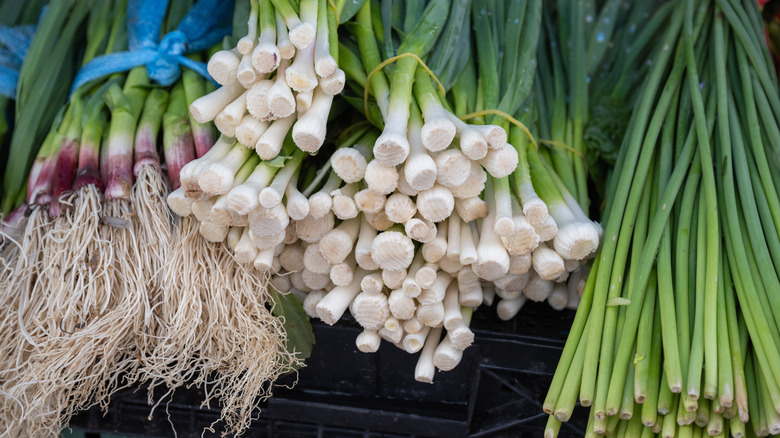
Browsing the grocery store herb section for scallions without reading glasses, it would be all too easy to go home with a fistful of green garlic. That is, unless you know the key differences you can tell with your nose, hands, eyes, and (when you get home, probably) taste. Both green onions and scallions are in the same family of alliums, but are distinct plants in their own right. This means that they're in the same botanical basket with chives, leeks, spring onions, shallots, and regular onions and garlic bulbs. So what's the difference between these two similar, yet distinct, plants?
Green garlic is simply a garlic plant in its early stage of life, usually harvested in early spring, before a bulb really forms. Green garlic is not to be confused with garlic scapes, which are the curly, flower bulb-tipped stems that emerge from the plant toward late spring or early summer. Involving touch, green garlic can have subtle bulbs forming at the base. Visually, scallions — also called green onions — have the classic long, slim, green stalks that, even at maturity, are a more consistent width, while green garlic has broader, flatter leaves, and — sometimes — a slight purple tint toward the bulb end.
While these two alliums look similar, they have different aromas and flavors. This makes each suitable for different dishes.
They may look similar, but these two plants are very different
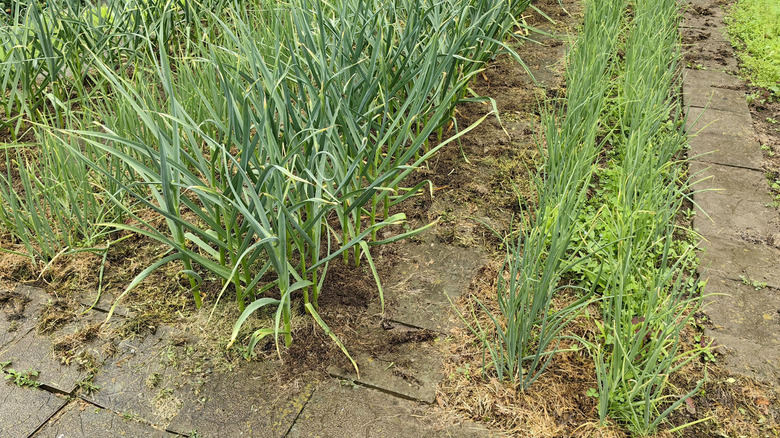
In terms of aroma, green garlic has an unmistakable fresh garlic smell, while scallions have a subtle onion one. Scallions taste similar to chives and spring onions, with a gentle onion flavor in the leaves, but a more concentrated flavor at the white stalk end. A classic ingredient in asian cooking, scallions add a pop of oniony levity to stir-fries and flaky Chinese scallion pancakes. You can slice the scallion thinner, near the white stalky base, to counteract its increased heat.
Both scallions and green garlic are amazing additions to omelettes, pestos, sauces, or pasta dishes. However, any dish that goes well with garlic but can benefit from a less intense version would enjoy a bit of green garlic in its place. Think Middle Eastern dips, salads, vinaigrettes, risottos, or mashed potatoes. Green garlic can also be easier on the stomach than mature cloves, making it a great substitute for those with sensitivities.