

Fertilize Tomato Plants In A Pinch By Reaching For This Baking Ingredient
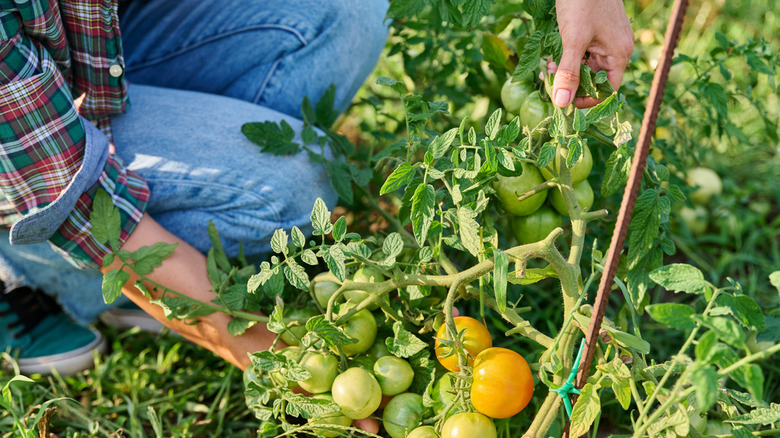
If you've run out of fertilizer and your tomato plants need a quick pick-me-up, an unexpected pantry staple can help: molasses. Yes, the sticky substance your great-great-grandmother might have added to baked beans or barbecue sauce is also good for plants in a pinch. While molasses isn't a true replacement for actual, balanced plant food, it's a temporary tomato gardening hack. The syrup is rich in natural sugars, which act as food for all those tiny soil microbes like bacteria and fungi. These microbes are incredibly important, as they essentially feed and protect our plants.
Molasses has a surprising nutritional profile, especially if you're using blackstrap molasses — one of the three different types of molasses. Blackstrap, the most concentrated and least processed, is a notable source of iron, calcium, and potassium. It would be very convenient if what's good for us is also good for the tomatoes. But here's the reality check: Molasses doesn't contain the full range of nutrients tomatoes need to survive. Tomatoes also need a specific balance of nitrogen, phosphorous, and potassium that the syrup can't provide on its own.
Perhaps most importantly, molasses is relatively expensive compared to traditional fertilizers, which perhaps is a sign from the universe that molasses is better off being used in gingerbread cookies than in plant food. Sadly, even the old wives' tale about molasses making tomatoes taste sweeter isn't true either. That sugary goodness comes from the tomato variety, consistent moisture, lots of sunlight, and soil health.
Molasses is a quick fix but not a full substitute
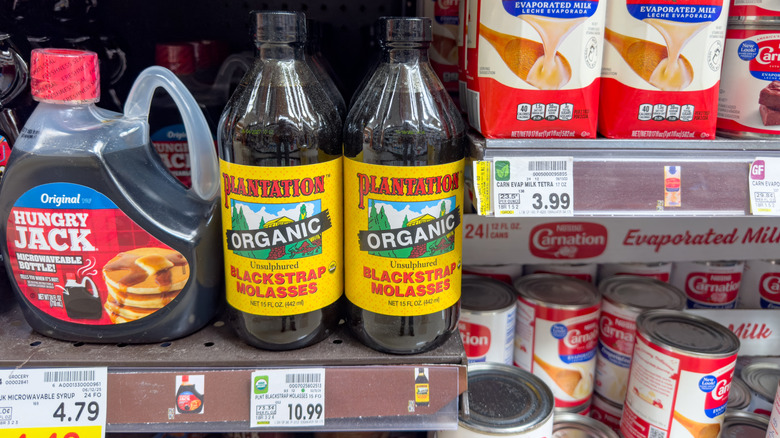
If you feel like experimenting and want to try out molasses on your tomatoes this summer, remember that a little bit goes a long way. A common approach is to mix one to two tablespoons of molasses per gallon of water. You'll want to use unsulphured molasses versus sulphured, because sulphur dioxide can act as a preservative and destroy microbes, and we certainly don't want to kill our friendly soil organisms. Stir the mixture thoroughly, then apply it to the soil around your tomato plants, not the plant itself. You can use this mixture every few weeks during the growing season, just make sure you apply it to moist soil so it distributes evenly.
Just like too much sugar is bad for us, it's also bad for plants. If you add too much molasses, it can throw the soil health out of balance, and possibly attract extremely unwanted friends like flies and rodents. Think of it as a soil booster, but not as your primary fertilizer. Molasses makes the most sense if you've already got healthy soil with active microbial life to feed. If you're starting with sad, depleted soil, focus first on compost and cover crops.
There's certainly many creative uses for molasses out there, including using the syrup as a way to balance acidity in tomato-based sauces. It's also excellent in coffee, coleslaw, and cookies, of course. As far as fertilizer goes, that choice is up to you.