

The Ancient Gardening Technique That Turns Herb Plants Into Artsy Masterpieces
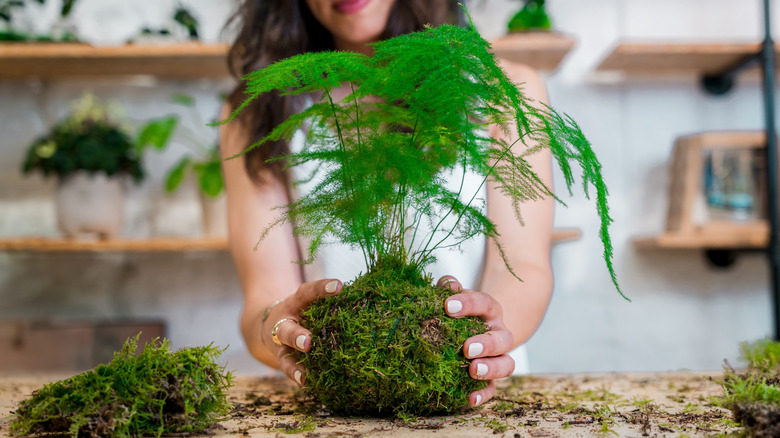
While some of us are planting seeds into the ground hoping they will sprout, some gardeners are turning their plants into hanging sculptures of greenery. Kokedama, a Japanese term that translates to "moss ball," is the practice of shaping root systems in moss-covered mounds of soil that are held in place by string or twine. The living, growing orbs are striking when displayed and can be set onto a surface or dangled from beams.
Kokedama blends the nearai bonsai and kusamono planting styles, emphasizing the practice of artfully displaying natural materials instead of burying them into the earth. Kokedama is thought to date back as early as the 1600s. Since the practice doesn't require purchasing pots, its affordability has made it a popular choice — though it does require transplanting plants as seedlings or using an established plant to form a moss ball around an existing root system. The approachable format simply calls for soil, moss, and string to keep everything in place. Kokedama can be used to display and grow edible herb gardens and houseplants and is also ideal for orchids, since the open-air presentation mimics how orchids grow naturally and can reduce the likelihood of common plant problems like root rot.
An approachable project even for beginners
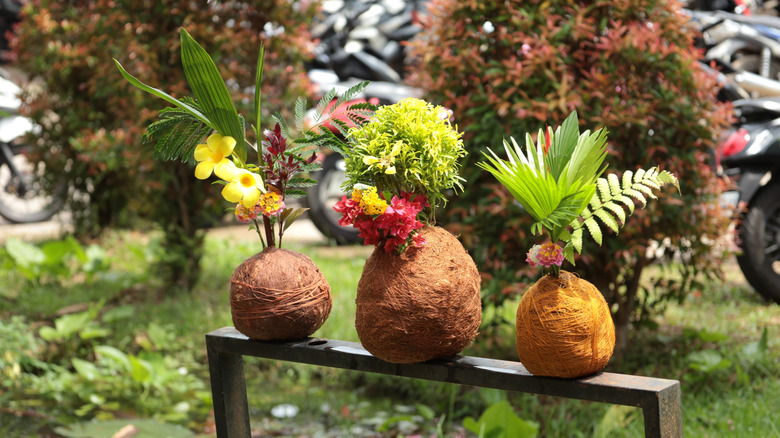
Compact herbs that don't develop complex root systems are ideal candidates for Kokedama. Rosemary and thyme adapt well to the moss ball format, as do mint, chives, parsley, and basil. Since mint and basil benefit from regular moisture, a soaking approach is ideal, whereas rosemary and thyme prefer drier conditions. Kokedama balls are often smaller than typical planters, so note that the harvesting yields will be smaller. Snip herbs carefully and factor in time for regrowth when using your Kokedama herbs for various culinary recipes.
Akadama, a Japanese clay soil often used for bonsai plants, is often combined with peat moss or standard potting mix. When properly mixed, the blend is dense and easily holds moisture. Some gardeners skip the soil core entirely, however, instead using sphagnum moss and clear string for a simpler aesthetic. Sheet moss is wrapped around the exterior of the formed ball and is secured by twine or jute. Kokedamas can be set into a shallow dish or hung with additional twine. "I tend to house mine in high humidity environments to prevent them from drying out too fast," wrote a gardener on Instagram. Water Kokedama arrangements by soaking them fully in water or spritzing when needed, and allow the moss to dry slightly in between waterings.