

One Kitchen Island Detail Adds Style Without Making The Room Feel Busy
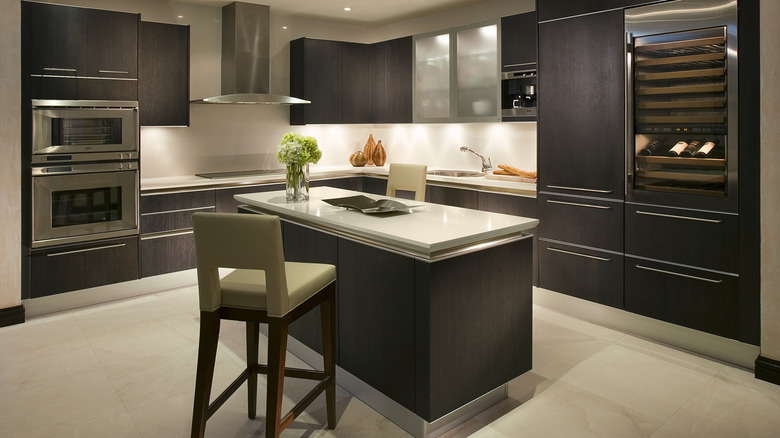
Kitchen islands are a great way to create more kitchen counter space, which can then be used to wash, prep, or even serve food. One little drawback is that once you plonk an island in the middle of your kitchen, it restricts any potential design flourishes. The island itself is the big design detail — any more and things can get overwhelming. However, there is a way to design a kitchen island that elevates the room without making it feel too over-the-top. According to Mark Bejan, senior designer at Imperial Cabinets & Millwork, it involves a smart use of millwork.
"The key to adding millwork to a kitchen island is making sure it's done in a cohesive way that adds texture to the space and turns the island into more of a furniture piece, rather than a flat box of base cabinets," Bejan told Tasting Table in an exclusive interview. "One way to achieve this is by adding texture to the sides or back of the island." When it comes to adding some oomph to the sides and back of your kitchen island, he said one recent design trend can really come in handy: the reeded wood panel.
"A custom way we incorporate this into our islands is by adding a cove molding frame around the reeded panels," Bejan said. "This creates extra depth, helps achieve that furniture look, and avoids the flat box appearance." To really highlight the reeded panels, do as he recommended and add soft LED lighting to the back of the island.
The trick to making your kitchen island feel custom
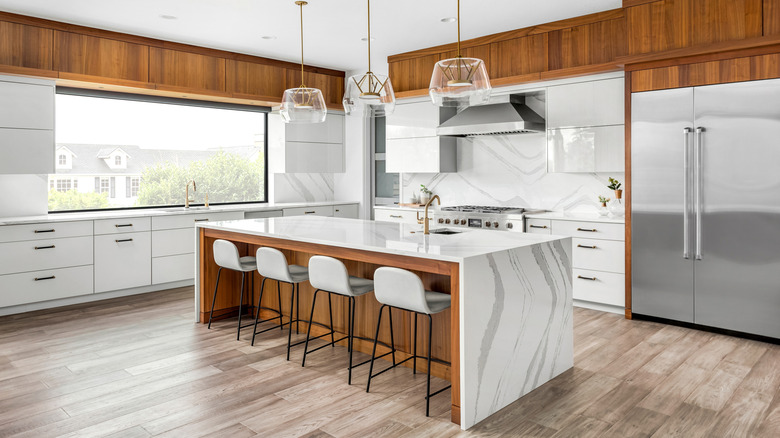
Mark Bejan had another tip for leveling up your kitchen island from a design standpoint: soft curves. "Radius millwork does a great job of standing out as custom, and it can be done in a subtle way that really elevates the overall design," he said. "Lastly, getting creative with waterfall sides is a unique way to elevate the space." Waterfall sides essentially mean a seamless transition from the countertop to the sides, which poses a hidden downside. However, he suggested one final flourish: "Transitioning a stone waterfall into a wood panel partway down is a beautiful detail that adds contrast and makes the island feel very custom."
While it's important to know what you must do to build the perfect kitchen island, it's also important to avoid common kitchen counter mistakes. According to Bejan, one important thing to keep in mind is to keep colors, wood textures, and overall style consistent. "For example, unless the home is very traditional, I would avoid corbels or overly decorative island posts that can feel outdated," he said. Another mistake is using the same paneling as the rest of the kitchen. "It can make the space feel busy and repetitive. Since that look is common in prefabricated cabinets, it doesn't help the island stand out as a custom furniture piece, which is really the goal," he explained.