

Why Italians Don't Overload Pasta With Sauce — And What They Do Instead
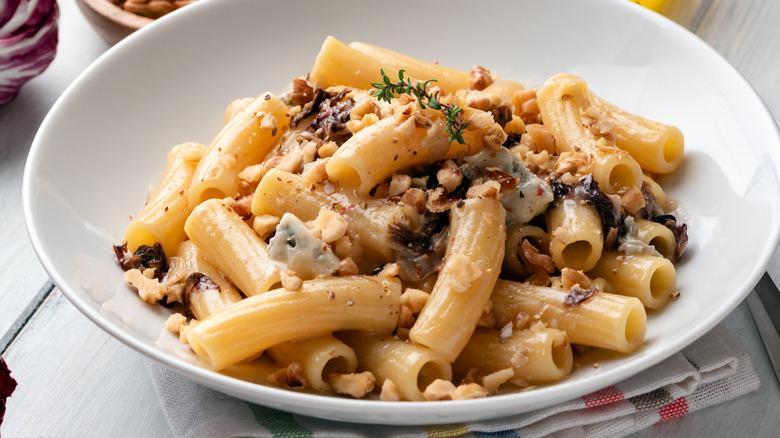
There's no wrong way to enjoy pasta, but a more restrained approach can open your eyes to the unspoken rules when dining in Italy. Tasting Table spoke to Jasper J. Mirabile Jr., owner and chef at Jasper's Restaurant and host of "Live! From Jasper's Kitchen," about how Italians prefer to dress their pasta. The family-owned Jasper's Restaurant has served fine Italian food for over 71 years, so Chef Mirabile knows his stuff. "In Italy, it's all about the sauce, and the pasta is usually a carriage for the beautiful sauce — but you don't wanna overload it. Just enough to lightly coat the pasta," he said. This is because you should be able to taste the pasta, not just the sauce, according to the chef.
There's a reason why expensive pasta tastes so much better. Knowing this, Chef Mirabile's advice makes sense — why would you splurge on high-quality pasta, only to sauce the noodles so heavily that the flavor and texture are indistinguishable? In Italy, pasta sauce is actually referred to as a "condimento" or condiment, which tells you how sauces are viewed: as a complement to dress and enhance the pasta, not bury it. Italians know that traditionally-made noodles with the perfect al dente bite deserve to be tasted and appreciated. If you'd like to try saucing your pasta the Italian way, Chef Mirabile's approach is super simple.
How to sauce pasta the Italian way for a more balanced bite
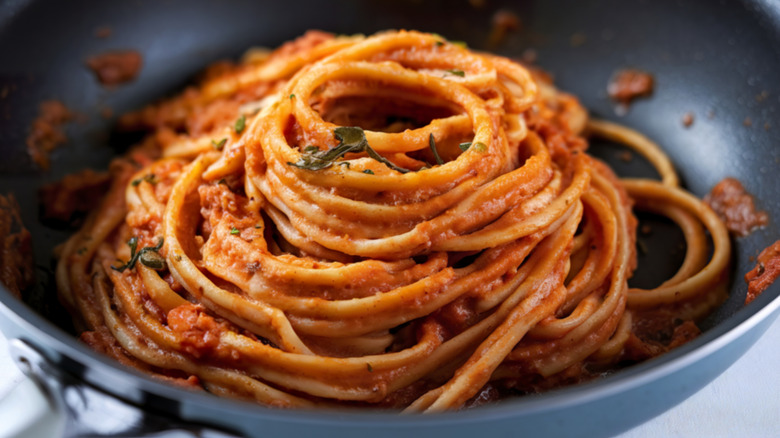
Whether you're making a simple spaghetti carbonara or a spicy penne arrabiata, Chef Jasper J. Mirabile Jr, recommended a gentle approach to saucing: "Cook your pasta al dente, add it to the pan with a little bit of sauce and some of the pasta water, and perhaps a little more of the pasta sauce that you're going to serve it with." Gradually adding the sauce in small doses, and slowly building up to the right amount, gives you more control.
Afraid that your pasta will be bland without a ton of sauce? As long as you make sure every bit clings to the noodles, each bite will have plenty of flavor. Chef Mirabile's use of pasta water is an effective way to ensure your sauce covers every bite of pasta, but how well sauce sticks to pasta comes down to the way it's made. Traditional Italian pasta is cut with a bronze die that gives it a rough, porous, absorbent texture. This helps the sauce cling to the noodles rather than slipping off.
As a final note, you should always finish your pasta in the sauce as Chef Mirabile recommended. Quickly simmering and tossing the two elements together further helps the noodles absorb flavors and unifies the dish. As long as you keep the simmering time to one to two minutes, the noodles shouldn't overcook.