

Here's What Trader Joe's Imitation Crab Meat Is Really Made From
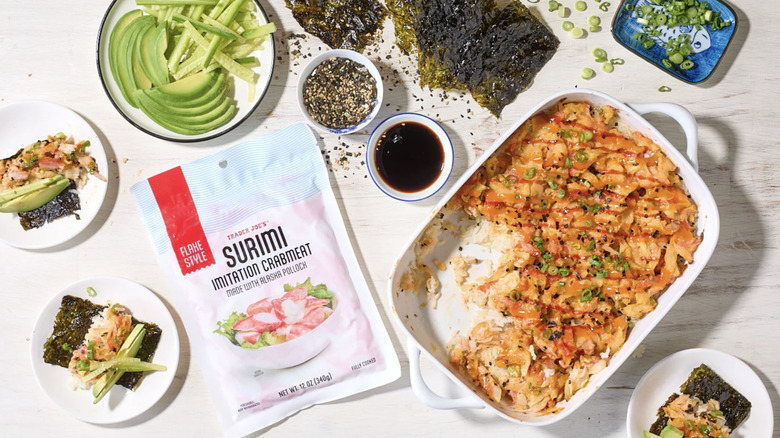
Trader Joe's doesn't take adding items to its permanent lineup lightly, which is why it was so exciting to see them finally release an imitation crab product last year. Trader Joe's imitation crab brought the versatility of this classic California roll ingredient to the company's devoted clientele, who had been asking for it for years. Labeled "Surimi," which is the traditional Japanese name, imitation crab has many uses beyond sushi. It makes a great topping for salads and soup and can even be turned into a tasty crab dip — all at a fraction of the price of the real thing. But when you eat TJ's imitation crab, what are you actually putting in your body?
Trader Joe's Surimi Imitation Crabmeat is made the same way most brands are: with processed white fish. In most cases (including the TJ's version), the fish used is Alaskan pollock. So, while it may not be crab, it is still real seafood. Imitation crab is made by grinding white fish into a paste, then adding binding agents, sugar, and crab flavoring that mimics the texture and taste of the real thing. In Trader Joe's case, it's surimi uses pea starch as the binder, and utilizes natural flavors. While real crab is often used to flavor imitation crab, other shellfish like shrimp and scallops sometimes substitute. Finally, while some other imitation crab gets its color from artificial food dyes, TJ's coloring comes from tomato lycopene extract.
Trader Joe's makes its imitation crab meat with wild Alaskan pollock
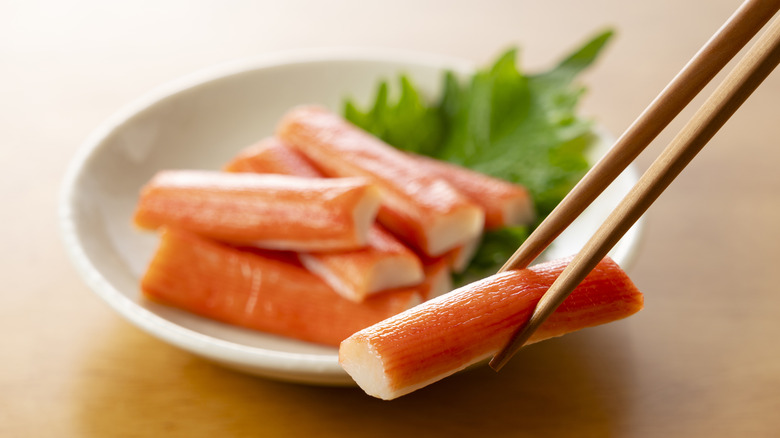
Since surimi can be made with different white fish, you may be wondering why Alaskan pollock is used? Well, there are two main factors: flavor and cost. Pollock is a very clean tasting and mild fish, perfect as a base on which to map other seafood tastes. Alaskan pollock specifically comes from the world's largest certified sustainable fishery, which produces copious amounts of fish. The result is a catch that is both affordable and environmentally friendly.
Imitation crab isn't just real seafood; it has a history too. The production of surimi actually goes back centuries, as the original fish paste was invented in the 12th century as a way to preserve excess fish. However, the modern version we know as "imitation crab" didn't come about until 1974, when a Japanese chemist added sugar, which prolonged its preservation and aided the freezing process.
Like other forms of imitation crab, TJ's Surimi Imitation Crabmeat is quite low in calories, but that doesn't mean it's a health food. A decent amount of any imitation crab are carb fillers without nearly the same amount of nutrients and protein as the real thing. Though not exactly unhealthy, it's better thought of as a light topping or flavoring than a hearty source of protein and vitamins. Still, Trader Joe's new imitation crab meat is a nice, affordable way to get some real seafood in your diet, courtesy of some Alaskan fish.