

Move Over Cabbage: The High-Fiber Leafy Green You're Missing Out On
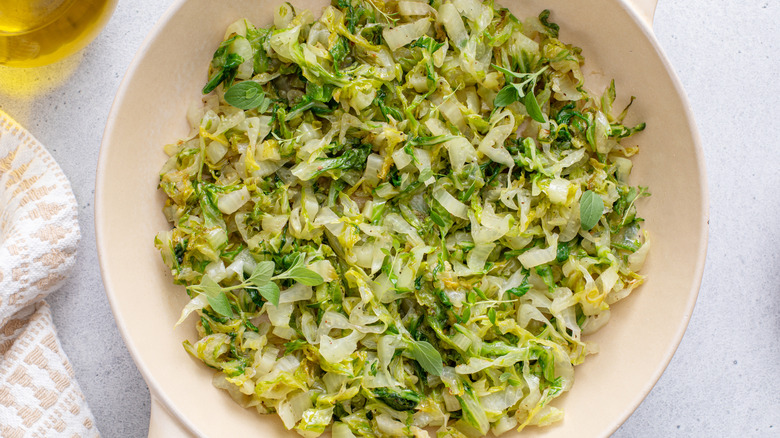
Fiber is quickly overtaking protein as the nutrient of note. With this in mind, it's good to consider which vegetables are an ideal source of this crucial carb, which helps to improve digestive health. Though cabbage has been widely lauded as an affordable vegetable that's nutrient-rich and good for the gut, it turns out that turnip greens have even more fiber per serving.
Of everything you need to know about turnip greens, the most important is that they come from the top of a turnip and are usually chopped off and discarded when preparing the rest of the vegetable for a meal. Rather than tossing out these tasty and nutrient-dense greens, prepare them for a fiber-filled side dish. Cabbage is certainly a versatile vegetable in its own right, but, when compared to turnip greens in terms of fiber, the dark green former discards are a clear winner.
While the two are both cruciferous, leafy greens with a difference in taste and texture, the nutritional numbers don't lie. One cup of cooked cabbage contains roughly a gram and a half of fiber, whereas the same amount of cooked turnip greens has about 5 grams of fiber. In addition to being filled with fiber, turnip greens also surpass cabbage in calcium, iron, magnesium, and potassium per serving. As far as preparation options, cabbage still reigns supreme; however, you can easily saute turnip greens like spinach for a unique side dish.
Tips for cooking with turnip greens
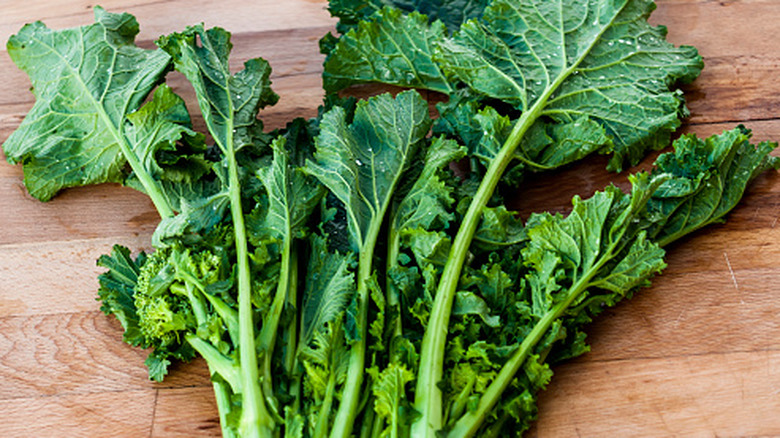
Turnip greens might not be as glamorous as their cabbage cousin, but you can easily use these fiber-rich leaves in a number of dishes. For example, a no-waste bacony turnip greens and mash recipe makes quick and delicious use of both the root vegetable and its vibrant green tops. Turning the turnip itself into a luscious mash and transforming the turnip greens by cooking them in bacon fat and combining the two into a mouthwatering topping for the mash is an easy way to reduce food waste and incorporate more vitamins and minerals into your meals.
You don't have to limit yourself to choosing between cabbage or turnip greens, either. Simply chop up both and sautee them for a low-effort side dish that's teeming with great taste. This would make an excellent accompaniment to a baked chicken or roasted turkey entree. For an entirely plant-powered meal, use both cabbage and turnip greens along with beans and other vegetables in a soup or stew that's filled with fiber and other nutrients.
If you're a fan of cabbage-based kimchi or other varieties of pickled cabbage, change up your recipe and try pickling turnip greens. Combining the two would make an even more robust recipe. Much like cabbage, you can also consume raw turnip greens or add them to sandwiches or salads. There's no limit to the delicious and nutritious possibilities.