

If You're Growing Strawberries, Hold Onto Your Coffee Grounds
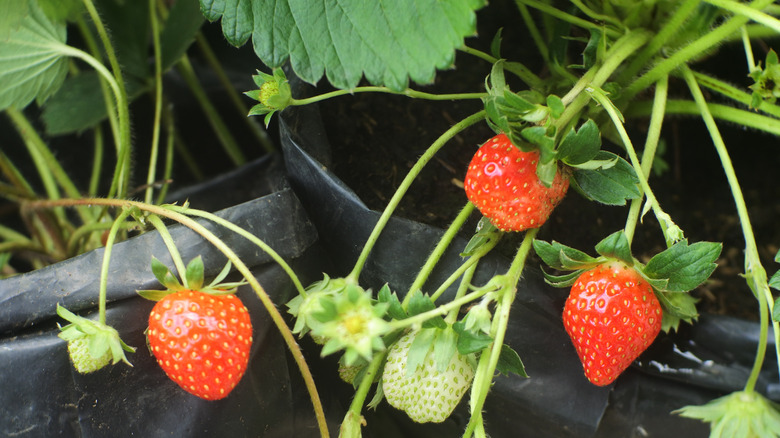
If you're a gardener who enjoys a hot cup of joe to start the day, you've surely heard the advice that you should save your coffee grounds to help your plants flourish. Composting can encourage strawberries to grow plump and juicy, and waste coffee grounds make an excellent addition to compost — so much so that some gardeners consider them almost essential.
Old coffee grounds provide your compost pile with moisture and nitrogen-rich material, which support the microbes that decompose organic material. When you combine the grounds with drier ingredients like dead leaves, you create a better composting balance. However, adding coffee grounds to compost offers structure, thanks to their gritty texture. This means the soil will drain more easily, instead of accumulating too much water, and strawberry plants are happiest in well-drained soil. They don't like to sit in marshy ground, so you want to avoid that at all costs. Instead of tossing out all those used grounds, they could be just what your compost needs so you can grow sweet, juicy strawberries.
How to feed strawberry plants
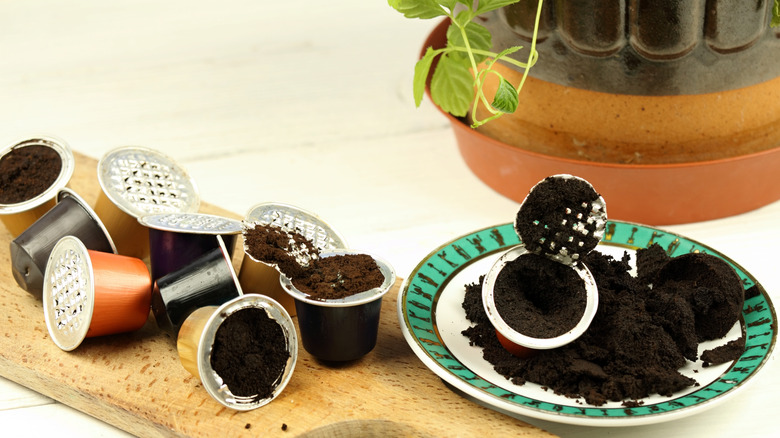
Strawberries need soil with plenty of nitrogen and potassium to produce the best fruit. It's important to know, though, that despite what you may have heard, coffee grounds alone aren't a great source of nutrition for plants, and they won't change the pH of your soil very much either.
Common advice is that because coffee is slightly acidic, the leftover grounds should help keep the soil at the right pH level. Strawberries do best in soil with a pH of around 5.3 to 6.5 (per the University of Minnesota), but used coffee won't do much to help that. While the coffee you drink is certainly acidic, the act of brewing it removes most of the acidity from the grounds. If you happen to live somewhere with alkaline soil, the best way to give it the acidity that strawberries crave is to treat your soil with sulfur.
Coffee grounds do contribute small amounts of nutrients, like iron, manganese, and zinc — and even some rarer elements like boron, which strawberry plants are often deficient in — but they can't provide everything a plant needs. Far from it, in fact. To give your plants the right nutrients, you'll need to make sure you add plenty of other kitchen and garden scraps to your compost. It's a good idea to read up on how to compost at home. And be careful not to add too much coffee to your composter — Oregon State University recommends mixing leaves at a much higher ratio — about three times as much as fresh grass clippings and coffee grounds. Just like your own diet, good compost is all about striking a healthy balance.