

10 Jamie Oliver-Approved Tips For Making Pasta Go From Good To Great

We may receive a commission on purchases made from links.
Jamie Oliver's no-frills approach to cooking is admired by many, and the chef has sold tens of millions of copies of his ever-growing collection of recipe books, now numbering well over 30 titles. Oliver champions fresh, simple ingredients, aiming to maximize flavor with minimal effort, and something that features in many of his dishes is pasta.
Quick to prep and endlessly customizable, pasta is a go-to for weeknight dinners, speedy lunches, and elegant date-night dinners alike. This carb-forward base pairs well with an array of flavor-packed sauces, proteins, and veggies, whether you're in the mood for something light and zesty or decadently creamy. While you might already have a few trusty pasta dishes in your recipe rotation, there's always room to refine your technique. And, what better place to pick up some tips than from "The Naked Chef" himself?
Oliver has provided countless pasta-related tips across his books, television shows, and social media videos over the years. Forever highlighting how easy it can be to elevate even the simplest of dishes, the chef shows that a few small tweaks can make all the difference. From perfecting your pasta water to finishing sauces with finesse, these expert-backed pointers will help you take your meals to the next level of deliciousness.
Bake your Bolognese
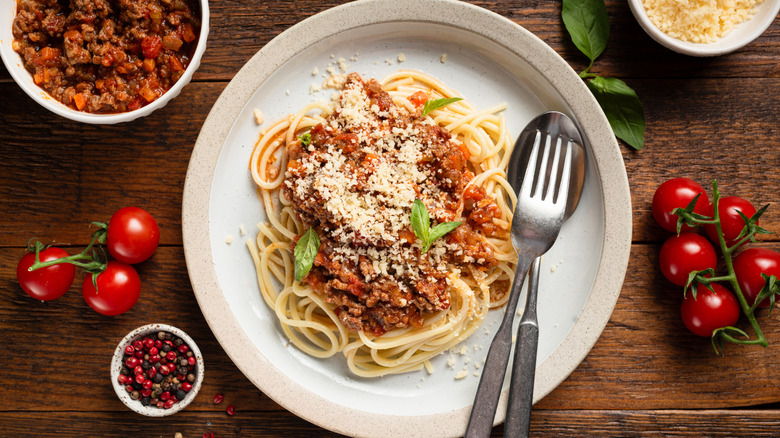
If spaghetti Bolognese is a staple in your household, you're probably familiar with slow-simmering the meaty ragu on the stovetop. However, this isn't the only method to consider. According to Jamie Oliver, baking your Bolognese in the oven is a fantastic way to enhance its flavor, and this hands-off approach allows the pasta sauce to develop a deeper, richer taste with minimal effort.
The gentle, even heat of the oven helps the ingredients meld together beautifully, encouraging caramelization and building layers of depth that are harder to achieve on the stovetop. As the sauce bubbles away, it won't require constant stirring. Over the course of an hour, it'll thicken up nicely, coming out irresistibly rich, hearty, and packed with robust savory flavor.
Oliver's Bolognese recipe features a garlic- and rosemary-infused base of sauteed onions and smoky bacon, which complement the umami notes of the ground beef and tang of the tomatoes beautifully. The chef recommends checking the mixture about halfway through baking and adding a splash of water if the sauce is looking a little dry. Once cooked to perfection, the Bolognese can be spooned atop a generous portion of al dente spaghetti and garnished with a sprinkle of nutty Parmesan for an extra touch of indulgence.
Grate mushrooms over cacio e pepe
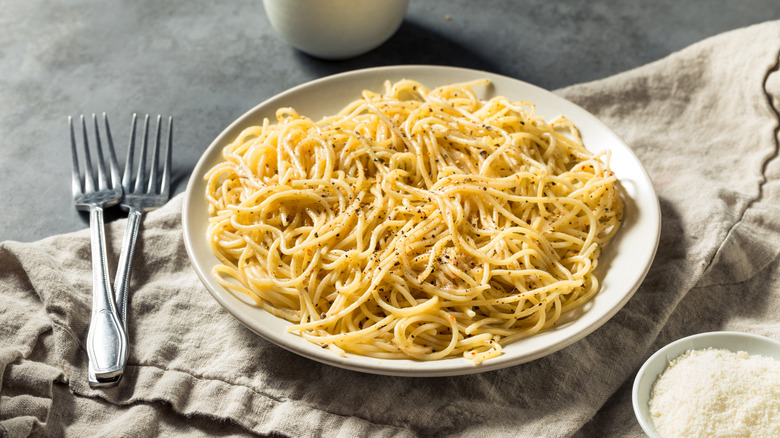
Mushrooms are no strangers to pasta, and we often see the two ingredients combined in a garlicky cream sauce or hearty ragu. Somewhere that Jamie Oliver likes to inject a touch of earthy mushroom goodness is in the beloved Italian classic, cacio e pepe. However, his approach is somewhat unconventional. Rather than sauteing the sliced mushrooms as you might expect, he grates them raw into the dish.
This tip comes from Oliver's 2020 cookbook, "7 Ways: Easy Ideas for Every Day of the Week." And, there's really nothing complicated about it. He recommends grabbing a mushroom and a microplane (a rasp-style grater with super-fine teeth), and grating the fungi over the spaghetti at the point of adding the cheese. Then, it's a simple case of tossing everything together to coat the pasta in a layer of luscious, mushroom-infused richness.
Added raw, the mushroom boasts a lighter, milder taste that brings just the right amount of earthiness without overwhelming the flavors of the rich butter, nutty Pecorino cheese, and warming black pepper. The fine grating also helps to distribute the mushroom more evenly throughout the spaghetti, so every forkful benefits from an extra dose of umami depth. You could absolutely try this technique with other pasta dishes, too, such as a creamy spaghetti carbonara or garlicky aglio e olio.
Reserve some of the cooking water
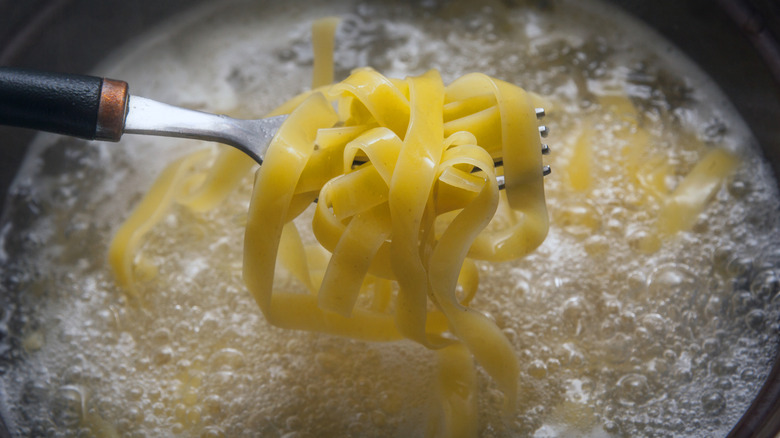
Pasta water is a transformative tool for enhancing homemade pasta sauces, and Jamie Oliver highly recommends reserving a good glug of the starchy liquid. It's a simple trick that's often overlooked, but one that can really take a sauce from basic to memorable.
Oliver notes that adding some of the cooking water to your sauce can yield a thicker, smoother result that better binds to the pasta. And he's not wrong. In fact, there's science behind this concept. As pasta cooks, it releases starch into the water, creating a cloudy liquid that acts as a natural thickener. This starch helps to emulsify the fats and water in your sauce together, creating a cohesive, silky coating. This results in a mixture that clings effortlessly to every noodle, rather than pooling in the bottom of your bowl.
To implement this technique, just scoop out a cup of the pasta water before draining as usual. The liquid can then be stirred directly into the sauce for the ultimate glossy finish.
Finish with fresh herbs
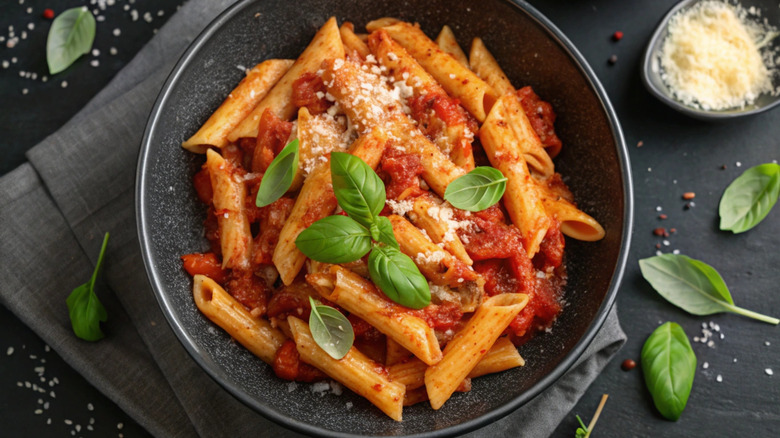
To instantly brighten your pasta dish, try scattering some fresh herbs over it right before serving. This adds freshness, color, and aromatic depth, making your dish feel altogether more elegant and well-rounded. Jamie Oliver uses this method in many of his recipes, including his pasta al limone, quick green pasta, and summer tagliatelle.
Various herbs work well here. Basil tastes fantastic with tomato-based pasta dishes, especially when paired with rich cheeses like Parmesan and ricotta. Parsley is another excellent pick, helping seafood and citrus-forward pastas to shine. Thyme will fit right in alongside earthy mushrooms and creamy sauces, while mint brings a refreshing edge to summery vegetable pasta.
Cooking fresh herbs can dim their naturally bright flavor, which is why they work best as a final flourish, rather than a component of the sauce itself. If a bold, herbaceous profile is the goal, consider incorporating dried herbs into your pasta sauce to infuse the dish as it simmers, before garnishing with the fresh herbs for maximum impact.
Always salt the water
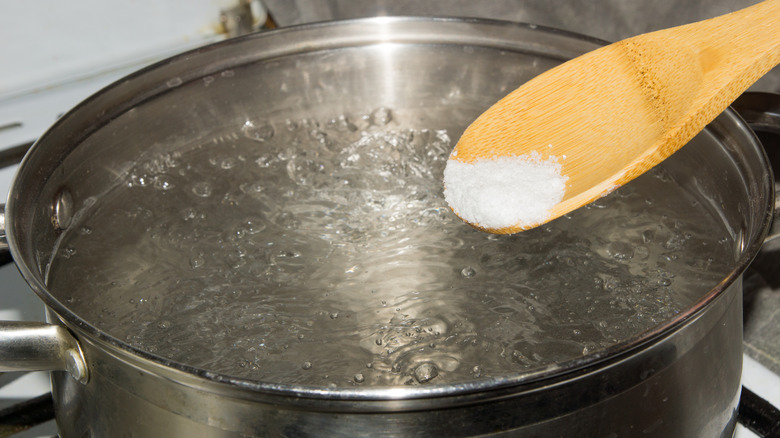
It's a step you might already be familiar with, but salting your cooking water is essential for helping your pasta dish reach its full potential. As per Jamie Oliver's advice, this stage shouldn't be treated as an afterthought, since it's your only real chance to season the pasta itself, rather than just the sauce.
As the pasta cooks, it absorbs the salted water, locking flavor into every strand or shape. Skip this step, and even the most carefully crafted pasta dish can fall flat. In a video on his YouTube channel, Oliver is seen adding a generous handful of coarse sea salt to a pot of boiling water. He tells viewers to "season the water with just enough salt so you can just taste it," before dipping in his finger and giving it a try. "You want a little edge of salt there, and that's perfect," he remarks, and proceeds to add the spaghetti.
While Oliver doesn't specify an exact amount of salt, a good rule of thumb is to add 1 tablespoon of kosher or sea salt for every 4 quarts of water. This should be enough to cook 1 pound of pasta. If you're doing a taste test like Oliver, be sure to cool the water on a spoon beforehand to avoid burning yourself.
Start with a flavor-packed base
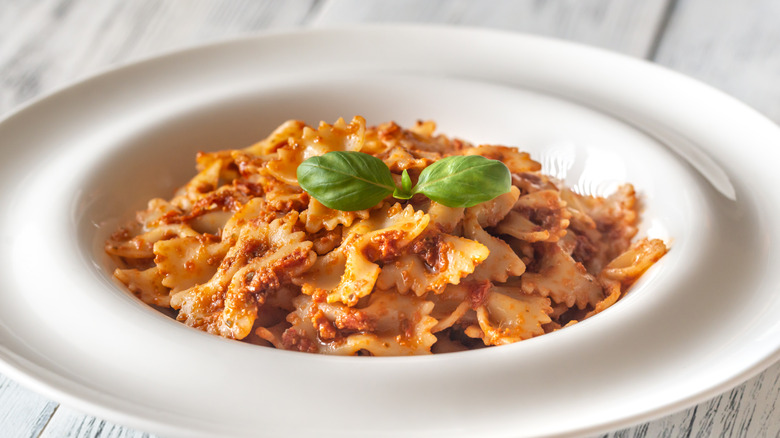
Building bold flavor doesn't always have to mean hours of slow-simmering or reaching for gourmet ingredients. Plenty of Jamie Oliver's pasta recipes create depth right from the start by layering simple, accessible ingredients thoughtfully.
The chef often begins by sauteing aromatics in olive oil to bring out their robust flavors. In his take on pasta arrabbiata, chiles, garlic, and anchovies form the base of the punchy tomato sauce, packing in savory richness and a good dose of heat with minimal effort. Oliver's penne with onion sauce builds complexity in an even more unique way — by stirring some Marmite into the sauteed onions with a sprinkle of flour and a splash of water, to craft an umami-rich sauce.
Cooking isn't always required to pack personality into a pasta sauce, either. Oliver's jarred pepper pasta recipe, which comes together in just 12 minutes, sees the penne tossed in a quick blender sauce, with no simmering required. This combines the peppers with a handful of vibrant flavor boosters, including garlic, almonds, chili flakes, and red wine vinegar.
Top pasta bake with garlic breadcrumbs
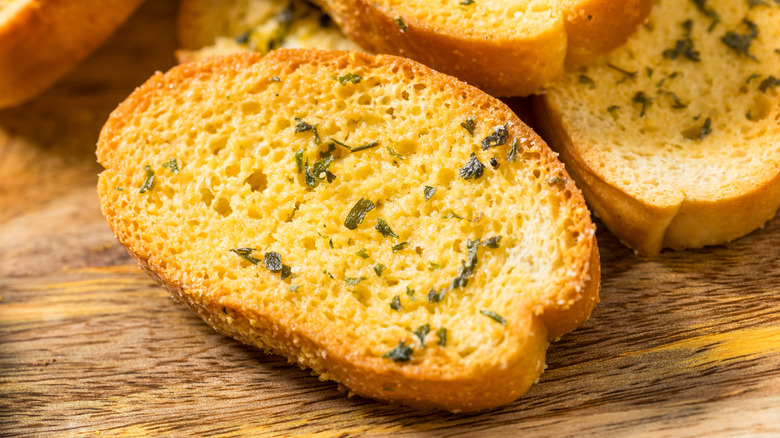
We all know how great garlic bread is as a side dish, but it also makes for an exceptional garnish. No, we're not talking about arranging whole slices of bread atop your bowlful, but rather crumbling it into golden, aromatic breadcrumbs to create an irresistible layer of crunch.
This tip comes from Jamie Oliver's veggie pasta bake recipe, where he blitzes up a whole loaf of garlic bread to make this flavorful topping. The crumbs are then tossed with a splash of olive oil and scattered over the pasta and sauce in a casserole pan before everything is oven-baked to crispy perfection.
While Oliver's pasta bake features sauteed leeks, plum tomatoes, and earthy spinach, the garlic breadcrumbs would work brilliantly atop a whole host of other ingredients. Try using them to jazz up a classic baked ziti, where they'll add an extra layer of indulgence to the rich, cheesy topping. Or, give a baked mac and cheese a garlicky upgrade by swapping out standard breadcrumbs for this far more flavorful alternative.
Speed things up with a no-cook sauce
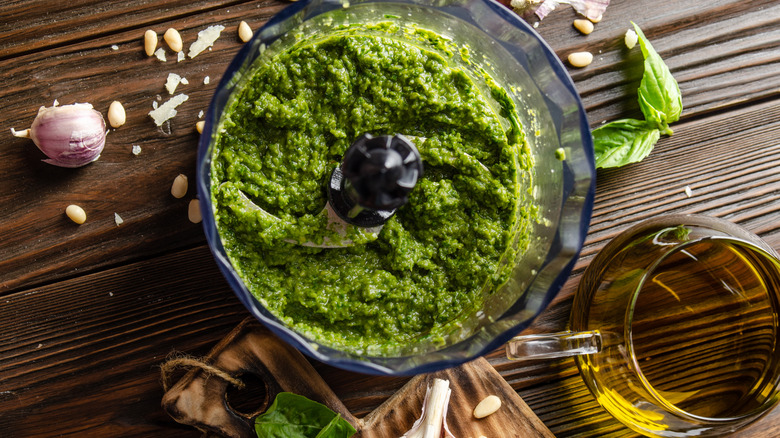
Pairing your pasta with a no-cook sauce not only adds flavor to your meal but also likely saves you time and effort. It's a method that Jamie Oliver demonstrates frequently in his recipes, proving that baking or slow-simmering isn't always the key to crafting a standout pasta dish.
A vibrant, herb-packed pesto might be the first thing that comes to mind here, and this is certainly a noteworthy pick for adding nutty, creamy richness to your bowl. But there are many other ways you can spruce up those al dente morsels. Jamie Oliver's speedy salsa spaghetti is the perfect example of fresh, raw ingredients coming together to create something seriously delicious. He crafts a vibrant salsa with tomatoes, olives, garlic, capers, and basil, and tosses this with the pasta, some grated Parmesan, and a splash of the cooking water. The resulting dish is bursting with briny brightness, despite only taking 14 minutes to whip up.
The chef's beetroot and ricotta pasta is another standout example of the no-cook approach's effectiveness. Here, pre-cooked beets are blitzed up into a striking pink sauce with Parmesan, lemon, basil, and olive oil. This serves as a wonderfully speedy way to pack heaps of zesty, earthy flavor into the farfalle base.
Balance your dish with acidity and richness
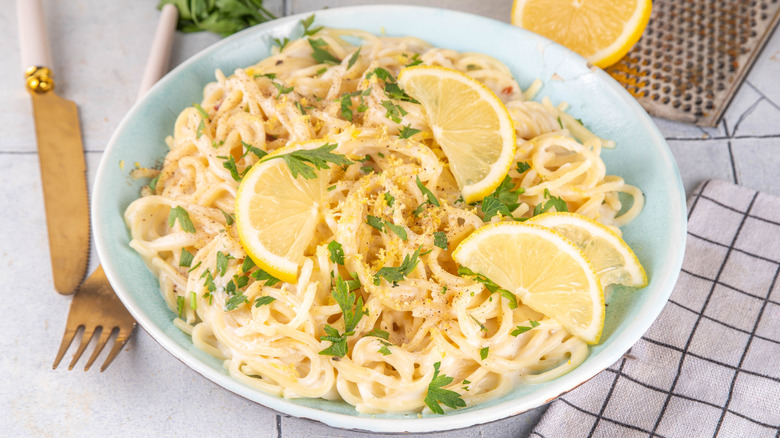
Balance is the key to any truly great pasta dish, and Jamie Oliver often highlights the importance of pairing richness with just the right amount of acidity. Whether you're working with a creamy sauce or a tomato-based classic, an acidic element can lift the entire dish and prevent unwanted heaviness, while richer add-ins boost indulgence and the overall comfort factor.
Multiple recipes from Jamie Oliver call for ingredients like lemon juice, zest, or even a splash of vinegar to bring that all-important brightness. Butter, cheese, and cream are all ideal picks for building richness, and these versatile additions will taste fantastic alongside a wide array of herbs, spices, proteins, and vegetables.
Oliver's lemon linguine demonstrates this fine balance exceptionally well, where the sharp citrus cuts through the richness of Parmesan and olive oil, yielding an irresistibly light yet silky sauce. In Oliver's wild rocket and chili spaghetti recipe, canned anchovies bring their natural oily richness to the spicy sauce, which is livened up with a generous sprinkling of lemon zest and a handful of peppery arugula.
Finish pasta in the sauce
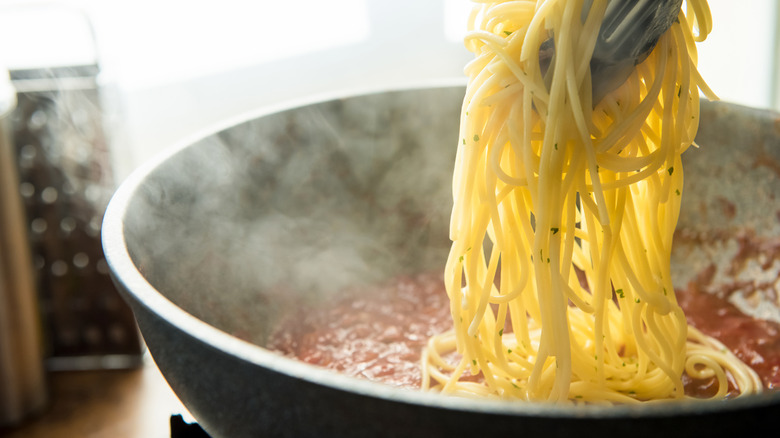
For optimal flavor and texture, make sure to finish cooking your pasta directly in the sauce. It's a small change that'll make a noticeable difference, giving your dish that restaurant-quality edge.
Jamie Oliver swears by this technique, using it in recipes like his tinned sardine puttanesca and one-pot pasta al limone. Prepared this way, the pasta gets a nice, even coating in the sauce, ensuring it absorbs as much flavor as possible without becoming mushy or clumpy.
A good approach is to cook the pasta for one minute less than the time recommended on the packaging. Then, once you've drained the noodles, just add them to the pan with the bubbling sauce, stirring everything together for a final minute. This is also the perfect time to throw in a splash of that leftover pasta water, to help emulsify the sauce and create a gloriously silky consistency.