

Make Brisket 10X More Flavorful With This Basic Appliance (No Smokers Or Slow Cookers Required)
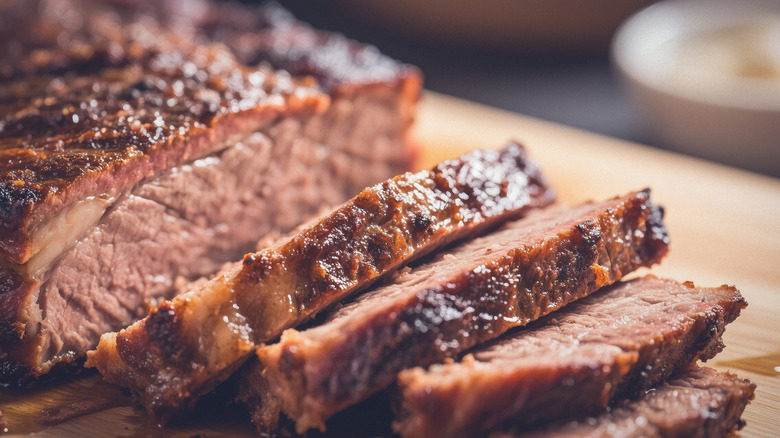
We typically associate brisket with smokers or long hours in a slow cooker. It's a popular cut of beef that can be very flavorful when prepared correctly, so it's worth the time and effort. However, some recipes are so complex that they may be fun to watch in a video, but aren't really practical for many home cooks. The good news is that you can make a brisket at home that is much more flavorful than you might think without needing any specialty equipment. All you need is your oven.
A smoked brisket will develop a delicious, flavor-packed crust. Anyone who's had barbecue brisket knows how tasty it is, but your oven can develop even more concentrated flavor in less time. The heat in your oven is also easier to control compared to a smoker or a slow cooker. That helps the meat cook evenly and develop consistent flavor throughout. Low and slow oven cooking in a braising liquid ensures a fall-apart texture, like this Ree Drummond recipe for ultra-tender braised brisket.
Because you are braising the brisket in liquid, it's able to absorb the flavors around it. So it's a good idea to use aromatics like a mirepoix of carrot, onion, and celery that can be cooked with the meat. You can also add herbs like thyme or rosemary along with salt and pepper. Red wine, stock, and other liquid ingredients that wouldn't work on a barbecue can be included to build flavor.
The other key to the best flavor is to sear the brisket first. You can do this right on your stovetop. Add a little oil to a pan, season the brisket with salt, then sear it until the meat develops a nice brown crust on every side before placing it in a roasting pan.
Braising is amazing
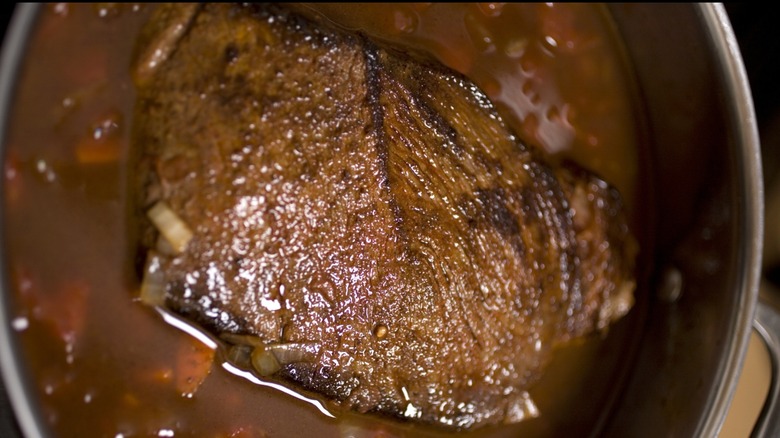
Braising a brisket in the oven should take about 60 to 75 minutes per pound at around 275 degrees Fahrenheit to achieve desired low and slow results. When you sear the meat first and saute the vegetables, they develop flavor from the Maillard reaction which makes the finished brisket much tastier than braising alone. As liquid evaporates during cooking, the overall flavor intensifies.
Brisket can be a tough cut and it's also prone to drying out. That's why some people are opposed to oven cooking — particularly if you're roasting it slowly in the oven rather than braising. But as long as the temperature stays low enough, the muscle fibers in the beef are much less likely to dry out. Instead, the connective tissue will have a chance to break down. As the collagen breaks down, it makes the meat tender and develops that desirable texture. Collagen turns into gelatin which absorbs liquid and locks flavor into the meat.
Above 300 degrees, collagen can toughen up and make brisket chewy, so the oven is an ideal place to cook it because you can precisely control the temperature to keep it low enough. A smoker can be affected by flare ups or the heat can be lost entirely if the coals go dead, so it should be constantly monitored to maintain consistency.
Slow cookers can maintain temperatures, but they are also small. You need space to properly cook a brisket evenly. Cramped in a slow cooker, it may also suffer inconsistent heating unless it's a very small roast. Try our braised brisket recipe and compare it to the smoker or slow cooker methods and see the difference for yourself.