

This Canned Food Packing Up To 31 Grams Of Fiber Is Probably In Your Pantry (And Fits In With Any Meal)

There are people who have built beans into their everyday, soaking and seasoning them, constructing entire meals around them. Then there's the rest of us, who have a couple cans of black beans pushed to the back of the pantry, lurking for some future event, maybe a power outage or a Super Bowl party that requires a 7-layer dip. But, you actually don't need a specific reason to crack open that can. They're way more multipurpose than most people realize, and they're worth developing a habit around, because each can contains around 31 grams of fiber, depending on the brand and bean density. With a little practice and imagination, you too can become a regular bean-eater.
Although fibermaxxing is gaining traction as a nutritional trend — move over, protein — most people aren't getting enough dietary fiber, and it's starting to show up in uncomfortable health statistics. Rates of chronic digestive issues and colon cancer have been rising, and one of the consistent through lines is an unbalanced diet that skews heavy on processed and ultra-processed foods, which often lack meaningful amounts of fiber, and light on whole plant material.
Beans are dense in fiber because of how the plants are built. Their cell walls contain complex carbohydrates that don't fully break down in digestion, along with resistant starch that makes it all the way to the large intestine, intact. There, gut bacteria ferment it, producing compounds which in turn support everything from digestion and elimination to inflammation reduction. Superfoods and diet trends may come and go, but this is a structural part of how the human body works.
To bean or not to bean
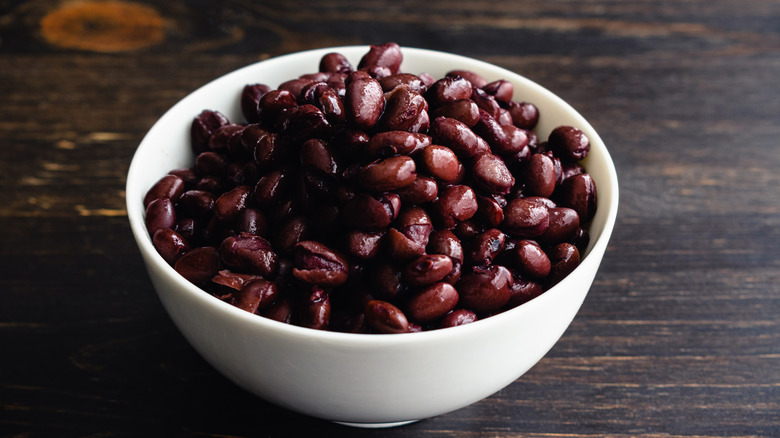
If you're trying to develop a bean habit, what matters most is finding a way to eat them that you actually enjoy, not just endure, because merely choking down unappealing health food isn't generally sustainable. Plain black beans are fairly underwhelming, and eating them straight from the can reinforces the idea that they're a chore.
Black beans have been a staple in Latin American cooking traditions for over seven thousand years, but they're never served unseasoned. Along with animal fat, aromatics like garlic, onion, cumin, bay leaves and, epazote are added because they actively help the body process the beans. They contain compounds that act as carminatives, meaning they reduce gas and ease digestion by helping relax the gut and move fermentation byproducts more comfortably. They also, of course, contribute savory, pungent flavor and make a single, rather bland-on-its-own ingredient taste like a complete dish, pleasant and satisfying to consume.
Black beans are basic and adaptable. There are lots of great recipes that put them in the spotlight, and you can go full chef mode with them. You can add them to most soups pretty seamlessly, turn them into a spicy dip, sprinkle them on salads, or if you're feeling subversive, blitz them into a cocoa-bean smoothie or cook them into brownies — it sounds wacky, but, hear us out, chocolate and black beans somehow works. Also, though, if you're exhausted and need a substantial and nourishing but very low effort meal, it's also perfectly acceptable to just stir some shredded cheese and hot sauce into them, microwave it, then maybe throw some avocado and crunched up corn chips on top if you have them.
From pantry filler to actual dinner
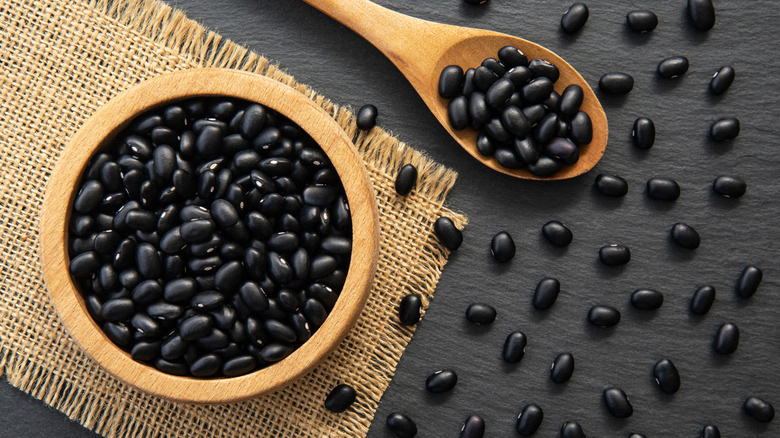
Right after you open the can, it's worth taking a second to deal with the liquid within. Beans contain oligosaccharides, a type of carbohydrate the human digestive system doesn't fully break down on its own — which is part of what makes them healthy, but in high amounts can lead to gas and that heavy, bloated feeling some people associate with beans, especially if you aren't accustomed to eating them regularly. When beans are cooked and canned, some compounds leach into the water they sit in. Pouring it off and quickly rinsing the beans under running water removes some of them, along with sodium and starch, and will make them easier to digest and more appealing to eat on repeat.
The liquid is also why one can of beans might list 31 grams of fiber, and another closer to 20. Nutrition labels don't always describe beans in the same state; some account for the liquid, some reflect a drained serving, and some differ based on how tightly the can is packed. But even a lower-fiber can contribute a substantial amount of dietary fiber, and certainly more than most processed convenience foods do. They're also relatively high in protein, around 25 grams per can.
For everything they offer, black beans are hard to beat on cost. While a single can is usually just a few dollars, dried beans can be cheaper if you're willing to plan ahead, and buying in bulk lowers the cost even more. They're in that special category of foods that are shelf-stable, nutrient-dense, and genuinely affordable. They don't need to be considered an emergency ration or a reluctant health choice. Once you know how to rinse and season them, they'll become something you reach for, not something to fall back on.