

The Biggest Mistake You're Probably Making With Your Dishwasher's Lower Rack
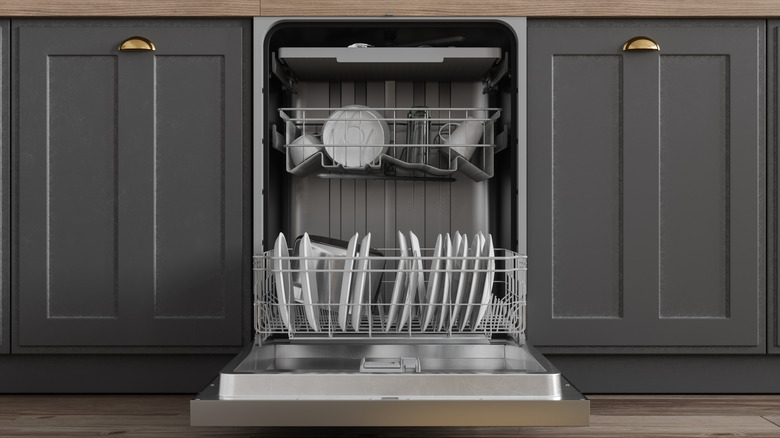
How to properly load the dishwasher is a common debate in many households. There may be big differences between each person's loading style or preferences, but there are specific methods that actually result in the cleanest dishes. A commonly misused area is the lower rack of the dishwasher. The bottom rack can be used for heavier items, like large bowls, baking dishes, and platters. However, one of the biggest mistakes you're making when loading your dishwasher is blocking the upper or lower spray arms from functioning.
If you place tall items upright in the lower rack, they may block the upper spray arms from spinning properly. This can result in inconsistent cleaning and you may end up with plates and glasses that still have food caked on them. Tall items can also fall over during the cleaning cycle, preventing water from the lower spray arms or detergent from the door from reaching all of the dishes.
The best way to load cutting boards, baking sheets, platters, baking dishes, and other tall items is to place them horizontally along the sides or back of the lower rack. This provides clearance for upper and lower spray arms and keeps the dish detergent dispenser clear. After loading, check to see if the spray arms still rotate 360 degrees by spinning them gently with your hand. If you have a dishwasher with adjustable racks, you can also raise the upper rack to accommodate taller items. If an item is still too tall to fit properly, angle it downwards slightly – just make sure it isn't blocking any other dishes.
Other tips for properly loading the dishwasher's lower rack
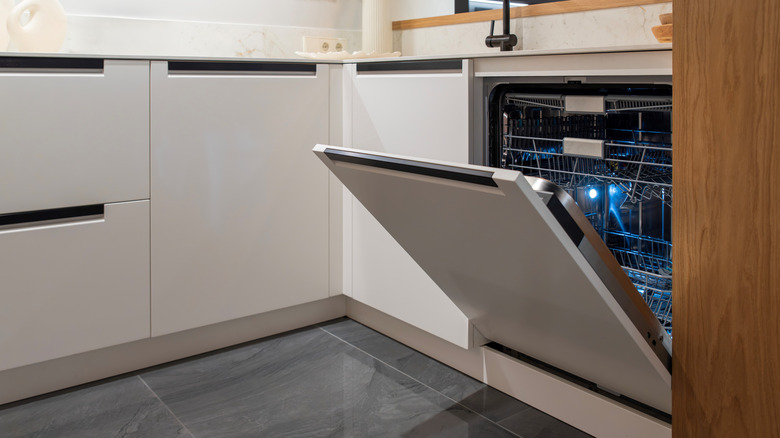
Another common mistake when loading the lower rack is placing small, lightweight, or delicate dishes there. While the silverware basket is meant to hold small utensils, some items may become damaged on the lowest rack as it is closest to the dishwasher's heating elements as well as heavy sprays of water. Before putting anything in the dishwasher, make sure it is labeled as dishwasher safe, and check to see if the label further specifies top rack only. The main function of your dishwasher's top rack is for washing items like plastic food storage containers and lids, plastic bottles, fragile dishes, silicone utensils, travel mugs, and small bowls.
Overfilling the bottom rack is also a no-no, as loading your dishwasher this way could sabotage every wash by allowing bowls or dishes to nest within each other. You want to leave enough space that water can reach all sides of the dishes, and ensure they will drain easily. When loading, alternate between smaller and larger dishes and make sure the dirty side of each dish faces the center of the dishwasher. Try to angle the items slightly forward as well. This makes cleaning more effective, and allows the dishes to drain and dry more efficiently. Always place pans, baking dishes, and bowls on their sides, and place dishes between each tine, rather than over them.
Another tip for loading your dishwasher is to place silverware in the basket handle down, ideally with alternating placement of spoons and forks to prevent the spoons from nesting inside each other. Sharp knives, like steak knives, should be loaded blade down to prevent accidents, but ideally don't wash kitchen knives in the dishwasher at all as the blades may become dull.