

This Is Where Heinz Ketchup Sources Its Tomatoes
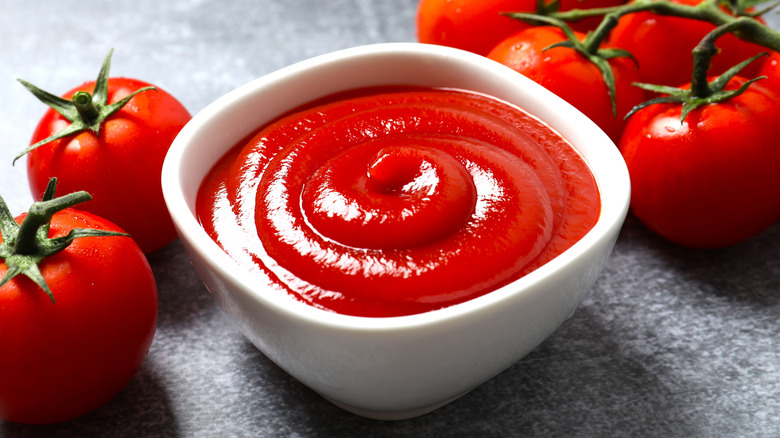
When we're buying groceries, it's easy to not even think about where the food originally came from. But every bottle of ketchup came from real tomatoes, and all of those tomatoes had to be grown somewhere. There are plenty of different ketchup brands out there, and Heinz is one of the largest and most recognized in the world. Being such a big company, the tomatoes used to make Heinz ketchup are grown on four different continents — North America, South America, Africa, and Europe.
If you're buying ketchup in the United States, those tomatoes would have been harvested in California, in the fields of M Three Ranches, near Sacramento. Elsewhere, Heinz tomatoes are grown in Nerópolis, Brazil; Badajoz, Spain; and in Egypt, where the company sources tomatoes from local farmers. Heinz also grows tomatoes in Canada, specifically to make ketchup for Canadian buyers.
Ketchup is an ever-popular condiment, and the wealth of tomatoes, grown in so many countries, is how Heinz produces an astonishing 650 million bottles of it every year. That's roughly 175,000 metric tons! While that definitely takes a lot of tomatoes, Kraft-Heinz is only one of many companies feeding the world's insatiable hunger for the red fruit.
The worldwide tomato industry

Since they were first domesticated in South America, around 7,000 years ago, tomatoes are enjoyed in cuisines all over the world. They're grown in almost every country, and in the U.S., they claim the accolade of being the most popular garden vegetable. America is far from the world's biggest tomato producer, though, ranking at No. 4 worldwide. Between them, China and India produce over seven times as many tomatoes as the U.S. But that isn't to say that Heinz doesn't play a role globally.
Heinz runs a seed processing facility in Stockton, California, importing, testing, and distributing tomato seeds. Here, imported seeds are processed and then shipped to customers around the globe. These aren't just for making ketchup, either. Heinz makes numerous products that use tomatoes, as do other companies, and the tomatoes used to make soup are different than those used for ketchup. The HeinzSeed facility supplies growers with several kinds of tomatoes, boasting that two in five tomato products in the U.S. came from seeds processed there.
While it could easily rest on its laurels, Heinz has also been working on future-proofing its business. With climate change threatening many tomato farms, tomato scientists at Heinz have worked on developing breeds of tomato that are more resistant to drought and disease, while also working to grow sweeter tomatoes. In perhaps its biggest flex for where to grow tomatoes, in 2021, Heinz worked with the Aldrin Space Institute to recreate the kind of conditions tomato plants might face on planet Mars. Dubbed Marz Edition, this ketchup was never available for sale, but it handily demonstrated that someday, people may be eating Heinz tomato ketchup on the surface of the red planet.