

For Cheaper Gas, Look For Stations That Serve Fresh Food
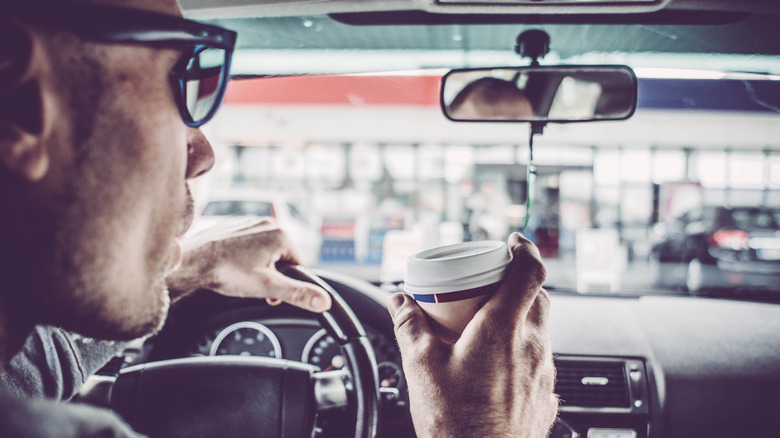
With U.S. gas prices continuing to surge, and ongoing uncertainty around when they might fall again, it helps to know where to find the cheapest refueling rates. There are a few different factors that can affect how much a station charges for gas at any given moment, and — surprisingly — this includes whether they serve fresh food.
The reasoning behind this is remarkably simple. Gasoline doesn't have a particularly high profit margin, which is partly why most gas stations double as convenience stores or offer fresh food. If chains like Buc-ee's and Sheetz can make more money by selling food, they can afford to lower their margins on gasoline, which is typically why customers stop by in the first place. The cheaper gas is just what gets people in the door. It's also why stores like Costco and Sam's Club are often able to offer gas for less than other suppliers – they can afford to take a hit on the fuel because enough shoppers decide to pick up a few items while they're at the store and end up purchasing enough high-margin products to make it a favorable deal for everyone. It's an approach that clearly works, as there's already research showing that rising gas prices affect where people buy their groceries.
And while you might be wondering whether cheaper fuel is worth the trade-off for dodgy gas station grub, some chains still surprise customers with the quality of their food offerings. Midwestern gas station chain Kwik Trip is beloved by customers for its fresh convenience snacks and meals, for example, while the East Coast's Wawa has long been acclaimed for its famous hoagies.
Why gas prices can vary between stations
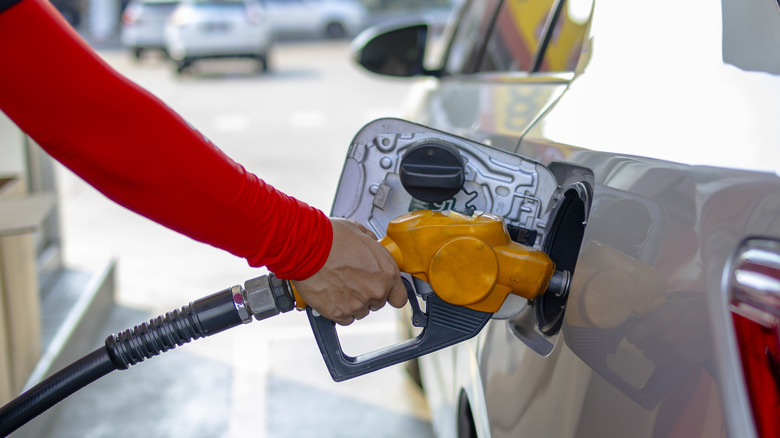
If you're on the hunt for the cheapest gas in your area, it's helpful to know why some stations are more expensive than others, and what impacts their pricing decisions. This also means understanding a little more about how gas is priced in general.
According to Pricing Evolution, roughly half of the price of retail gasoline is linked to the current cost of crude oil. While Forbes notes that the U.S. is the world's largest oil producer, suppliers will still try to get the highest price on the global market. As such, if global oil prices rise for some reason — such as a lack of supply due to military action cutting off a crucial international supply route — domestic gas prices will still rise. Around 14% of the price is linked to costs from refining crude oil into usable gasoline (per Pricing Evolution). While this figure tends to be more stable, it can still fluctuate if refinery capacity is reduced, perhaps due to a natural disaster.
Another 8% of the price can be linked to distribution, meaning the cost of transporting the gasoline to stations around the country (per Pricing Evolution). And of course, Uncle Sam needs his cut, so federal, state, and local fuel taxes are added. While the federal rate has remained the same for over 20 years, state and local taxes can vary dramatically — in high-tax states like California, this can equal almost $0.90 per gallon (per Fox 40). In some instances, it may even be cheaper to drive out of your way across city or state lines to take advantage of cheaper gasoline. Plus, stations in less convenient locations may decide to lower their prices to draw more customers, which could result in better savings.