

Next Time You Make Pulled Pork, Use The 3-2-1 Method (It's Magic)
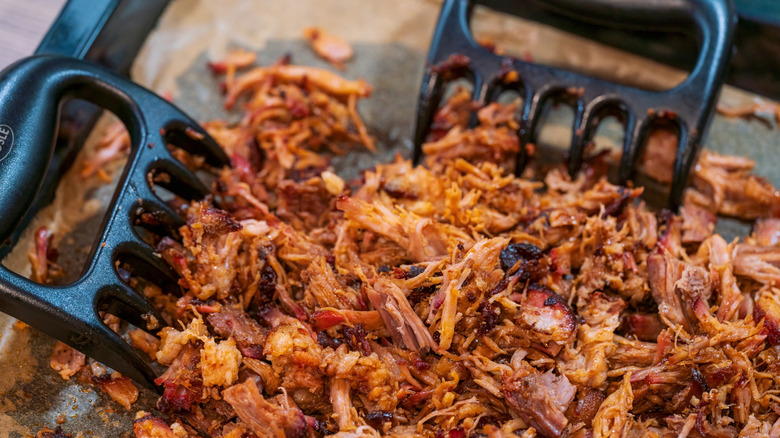
There's a lot at stake when cooking a big ol' piece of pork for many hours — it's a lot of meat on the line, and a long time to wait to find out if you nailed or ruined it. That's why we love recipes that not only cut down the timeline for preparing meats like pulled pork, but also offer cooking guardrails to limit how much you can actually screw it up. There's a popular method for making tender, fall-off-the-bone ribs, that also works like a charm for pulled pork. Just like A-B-C, it's as easy as 3-2-1, literally. The 3-2-1 method refers to a process of smoking meat in three basic stages, each lasting three, two, and one hours, respectively.
Each stage contributes a different benefit to cooking or flavoring the meat. The first stage is to smoke the pork (shoulder works great for pulled pork) uncovered for three hours. This starts the pork getting up to temperature, infuses the initial smoke flavor, and builds structure in the meat. Next, you wrap the pork in tinfoil, butcher's paper, or parchment paper and place it back into the smoker for two hours, which retains the meat's juices while allowing the fat to render into the surrounding meat. The third step is to unwrap the pork and put it back in the smoker for one more hour, to set a satisfying bark on the surface of the meat and add a final layer of smokiness.
Countdown to dinner time
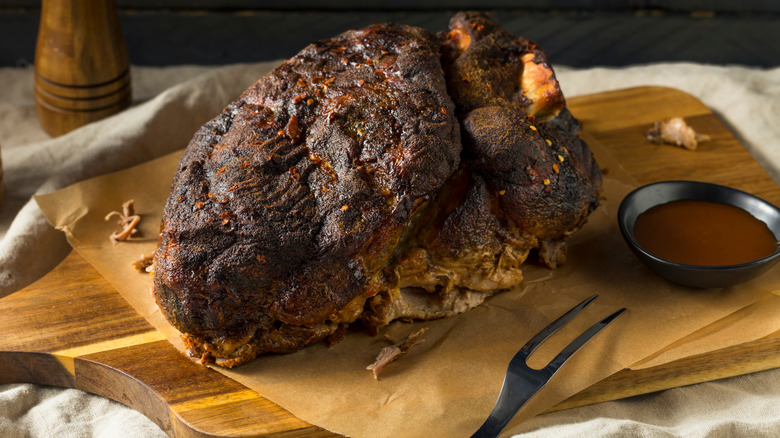
The 3-2-1 method compresses what can take up to 15 hours at a lower temperature, usually between 200 to 250 degrees Fahrenheit, and cranks up the heat to around 275 degrees. By wrapping the pork up for two thirds of the cook time, you prevent the meat from drying out while giving it extra heat to cook faster.
Try to avoid some of the typical mistakes you can make when smoking a pulled pork, such as skipping the rest stage, which might feel tempting given that the pork has already spent time being wrapped up. Before you reach for the bear claws, let it rest for another 20 to 30 minutes after you pull it out of the smoker to keep it as juicy as possible. You can also jazz up this method by adding some apple cider, juice, or another braising liquid to stage two, just make sure you don't overdo it, as this can steam out the meat too much and destroy its structure.
This method adds convenience and expedience to an otherwise lengthy cook. No matter what pulled pork recipe you're going for, whether that's sandwiches, tacos, or chili, you can customise your rub, marinade, or braising liquid. Pork shoulder is a forgiving cut, giving you flexibility in tweaking variables like time and heat. Plenty of fat runs through cuts like this and provides moisture and flavor, which when wrapped can help the meat break down, even if the process is sped up somewhat.