

Why Planting Cucumbers Next To Potatoes Will Only Disappoint You
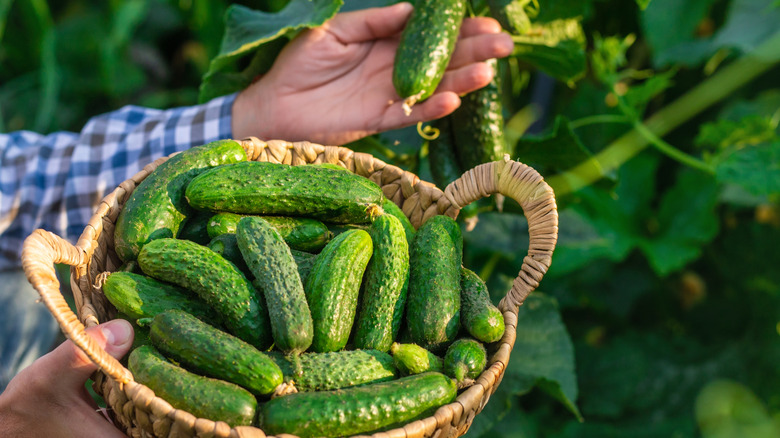
Most garden planning involves some mathematical negotiation that aims to optimize your harvest within the space you have. Planting cucumbers next to potatoes is a pairing that tends to disappoint, because eventually, the tiny seeds you plant in spring will fill up the space and compete for resources. It's tempting to try to make everything fit, especially at the beginning when you're just looking at empty patches of soil. Gardening outside can get started as early as April, but it's a slow process. If you're putting real time and effort into growing something beautiful and delicious, get the layout right from the start.
Soil may look like an infinite supply of everything plants need, just waiting to be tapped, but it's a shared system with limits. Nutrients are spread out unevenly, with some areas containing more and some less. As roots grow outward, they pull from the same surrounding zone, gradually depleting what's available. Potatoes and cucumbers draw water and nutrients from overlapping root zone territory. When they're too close to each other, they're actively competing in the same underground space, reaching into the same reserves, which creates pressure before either plant has a chance to establish itself.
Potatoes pull heavily from the potassium and phosphorus in the soil to form their tubers, along with a range of micronutrients that support development below the surface. Cucumbers, which grow quickly and can produce a lot of fruit in a short window, are also heavy feeders that demand consistent access to the same nutrients. Cucumber roots spread close to the surface, comparatively, while potatoes build their entire yield underground. When those needs face off, cucumbers often show the first signs of strain, with slower growth and a smaller harvest. The plant never quite catches up to its potential.
Unfriendly neighbors
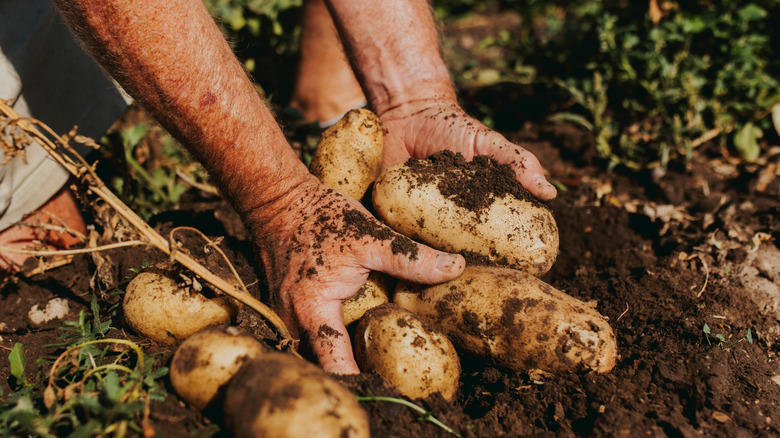
Even if both plants manage to establish themselves, there may be other problems later in the season. Potatoes go into the ground early and develop slowly, while cucumbers are planted after soil warms and continue producing through the peak of summer. When potatoes are ready to harvest, cucumber vines are still actively growing and need their root systems to support fruit production, which puts the two crops at odds again in a very physical way.
Both plants are susceptible to blight, a fungal disease that spreads quickly under the warm, humid conditions that many healthy gardens create during the growing season. When plants that share vulnerabilities are grown close together, it's easy for opportunistic diseases to move from one to the other, especially if the leaves overlap and airflow is limited.
The easiest way to avoid all these issues is to not plant potatoes and cucumbers together. Give each crop its own space so it can access water and nutrients without competition, and grow without interference. Potatoes do very well in a container, like in a laundry basket, or alongside shallow-rooted, fast-growing crops like lettuce, spinach, and other greens, which won't compete for nutrients or disrupt the deeper soil when harvested for their leaves. Cucumbers like companions that either support their vertical growth, like corn, or improve soil nitrogen, like beans and peas. Radishes can help deter cucumber beetles, and dill and marigolds can repel pests and improve biodiversity. Considering how plants share space above and below ground will lead to better outcomes than trying to maximize every square foot from the top down. Every plant deserves a fair shot from the beginning, with proper planning and placement.