

Poached Eggs Turn Problematic When You Follow This Seasoning Myth
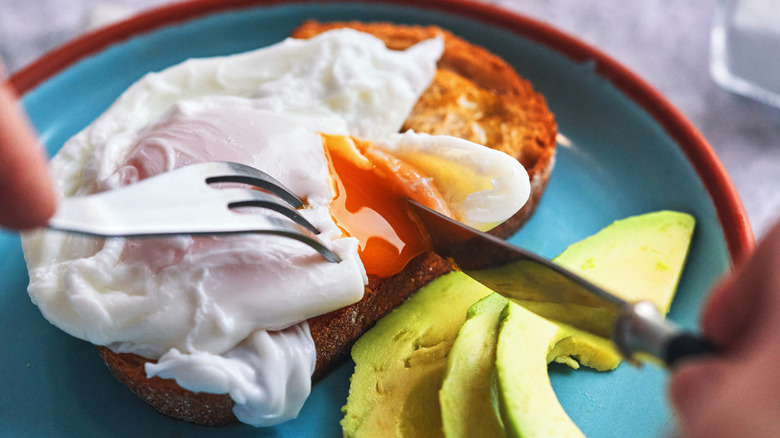
Cutting into a perfectly poached egg can be one of the most satisfying breakfast moments. However, getting the egg poached perfectly in the first place can be a little tricky, especially when you're trying to parse and combine a mythology of erroneous techniques. There are a lot of different methods for poaching eggs — slotted spoons, swirling the water, even soaking them in vinegar as Adrienne Cheatham recommends, and so on. One of the most common pieces of advice is to salt the water, but that's actually a myth that makes eggs harder to poach. A lot of people won't even attempt the technique, assuming it requires an unattainable confluence of precision, luck, and a calm morning. But if you observe the egg's behavior and understand the underlying science, you can easily separate the good egg-vice from the bad.
When you crack an egg into a pot, the outer white starts to set immediately upon exposure to the heat, tightening around the yolk and forming that softly rounded pouch. Salt disrupts that formation process by pulling water out of the egg white proteins and increasing their solubility. Instead of helping hold the egg together, it weakens the structure, causing the whites to loosen and drift apart into the simmering water, like so many kite ribbons floating in the breeze, instead of the coherent globule you're going for. The egg will cook, and you can eat it, but it will be more like stringy, messy egg drop soup than a taut and self-contained parcel you can place, picturesquely, on avocado toast.
In unsalted water, the whites coagulate decisively, sealing tidily and staying close to the yolk, gently forming a compact shape. There might be a few stray stringy bits to skim or trim, but most of it will be held within the plump package.
Salting science
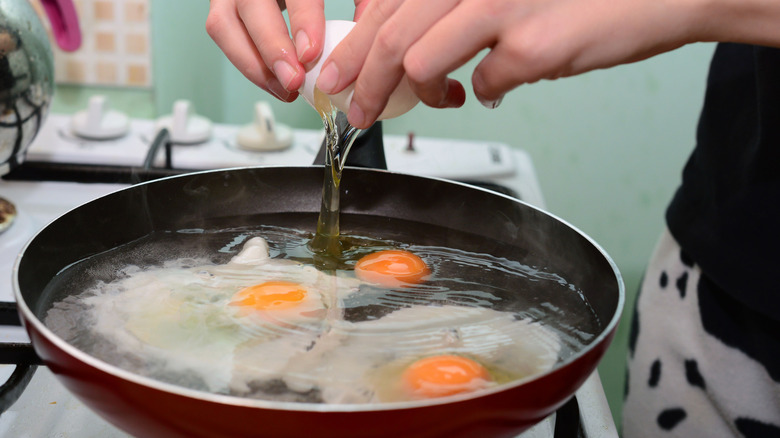
Egg whites are mostly water, held together by proteins. When those proteins meet heat, they begin to unfold and denature, then re-link together, or coagulate, into a delicate network. That's what's happening in the poaching process, ideally giving the poached egg its shape. The key is letting the network form without interference.
Once cooked, adding salt directly to the finished poached egg is a fine way to season it. This also gives you more control over the final flavor, especially if the egg is going onto something already seasoned, like buttered toast or sautéed greens. If you want to further improve your poaching results, there are a few other adjustments and tricks you might not know, that are easy to build into your routine. Always use fresh eggs for poaching, since the whites are tighter and less likely to spread. Keep the water at a very gentle simmer, not a vigorous boil, so the egg sets without being torn apart by movement. A splash of vinegar can actually help the whites firm up more quickly, which encourages them to cling to themselves instead of drifting apart. Cracking the egg into a sieve or a small bowl first can also create more controlled physics then with a one-handed, Kamala Harris-style egg crack.
In general, poaching eggs without mistakes requires more restraint than intervention; it's creating the right conditions and then getting out of the way and letting the egg do what it will naturally do in a simmering bath of hot water. The final step is masterfully moving the perfectly cooked egg from the water to the plate, but that just takes practice and confidence.