

Grilling Steak? You Might Be Flipping It All Wrong
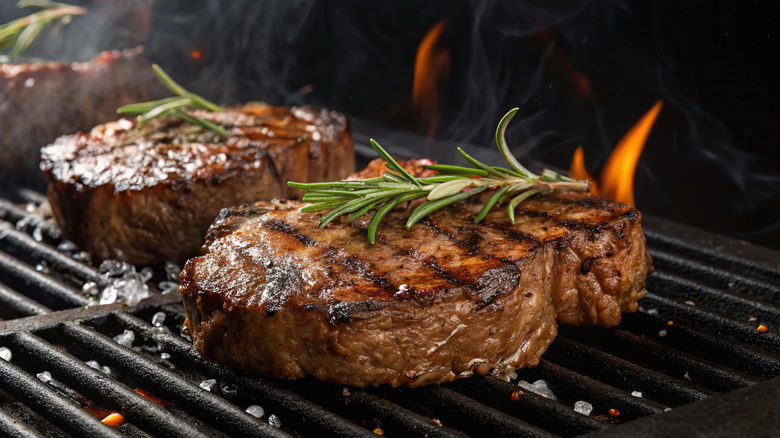
There's nothing like getting an even, browned crust on food. There is a lot of advice out there regarding how to do it when you're cooking steak, and world renowned chef Josè Andrès has some more, which may be different to how you usually grill steak.
We caught up with Andrès (who has written a new cookbook, "Spain My Way) to get tips on how to achieve the best crust on steak. His suggestion implies that leaving your steak to brown on the grill might be a mistake. Instead, Andrès says you should be flipping your steak "very often" when cooking it on the grill. "Since you've already tempered your steak (right?), and your embers are very hot (right??), the final cook will be way faster, so you want to flip it regularly to make sure you get consistent heat transfer on both sides of the steak," he explains.
By barely giving the meat a chance to rest on the grill, every centimeter of its surface stays hot, ensuring that the crust forms evenly. With your grill set to at least 450 degrees Fahrenheit, flip your steak every 30 to 60 seconds, making sure to hit all the corners. Andrès notes that the method won't give you those gorgeous grill marks, but the texture that comes from frequent flipping is the most important part.
The perfect finish on your steak starts before it hits the grill
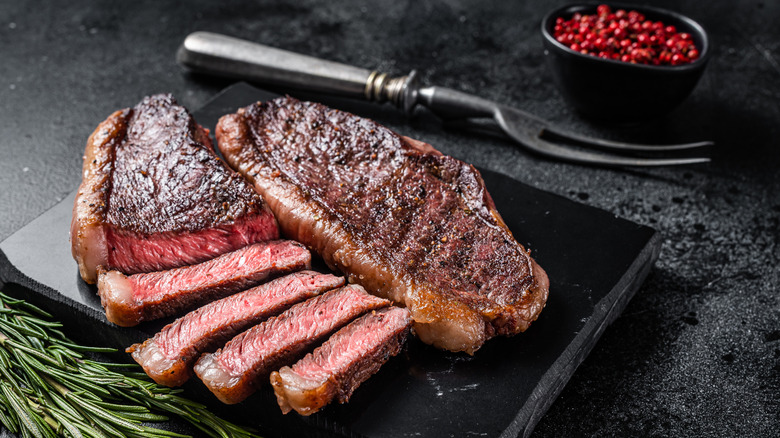
A uniform crust makes flipping your steak often on the grill worth it, but it's vital not to leave out the first part of what the Spanish chef said. Similarly to the Andrès method for searing steak, the chef tempers the meat before grilling. This simply means bringing the meat to a uniform temperature by warming it indirectly above a grill before you start grilling. Moving the steak constantly helps with even heating on the outside, but tempering it beforehand ensures the center is evenly heated, as well.
You can mimic this method using a raised rack on your grill or by placing it in the oven at 150 degrees. When the steak has an internal temperature of 105, it's ready to be grilled. In between flips, Andrès recommends getting in there with some salt. "Season it regularly with coarse sea salt — the meat will absorb what it can take, and the rest will fall off into the grill so the meat won't be over-seasoned."
Flavoring steaks beforehand gives the meat a powerful punch, but doing it as it cooks produces a scaled-back effect that lets you taste the beef properly. The method, which is also how Ruth's Chris Steakhouse seasons steak, also helps to develop a nice crust thanks to the thickness of the salt.