

Why Your Tea Bags May Contain Microplastics (And What To Use Instead)
We may receive a commission on purchases made from links.
Most of us are aware of microplastics and their unfortunate ubiquity in our environment, including our air, water, and food. These nearly invisible plastic particles are so common in our everyday lives that we're all likely eating a credit card's worth of plastic every week. Microplastics have been found in almost all parts of the human body, including blood, organs, tissues, and saliva, but what's even more horrifying is that the smallest microplastics, called nanoplastics, have even been found inside human cells. Microplastics have been linked to increased cancer risk, heart attacks, infertility, and more. While this may feel overwhelming as avoiding all microplastics in the environment is nearly impossible, there are steps you can take to reduce exposure to them. If you're a tea drinker, one of the simplest changes you can make is to ditch tea bags that are made with plastic.
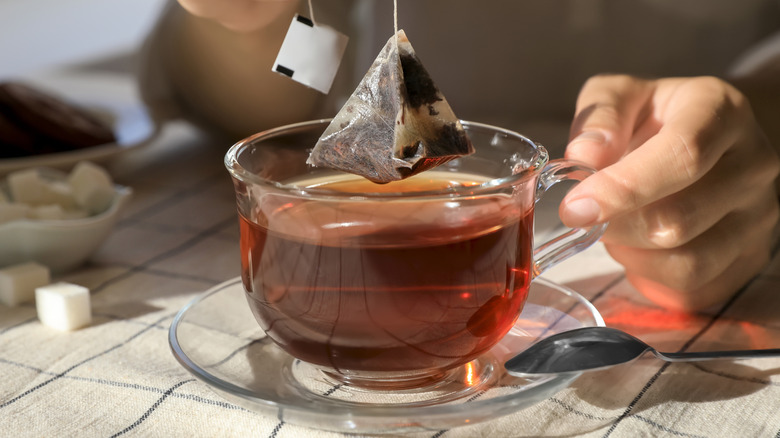
Some teabag makers use microplastics to keep the structure of the bag whole in hot water and to seal the edges. In a 2024 study, the Universitat Autònoma de Barcelona showed that when introduced to hot water for brewing, commercial tea bags made with polymers including nylon-6, polypropylene and cellulose "release millions of microplastics." As the consumer drinks the tea, they're also drinking those microplastics and nanoplastics, which work their way into the body. Other studies have shown that brewing one single serving of tea in a bag made from plastics can release over 11 billion microplastics and 3 billion nanoplastics. If you're a habitual tea drinker, it's hard to fathom how many microplastics have entered your body over many years.
Plastic-free tea is easy
Not only are they filled with microplastics and other dangerous substances, but those substances in commercial tea bags also take up to a century to decompose. Other than nylon, commercial tea bags often contain polypropylene, which is usually used to seal the tea bags or to give the bags more structure and durability. While companies are trying to reduce their use of plastics — 90% of Twinings bags are plastic free — many popular tea bag brands do still contain plastics, including Mighty Leaf Tea, Tazo, Lipton, Teavanna, and Celestial Seasonings. If you're dedicated to the bagged tea lifestyle, fear not, as some popular tea brands do use compostable bags, some of which claim to contain zero microplastics, including Art of Tea and Stash.
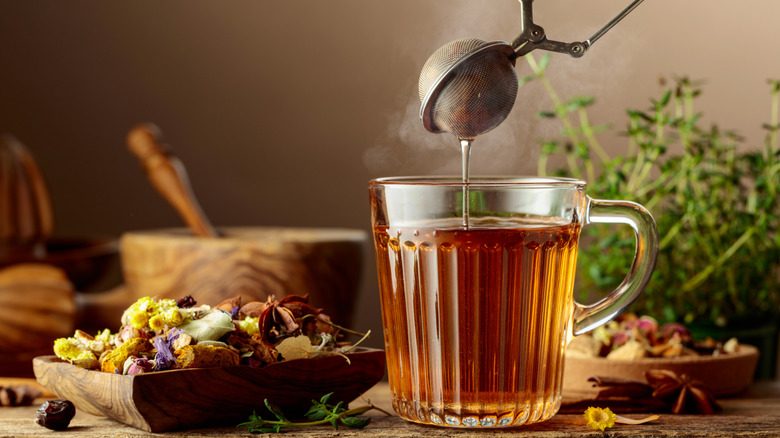
The safest way to avoid releasing microplastics and nanoplastics into your tea when they meet boiling water is to eliminate the tea bags entirely. Instead, buy loose leaf tea and use a metal tea strainer, like this Snap Ball Tea Strainer or an OXO Bret Tea Infuser Basket, or make the tea in a pot and use an old-school sieve like this Kafoor strainer for tea. If you still have boxes of bagged tea in your pantry and don't want to let them go to waste, simply cut the top of the tea bag off and pour the contents of the tea bag into a stainless steel brewing basket, then enjoy your tea as you normally would. Most tea leaves or infusions should steep for about three to five minutes, after which, simply lift out your stainless steel basket and set it aside. If you're concerned about microplastics, check out our every day tips to reduce the consumption of microplastics.