

Avoid Bland Shrimp Forever When You Season It Like This
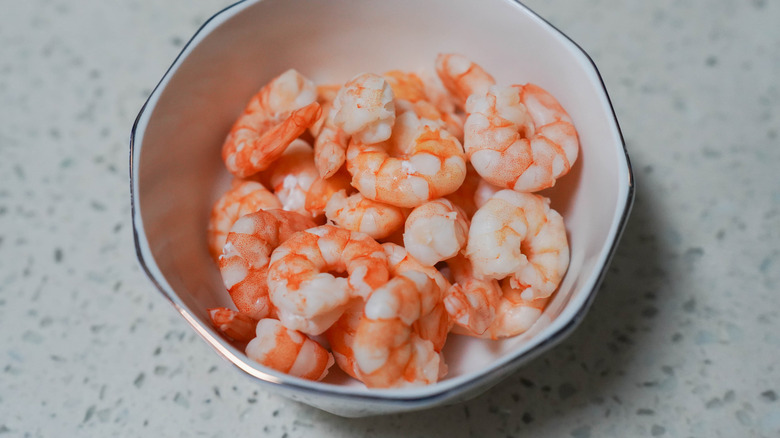
Shrimp might be one of the easiest things to cook. It's relatively cheap, can be ready in no time, and has a mild, slightly sweet flavor that pairs well with an endless array of ingredients. But if you're not careful, shrimp can also turn out extremely bland. You can avoid this awful fate with just one simple extra step: season both sides of the shrimp.
It can be tempting to throw any protein on a pan and add the seasonings to only the top layer, but that doesn't always work out, especially with shrimp. If you don't take the time to season each piece thoroughly, the flavors can get completely lost, even in a robust sauce. Celebrity chef Alex Guarnaschelli emphasizes this crucial tip in her recipe for shrimp scampi, which she shared on The Food Network.
Guarnaschelli seasons her shrimp by laying them out and sprinkling them with kosher salt from a height. Then she flips each one over and repeats the process. In a clip shared on Youtube she says, "Make sure you get it on all sides. I will take the time to turn these over and season them on both sides." This is because unlike other types of fish, shrimp doesn't contain anything that will add more flavor, like a layer of fat. There's nowhere to hide, so to speak. This is true both for seasoning and cooking. As Guarnaschelli puts it: "Shrimp has nothing to protect it ... no fat, no skin, no nothing."
How to season and cook shrimp

When it comes to seasoning shrimp, salt is the most important element. It helps them stay firm and juicy during cooking, and it enhances the natural flavors. Pepper, garlic, and the usuals can also be added to the shrimp on both sides before they hit the pan, but more delicate seasonings, like dried herbs, should be tossed in later, right before the end of cooking so they don't turn bitter.
And while seasoning is important, you don't want to overdo it. As Guarnaschelli says in the Food Network video, "The thing about shrimp is, you just got to get shrimp from raw to cooked to on the plate tasting like itself." As for the cooking process, we actually previously spoke to Guarnaschelli about some of the signs for perfectly cooked shrimp, and she said the key is keeping an eye on the color. "They start out mostly blue and white, and when they're cooked, they're no longer opaque and they turn pinkish reddish-white, so you've got a color indicator".
She recommends taking them off the heat when they're slightly pink but still slightly translucent, as they'll continue to cook off the pan. And don't cook the shrimp in a sauce. Instead just season on both sides, sear, and then add the coating. Whether you're making a copycat Olive Garden shrimp scampi or garlic butter shrimp, you'll notice the difference.