

Unsalted Vs Salted Butter: What's The Difference, And Which Is Better For Baking?
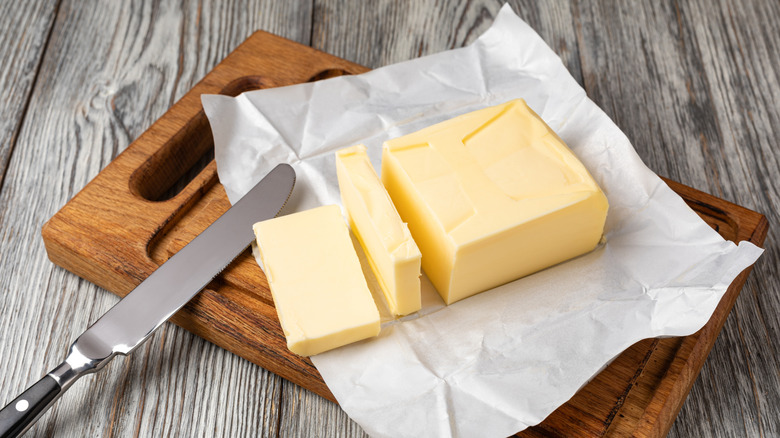
Butter is an essential ingredient for most baked recipes. Indeed, it's the primary component of puff pastry and flaky pie crust. When it melts, it releases steam, leaving behind the pockets that make up its signature layers. It also plays an important structural role in batters and doughs, like when it's creamed with sugar and traps air bubbles. As such, butter is an ingredient that any prepared home baker likely keeps stocked in their fridge. But how do you decide whether to use salted butter or unsalted butter in your recipe? What impact does the type of butter used have on the taste and texture of your bake?
To get an idea of the differences between these two butters, we spoke to Megan Garrelts, proprietor and executive pastry chef of Rye Restaurants and Cornflower Baked Goods. Although the differences between the aptly named salted butter and unsalted butter (which still contains trivial amounts of sodium) may seem minimal, they can have a big impact on your bake. With Garrelts' advice and a better understanding of the science behind butter, you can select the right type for your recipe.
Unsalted butter allows control over salt levels in baked goods
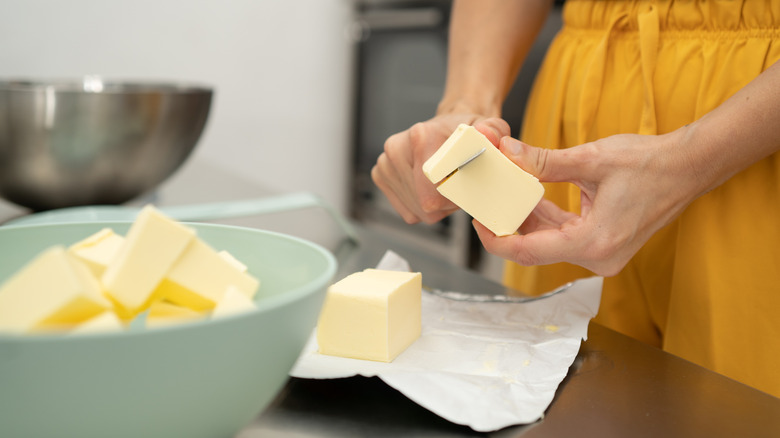
The primary reason why you'll want to bake most recipes with unsalted butter is to control its flavor. "Because baking requires precision, many pastry chefs prefer unsalted butter so they can control the exact amount of salt in a recipe," says Garrelts. When you use unsalted butter, you can always add however much salt you need yourself.
On the other hand, when using salted butter, you are at the mercy of however much salt the chosen brand has decided to add to its product. While you may assume that this quantity is standardized (when has a recipe ever listed the brand of butter it should be made with?), the reality is that salt content can vary significantly across butters. Typically, salted butter contains between 600 milligrams (¼ teaspoon) and 900 milligrams (½ teaspoon) of salt per stick — that's a pretty wide margin.
If you come across a recipe that calls for salted butter but only have unsalted, you can safely add ¼ teaspoon of salt per stick. Alternatively, if your recipe calls for unsalted butter and you bought the salted kind, well, you may have to do some minute tinkering with other salty ingredients to get its flavor just right. It's easier to just buy unsalted butter in the first place.
Salted butter can benefit savory bakes
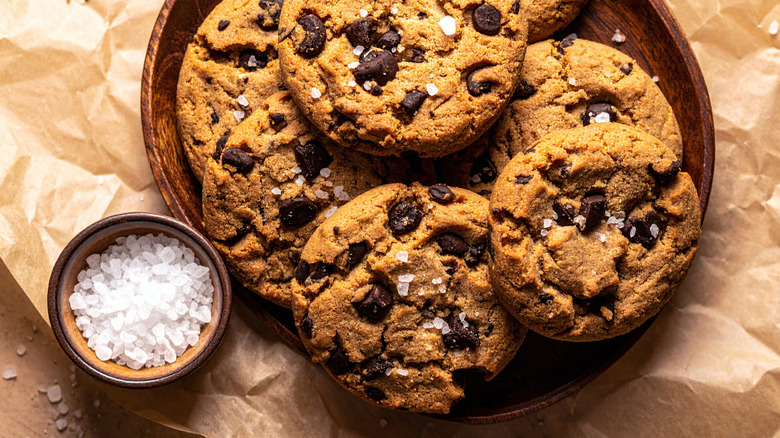
Although it might seem like salted butter is useless in the kitchen because the sodium content is so variable, the truth is that it does have some utility. This mostly comes down to its flavor profile. "Salted butter contains added salt, which typically extends its shelf life and makes it well-suited for savory dishes or baked goods that benefit from a touch of salt, such as chocolate chip cookies," Garrelts explains. In essence, if you're going to add salt to your recipe anyway, you can just use salted butter and feed two birds with one scone.
As such, the decision on whether you can use salted butter is dependent on the flavors you're working with. If you're planning to add a little bit of salt in (or on top of) your cookies anyway, you're okay to use salted butter, but if you're baking a recipe with a very pure (and very vanilla) flavor and not adding salt yourself — think pound cake or a delicate vanilla sponge — you'll want to use unsalted butter to avoid distraction.
That said, you can also use salted butter for general cooking, like adding to a pan to sauté, topping your steak, or spreading on toast. "Salted butter can enhance flavor without significantly affecting structure," Garrelts adds. As an example, the professional chef notes that "recipes like quick breads, muffins, brownies, and more straightforward cookies such as chocolate chip or oatmeal" may benefit from salted butter specifically.
Unsalted butter improves control over the bake's structure
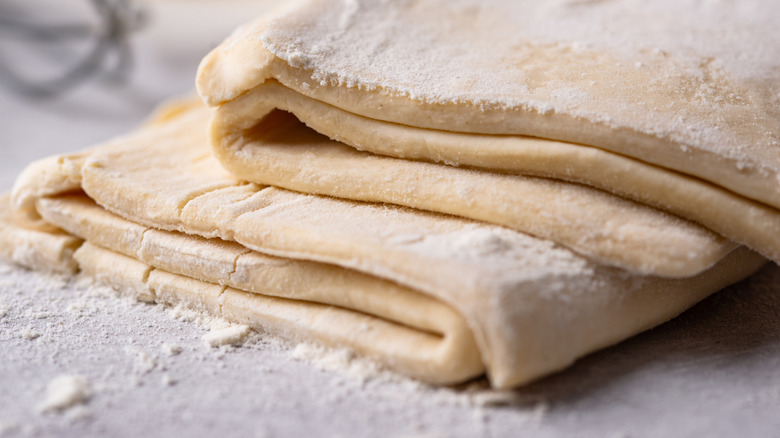
Baking is always a house-of-cards situation. If you remove or change one aspect, you risk every element that it touches falling down. For example, salt doesn't just impact flavor and freshness, as Garrelts notes that it also plays a critical role in gluten formation and development. Gluten is the class of protein that we can thank for giving most baked goods their structure. Without gluten, many baked goods wouldn't hold their shape, trap air, or give us the satisfying texture we crave. So, it's kind of important.
Salt makes gluten stronger, which can come in handy for bread doughs where you want that elasticity and want it to maintain as much carbon dioxide as possible. You're probably going to have to add additional salt anyway if you're making an enriched bread (with salted butter), but it's worth noting that high-gluten foods are a little more forgiving when it comes to using salted butter.
However, if you're making a delicately textured recipe or want to limit your gluten intake as much as possible, grab some unsalted butter instead. "Unsalted butter is ideal for cakes, delicate cookies (such as sugar cookies or macarons), and pastry doughs," Garrelts concludes. "[It] contains no added salt, resulting in a fresher, more pure butter flavor."