

10 Best Chinese Food Cookbooks For Beginners
We may receive a commission on purchases made from links.
Most Americans love Chinese food. That's not an exaggeration, but a fact. If you need more proof, here's a statistic for you: There are more Chinese restaurants in the U.S. than there are McDonald's locations. Seriously, it's true. Most of these establishments offer American-Chinese food, which, while beloved, is not quite the same as the Chinese food you'd enjoy in, well, China.
If you want to eat authentic Chinese recipes, accurate to the different cultures and regions in the Asian country, a good place to start is with a decent cookbook. Sure, it does involve you putting the takeout menu down and picking up a cleaver, but the result will be well worth the time investment. Trust us.
Below, we've gathered up some of the best Chinese food cookbooks to get you started. And don't worry if you're not a whizz in the kitchen, because all of them are suited to beginners.
Every Grain of Rice
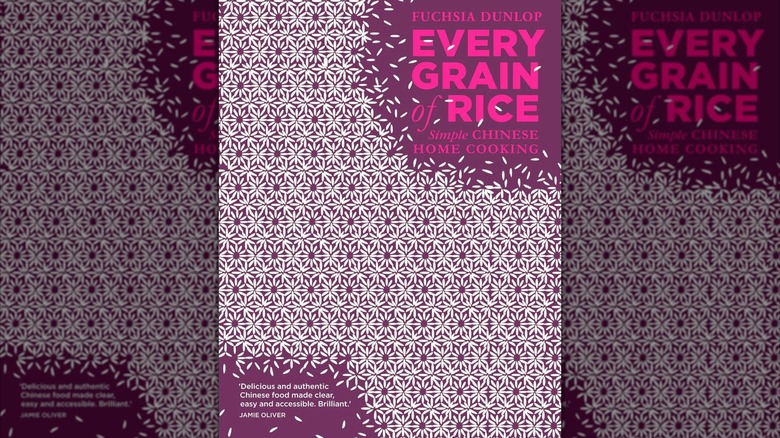
Scan any social media thread focused on Chinese cooking in the West and you'll come across one name time and time again: Fuchsia Dunlop. If you're thinking, "But that doesn't sound like a Chinese name?" you'd be correct. Dunlop is British, but she is renowned as one of the best Western chefs when it comes to authentic, traditional Chinese cooking. She was among the first foreign students to train at the Sichuan Higher Institute of Cuisine, and has spent decades studying the art of Chinese cooking. She's well respected in China, too, where she's known as Fu Xia.
Dunlop has written multiple cookbooks, but if you're not sure where to start, many recommend "Every Grain of Rice" as a good jumping-off point. It includes recipes inspired by various regions in China, all of which are highly accessible for beginners, thanks to the uncomplicated instructions and aspirational imagery. It also helps that in this cookbook, Dunlop's emphasis is on humble home-cooked dishes — most of which rely on simple vegetables rather than meat and fish.
Wherever you are in your cooking journey, "Every Grain of Rice" will hold your hand until you're whipping up recipes that impress even the most critical of family members. "I am a British-Born Chinese guy who didn't learn to cook from his parents," reads one Amazon review. "I could never have known that cooking the dishes from this book would be the most impressive thing I do for my Taiwanese girlfriend."
The Food of Sichuan
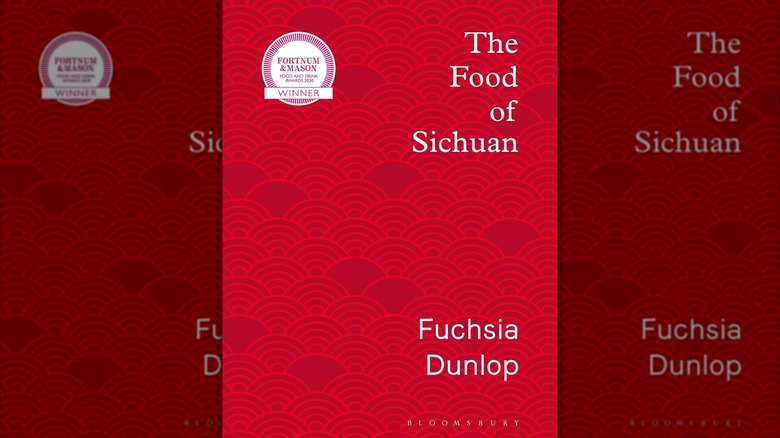
Fuchsia Dunlop is an expert in general Chinese cuisine, but Sichuan food is her specialty. It makes sense, considering she once lived in the Sichuanese city of Chengdu and trained at the Sichuan Higher Institute of Cuisine, where all of her classes were taught in Sichuan dialect. This is probably why her cookbook "The Food of Sichuan" is often held up as one of her best. In fact, on Reddit, it's even been called her magnum opus.
Similar to "Every Grain of Rice," this cookbook is often praised for its easy readability, its genuinely authentic Sichuan recipes, and its good-looking aesthetics. It also offers an education on Sichuan ingredients and cooking techniques to help you really nail every recipe.
Reviewers say "The Food of Sichuan" is slightly more complicated than "Every Grain of Rice," but it's still a great introduction to Sichuan cuisine for beginners. The recipes are oozing with traditional flavor, and many people say it helped them take their already beloved Chinese dishes to the next level. "Don't expect American-style Chinese food," writes one Amazon reviewer. "This is the kind of book where reading the pantry section will open you up to a whole new world of cooking."
The Woks of Life
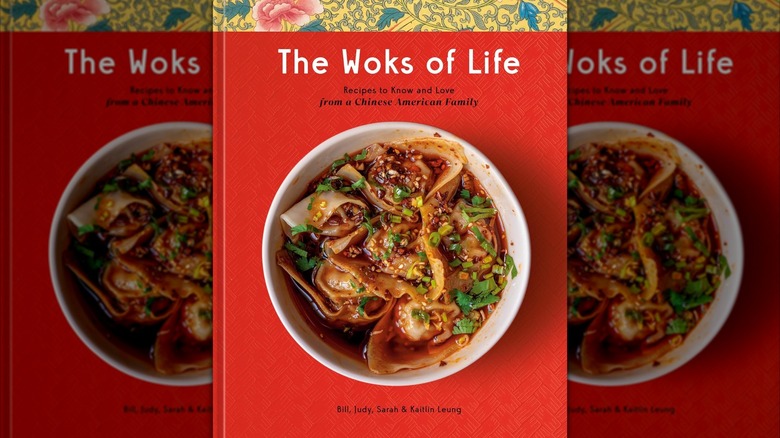
Another name that often comes up when discussing easy, accessible Chinese recipes? Leung. Bill, Judy, Sarah, and Kaitlin Leung, to be more specific. But if those names aren't ringing a bell, we'll bet that the name of their blog, The Woks of Life, will. Yep, the entire Leung family (Bill and Judy are the parents, and Sarah and Kaitlin are the daughters) is the brains behind this popular Chinese-American cooking blog, which is renowned for its accessible, flavor-packed recipes. Based in New Jersey, the family also runs a successful YouTube channel, which at the time of writing boasts more than 260,000 subscribers.
But sometimes, it's good to learn from an actual cookbook that you can hold in your hands, fold over the pages, and cover in soy sauce. As of 2022, the Leungs have that, too. Just like the successful blog, "The Woks of Life" cookbook is praised for its easy-to-follow recipes, but also its attention to detail. You'll learn how to master basic Chinese cooking techniques, and also gain an understanding of the role and function of each ingredient in the dish.
Ultimately, this is a cookbook filled with flavorful, uncomplicated recipes, but it's also a place to learn transferable skills that you can apply to any other Chinese dish you turn your hand to. With that in mind, it's no surprise it was James Beard-nominated.
Easy Chinese Cookbook
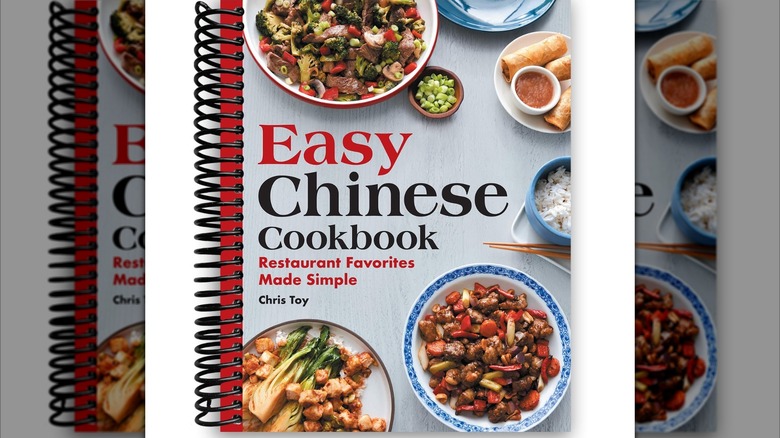
Chris Toy has been teaching people how to cook for more than three decades, so it's unsurprising that "Easy Chinese Cookbook" is often praised for its easy-to-follow, accessible recipes. On every page, the culinary instructor, author, and private chef skillfully breaks down complex-looking dishes with simple instructions, affordable ingredients, and easy-to-master techniques.
Adopted from Hong Kong in the 1950s, Toy grew up learning to cook from his Chinese-American mother and honed his skills in their family restaurant. His upbringing is particularly evident in the home takeout section of "Easy Chinese Cookbook," which provides pre-planned recipes for everything from Cantonese dishes to dim sum. With "Easy Chinese Cookbook" on the shelf, there's no need to order takeout (which, let's be honest, in this economy, is getting harder to justify anyway).
The Vegan Chinese Kitchen
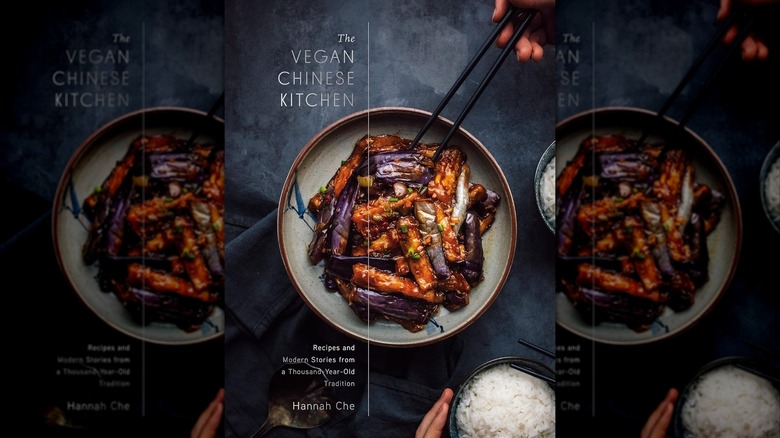
Firstly, let's address the elephant in the room: You don't have to be vegan to love Hannah Che's "The Vegan Chinese Kitchen." Sure, this cookbook is a celebration of plant-based Chinese cuisine, but it's designed to appeal to all palates and dietary preferences with its flavor-packed, umami-rich, well-written, and easy-to-follow recipes.
Che, who is also the force behind the popular blog The Plant-Based Wok, is a master of Chinese vegetarian cuisine. She trained at the Guangzhou Vegetarian Culinary School, once ran her own vegan pop-up in Portland, and is passionate about zhai cai, a type of Buddhist temple cuisine that specializes in simple, balanced dishes made with humble vegetables, and prepared using straightforward cooking methods. For that reason, you won't find any over-the-top, complex recipes in "The Vegan Chinese Kitchen," making it somewhat of a bible for Chinese food beginners.
When we say "bible," we're not being overly complimentary. This cookbook is a James Beard Award winner and is loved by hundreds of home cooks for its accessible language, striking imagery, and educational focus. "You can put something together in a matter of 25 minutes that has the same flavor and better than any restaurant," reads one Amazon review.
Pei Mei's Chinese Cookbook
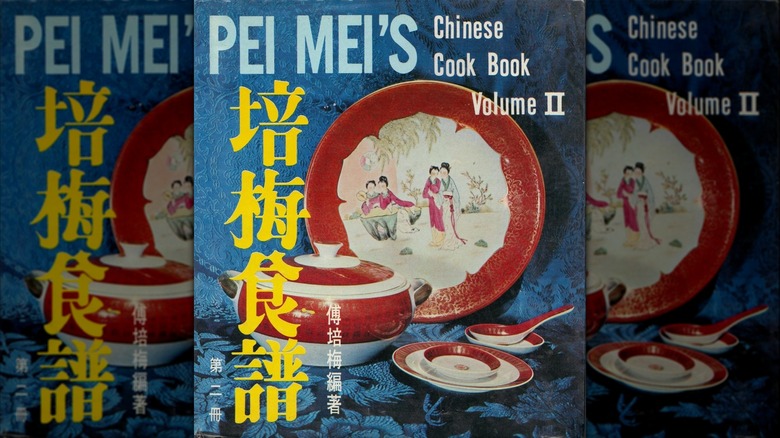
In the 1960s, while the housewives of the U.S. were learning French cooking tips from Julia Child, over in Taiwan, housewives were getting a similar education. Only, instead of coq au vin or salad niçoise, Taiwanese homecooks were mastering the basics of Chinese cooking with Fu Pei-Mei.
The comparison to Julia Child isn't unique. For decades, the media has compared Pei-Mei, who first appeared on Taiwanese television in "The Chinese Cooking Program" in the early 1960s, to Child. This is largely because both became household names due to their approachable personalities and accessible cooking techniques. Both women could masterfully translate complicated culinary techniques to an audience of housewives who just wanted to learn a few new recipes to impress their families. And both also have a timeless appeal; just like with Child, Pei-Mei's cookbooks are still recommended to budding home cooks today.
Some say that "Pei Mei's Chinese Cookbook" is a little dated now. It doesn't have the sophisticated imagery of many modern cookbooks, that's for sure, but the recipes have stood the test of time. The book is also an essential education on the nuances of Chinese cuisine, as it's broken up into regions, rather than courses or ingredients. If you're a beginner, "Pei Mei's Chinese Cookbook" is an essential resource, but, due to the slightly dated typewritten recipes, it's probably best to use it in conjunction with more modern cookbooks if you're still trying to get to grips with the basics.
The Wisdom of the Chinese Kitchen
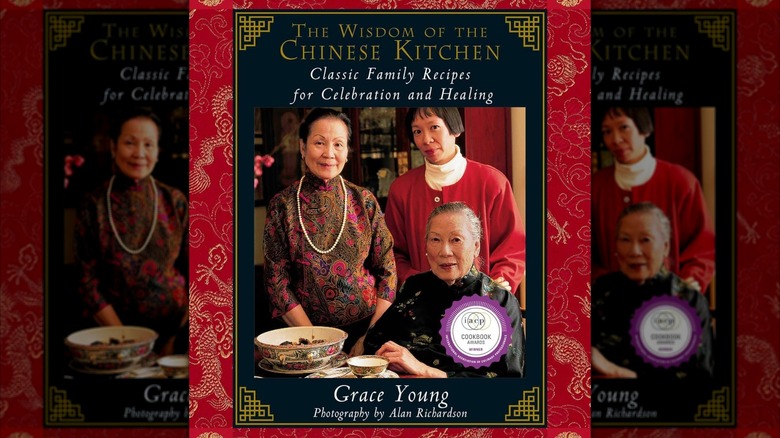
You might think of Grace Young primarily as an activist. In recent years, the esteemed Chinese-American chef has turned her attention to advocating for and protecting Chinatowns across the U.S., especially after the grueling impact of the pandemic. But Young is also a trusted and highly respected cookbook author, and her 1999 cookbook "The Wisdom of the Chinese Kitchen" is still held up as one of the best introductions to Cantonese cooking for beginners.
In this cookbook, Young translates her own family recipes with stunning imagery, easy instructions, and sections of moving memoir. But you're not going in cold: The cookbook begins with a section dedicated to mastering the basics, which will walk you through everything from steaming to braising to stir-frying. Young is particularly masterful at the latter. Her Instagram handle is @stirfryguru, after all.
Young has published cookbooks since "The Wisdom of the Chinese Kitchen," including "The Breath of a Wok" and "Stir-Frying to the Sky's Edge," and these are also highly rated choices, but it's her 1999 work that pulls many people back time and time again. It's accessible, full of flavorful recipes, and above all, it's authentic and heartfelt.
The Hakka Cookbook
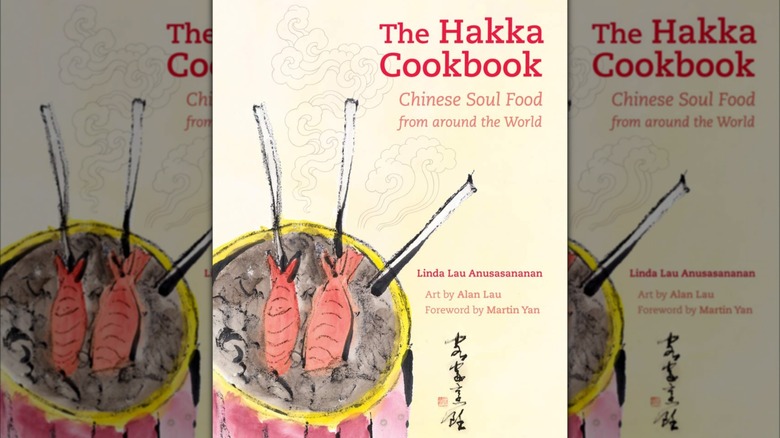
Many Chinese food cookbooks focus on Cantonese or Sichuan cooking, but this cookbook by Linda Lau Anusasananan pays homage to Hakka culture. Anusasananan skillfully translates the food of her heritage for a Western audience, and many reviewers say the food writer's recipes are well-written and easy to follow. But for most, it's the education on Hakka culture and the experiences of the diaspora that really strikes a chord. In Anusasananan's view, the cuisine of this nomadic ethnic Chinese group, who have suffered persecution, discrimination, and hardship over the centuries, is comparable to the soul food of the U.S.
The key criticism from many reviewers is the lack of photos in "The Hakka Cookbook," but the general consensus is that it makes up for this through its clear instructions and the interesting history lessons that are littered throughout the pages. For some, it's a great way to learn new recipes and find out more about the culture, but others have credited the cookbook with helping them learn more about their own heritage. "I bought this because my father's heritage is Hakka," reads one Amazon review. "He only ever made a few dishes," it continues. "I know he recounted other dishes his mother made and this will help me preserve my heritage when I too shall cook for my friends, family, and future kids."
Myers + Chang At Home
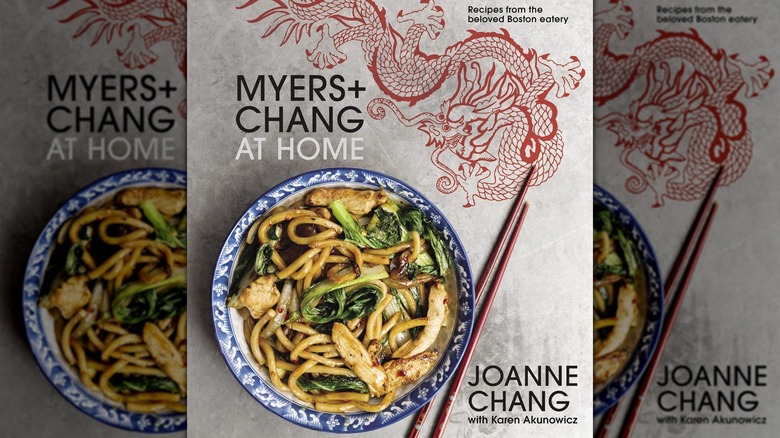
If you've never been to Myers + Chang in Boston, we'll give you a quick summary of what people tend to say after they've been: The food is outstanding, the menu is incredibly varied, and the atmosphere is warm and friendly. Now, if you want to make a reservation but you don't live anywhere near Boston, there's another option — order a copy of "Myers + Chang at Home."
This cookbook, written by restaurateurs Joanne Chang and Christopher Myers, is full of recipes inspired by Myers + Chang's most popular menu items. And don't worry, you don't have to have been to culinary school to master them, because reviewers say this cookbook is easy to follow and highly accessible.
It'll help you put restaurant-quality food on the table, while keeping your stress levels low, and inspire you to put away the takeout menu once again. Many people also praise its warm, friendly, conversational tone, which mimics the overall vibe of the Boston hotspot. As a plus, reviewers mention they've been able to recreate several of their favorite dishes from the restaurant, and they were relatively good recreations.
The Key to Chinese Cooking
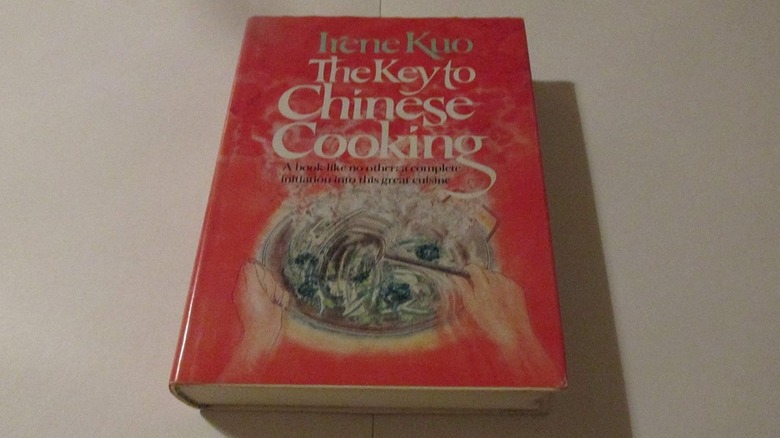
While Pei-Mei was enjoying her breakout years teaching Chinese cooking techniques to Taiwanese housewives, in the U.S., Irene Kuo was feeding Manhattan from her two popular restaurants: the Gingko Tree and the Lichee Tree. But Kuo wasn't just a restaurateur; she was also a talented cook and teacher. She poured all of her knowledge and experience into "The Key to Chinese Cooking" in the 1970s, and the cookbook became a groundbreaking introduction to Chinese cuisine for people all over the U.S. It still is: Kuo is still hearing from home cooks who have just discovered the book on Amazon.
If you want to really study and understand Chinese cooking, "The Key to Chinese Cooking" is the cookbook for you. Kuo herself acknowledges that the book is quite a marathon to get through, but most who commit will be rewarded. Reviewers who have worked their way through it say it is one of the best books for learning proper technique and understanding ingredients. What's more, the recipes are authentic, thorough, and enjoyable to read. "What makes this cookbook so revered? It's because Irene Kuo conveys the essence of Chinese cookery by describing the actual techniques," says an Amazon review. "Irene tells why you're doing something and what this will achieve."
Methodology
To recommend the best Chinese food cookbooks for beginners, we started by searching on social media. After all, isn't that where everyone looks for everything these days? We scanned cooking-focused Reddit threads, primarily, to get an idea of the Chinese cookbooks that were consistently recommended, and focused on the names and books that came up time and time again. During this search, we also made an effort to include voices from different eras and cultures, too.
We then took our search to Amazon. Where else? While on the e-commerce platform, we scanned reviews, looking for the cookbooks that came with an overwhelming amount of praise for their easy-to-follow instructions and beginner-friendly tone. The result of our investigation is this list, but we understand that ultimately, the best cookbook for anything is subjective. There's only one way to find out if you agree with our list, and it probably starts with grabbing a cutting board and a wok.