

Make Pewter Shiny Again With Ketchup, Vinegar, And Other Kitchen Staples
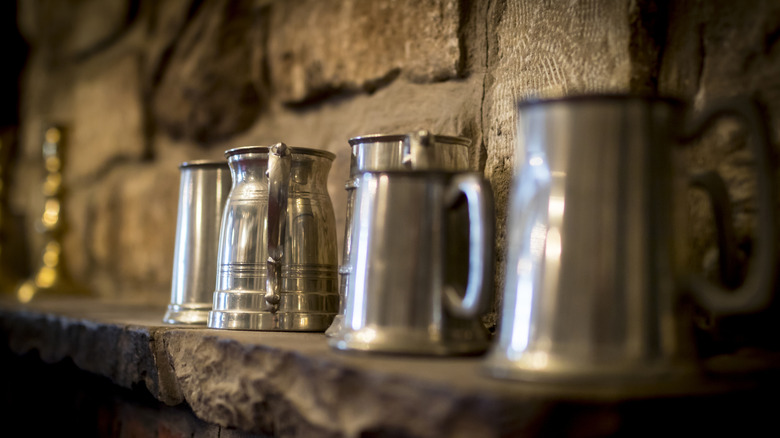
Pewter is much less prominent than modern-day tableware counterparts, even though it's been cradled by human hands for at least 3000 years. Somewhere along the way, stoneware, glass, stainless steel, melamine, and other materials took over the dining domain, relegating old-fashioned pewter to yesteryear collectibles or decorative purposes. Fortunately, the classic soft beauty of this mellow metal is having a comeback, bringing with it questions on how to keep it shiny, clean, and practical for everyday use. The secret is definitely not harsh commercial cleaners.
It helps to first understand what pewter actually is, and why keeping it lustrous isn't as easy as popping it into a dishwasher. Rather than being a pure metal, pewter is a tin-based alloy, now made with mostly tin plus small amounts of other metals for extra strength, including copper, antimony, and bismuth — but never the dangerous lead as in days gone by. Tin is a relatively soft metal, and pewter wears a naturally muted shine, one that requires a gentler touch to restore or maintain the patina. That's why you'll be reaching for everyday kitchen staples such as mild dish soap, vinegar, flour, or even ketchup.
When pewter looks dull or flat, it may only need a careful clean and a light polish. Simply hand-wash it gently with a soft cloth in warm water and mild dish soap, and rinse. If that did the trick, you're golden. If not, out come those pantry items.
Deeper cleaning and polishing for your pewter
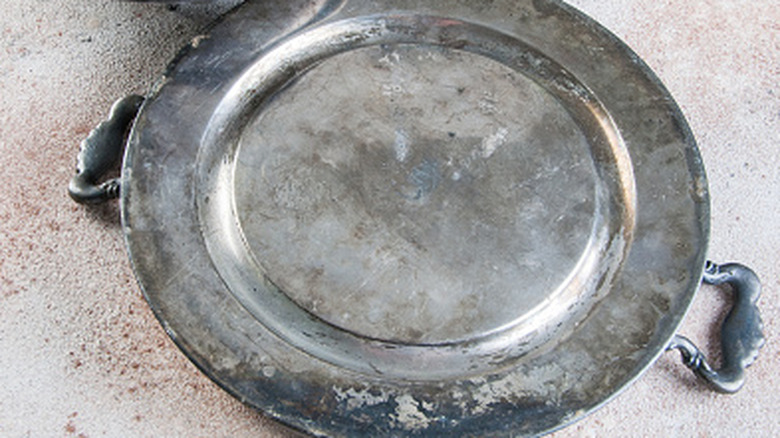
Before proceeding with a deeper clean and polish, it's important to note which type of pewter you have. Pieces with a satin finish and matte patina don't requires anything more than the soapy water treatment — no polishing. The same goes for dark-gray oxidized or antique finishes. But shiny polished pieces need more attention, with regular cleaning and polishing to avoid dullness or darkening.
After the soapy water cleaning, you can either do a deeper clean with distilled white vinegar alone, or create a polishing agent with vinegar and flour. For the vinegar-only clean, submerge the entire piece in a bowl of vinegar for 10 to 20 minutes, depending on how dark the surface has become. Rinse, wash again with mild soap, and dry immediately with a lint-free cloth to prevent water spots and dulling.
The alternative polishing method involves using a damp cloth to apply a paste of vinegar and flour, using a ratio of one part vinegar to 1.5 parts flour. Leave it for up to an hour before rinsing, drying, and gently buffing with a clean, soft cloth. If you're feeling a bit more adventurous, ketchup can also work as a simple spot treatment. Because it has mild acids, it potentially helps loosen surface dullness in small areas. A little dabbed on with a soft cloth, left for about 20 minutes, then washed off, can quickly brighten pewter without much ado. For future reference, ketchup also works wonders on rusty cast iron pans and tarnished silverware.
Precautions when cleaning and storing pewter
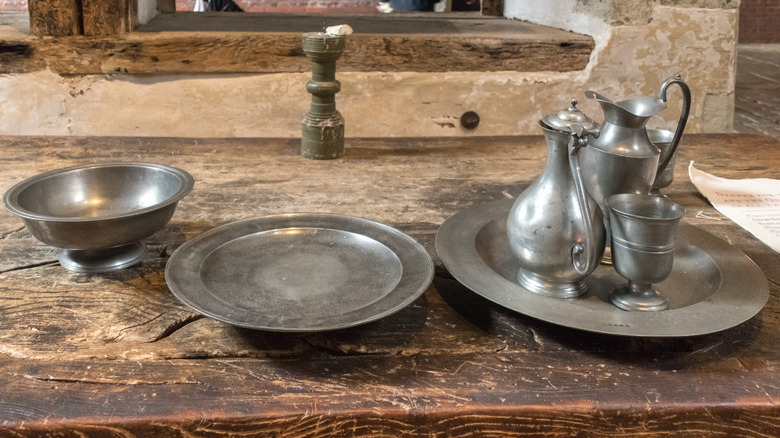
Though baking powder is sometimes mentioned as a cleaning agent for pewter, many experts disagree, as it's too abrasive for softer metals and can leave light scratches on the surface. When cleaning pewter, the safest rule is to stay gentle. Only wash pewter by hand, not in the dishwasher, because dishwasher detergents are too harsh, the water too hot, and other items can cause dings or scratches.
The same goes for cleaning tools: Only use soft cloths or sponges, since abrasive scrubbers and rough cleaning pads can scratch the surface of the relatively soft metal. It's also smart to avoid harsh chemical cleaners, especially bleach and ammonia, because they can corrode pewter or damage its surface.
If you're putting pewter away for a while, make sure it's completely clean and dry, since trapped moisture or residue can make the surface look dull when bringing it out again. Avoid damp spaces or excessive heat, which can cause discoloration and warping. Wrap in a soft material or tissue paper to protect during transfer and storage. But by all means, don't be afraid to use your pewter plates, bowls, mugs, chargers, and serving pieces for daily living; they'll quickly warm up your dining ambiance and bring a touch of nostalgia from times long gone. For more tips on caring for retro tableware, check out this advice for cleaning vintage dishes the right way.