

Stop Your Steaks From Sticking With This Simple Grill Prep
We may receive a commission on purchases made from links.
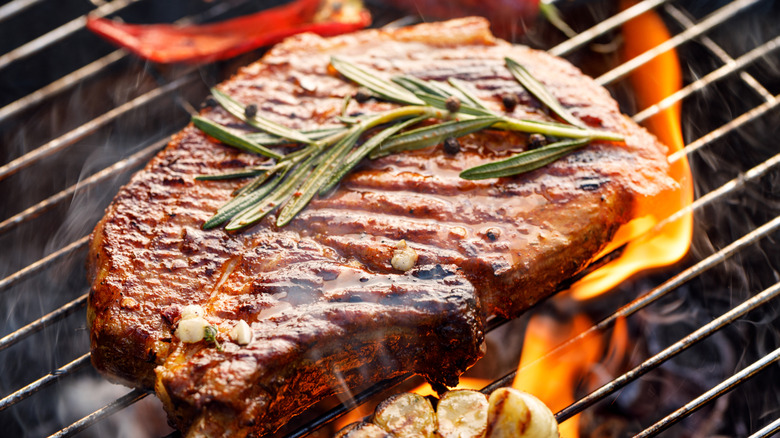
Any pitmaster — amateur or professional — can relate to this frustration: You've got a beautiful steak sizzling on the grates and you've timed a flip perfectly to make sure both sides get well-seared, but when you try to lift the meat, half of it stays behind on the grates like it had been superglued there. This maddening moment is the eternal enemy of grillers everywhere — and it's entirely preventable. All you have to do is brush a layer of oil onto the grates before the meat goes on.
That's literally it. A heatproof basting brush is a good tool for this — like this silicone one from Amazon. But if you don't have an oil brush, fold a paper towel into a pad, drizzle it with a bit of oil — not too much — then pick it up with a pair of tongs and use it to wipe down the grates. You want a thin, even coat on every rod, and ensure the grate is clean before you start oiling it. The oil will turn the metal into a non-stick surface, so your steak (or whatever you're grilling) will slide right off without sticking or tearing.
There's just one critical rule to remember: Never oil a blazing-hot grate. Do it either before you light up the charcoal (or turn on the gas burners) to preheat, or once you've given the grates time to cool down. On a grill at ready-to-sear temperature, any oil you apply will immediately start to smoke and carbonize. Terrible-tasting meat aside due to the acrid smoke and creosote, it can make for genuinely dangerous situations from flare-ups when the oil drips onto the hot coal.
The only good oil for the job is refined
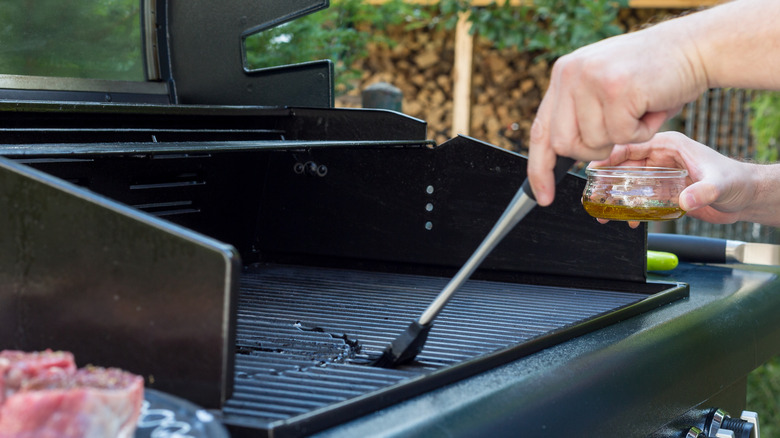
Some oils perform better at high temperatures than others – canola and vegetable oil are the best and cheapest examples. Or try algae oil, which has the highest smoke point of all – you can find it online, like this Algae Cooking Club brand. They won't flinch at 400+ degrees Fahrenheit. Compare that to extra-virgin olive oil, which, despite being pricey and tasty, will degrade the moment it hits around 325 degrees Fahrenheit and leaves behind a burnt taste that you definitely don't want in your food. The reason comes down to the oil refinement process. Canola and vegetable oil are highly refined, so they don't contain as many burnable impurities as, say, EVOO, allowing them to remain more stable at high temperatures.
There's also an extra, little-talked-about bonus you get for brushing oil onto your grill grate. Oil and heat work together to season your grill grate, creating a barrier that keeps moisture and oxygen at bay. If your grill lives outdoors, you'll notice a well-oiled and clean grate stays remarkably rust-free — a two-for-one win for just a few minutes of work.