

Why The 60/40 Rule Is Important For Steak That's Cooked To Perfection
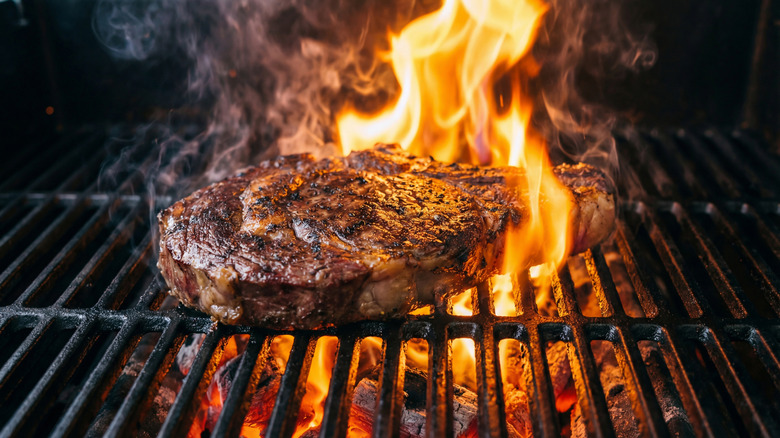
When you're new to cooking steak, one of the hardest aspects to master is timing. Once the steak is overcooked, there's no taking it back. You don't want to constantly poke the steak with a thermometer and risk losing its flavorful juices. You need to flip it at the right time to ensure it cooks evenly throughout, develops a good sear, and reaches the ideal internal temperature. The 60/40 rule helps achieve those goals. It states you need to cook your steak for 60% of the full cooking time on one side, then flip and cook the other side for the remaining 40%.
The 60/40 rule can be adapted to any type of steak or cooking method. You just need to know your full cook time and determine when to flip. There are a few key factors to determine how long to cook a steak normally, and the thickness of the steak is up there along with the cut and the temperature of the pan or grill. If you're cooking a one-inch steak over medium high heat, the entire cook time might just be seven minutes for a perfect medium rare. That would be roughly four minutes on the first side and three minutes on the other.
Usually, when cooking a steak, especially on the grill, you want even heat for good grill marks. Flipping once means your steak will cook thoroughly and look good when it's presented, and the 60/40 rule helps ensure that.
Keep it cool with the 60/40 rule
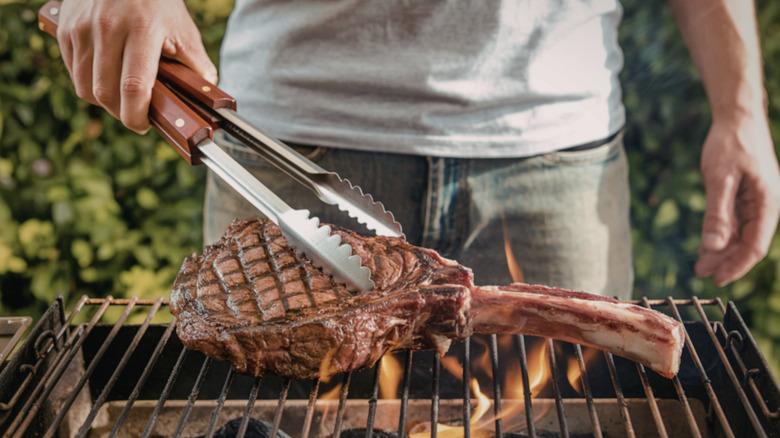
One reason the 60/40 rule is recommended is that it limits handling of the steak. One single flip means that each side has time to develop a sear. If you're constantly handling the meat and flipping it frequently, it may not create a Maillard reaction to produce that flavorful crust that is the hallmark of a well-seared steak.
It is true that, in some circumstances, you can produce a flavorful steak with a great sear by flipping it frequently, this method has pitfalls. If you're new to grilling, the 60/40 rule removes much of the guesswork. It makes it easier to ensure you have a really good, flavorful final product.
Combine the 60/40 rule with a reliable chart of cooking times for steaks with differing thickness and you should be able to produce a perfect steak every time. Remember, this is just one step to getting that perfect steak. There are many other tips to ensure a restaurant-quality steak at home that include letting the steak rest before grilling until it reaches room temperature, making sure it's well seasoned, and letting it rest after it's finished. Once you have the basics down, you can start looking at other ways to elevate your steak and experiment with seasonings, rubs, and different cooking methods.