

For Blueberries That Stay Fresh Longer, Wash Them In This Solution, Then Pat Dry
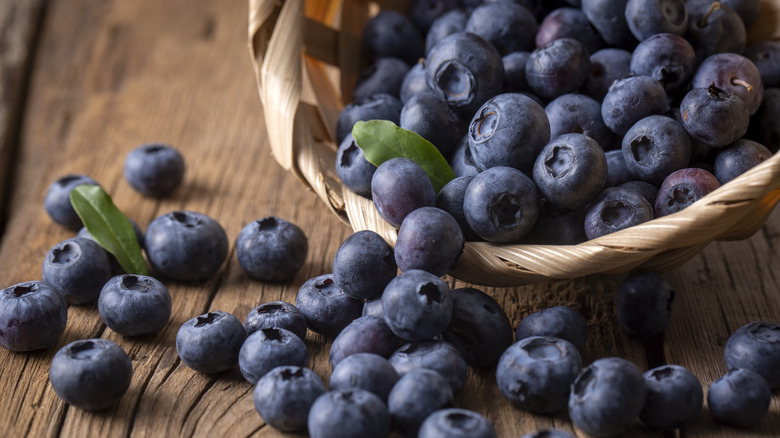
Blueberries are a popular berry for many, and with the fruit coming into season, it's tempting to stock up on freshly picked ones and save colorful, frozen blueberries for the off-season. But if you're someone who simply runs them under water before enjoying, you might want to reconsider how you clean the berries. Using a vinegar bath or a baking soda bath is far more effective in cleaning and preparing your blueberries for a longer shelf life.
To clean blueberries with a vinegar bath, add them to a mixing bowl with roughly one part vinegar to three parts water. Let the berries sit in the solution for no more than eight to 10 minutes to prevent the blueberries from turning into mush. After they've had time for the solution to gently lift impurities from the surface, rinse them under cold water once more, and carefully place them on a kitchen towel. Allow them to fully air dry before storing them in the fridge.
If you opt to use a baking soda bath, you can follow the same process, but use 1 teaspoon of baking soda for every 2 cups of cold water. Be sure to stir it in well to completely dissolve the baking soda into the water.
Why is a vinegar and baking soda bath so effective?
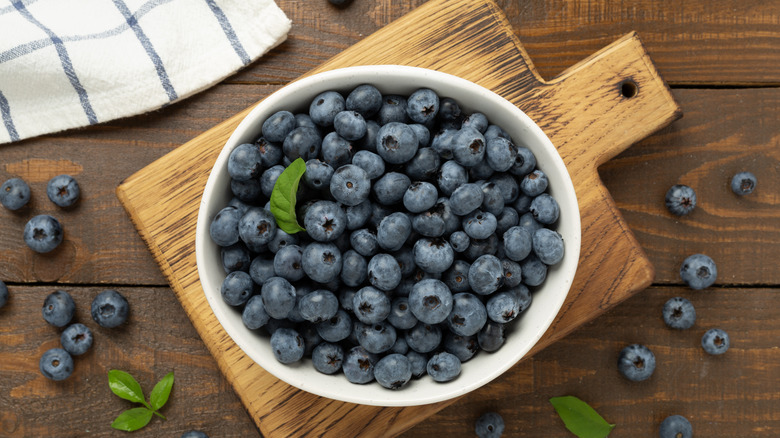
Washing with water alone one of the mistakes you have to stop making with blueberries, but soaking them in a vinegar bath or a baking soda bath offers enough advantages to make it well worth your time. While water rinses away some dirt and debris, these solution-based baths help lift more impurities and break down pesticides. When you prepare blueberries by washing them with a vinegar solution or a baking soda bath, you effectively disinfect them. Apart from a more thorough cleaning, using either of these methods can also prolong the shelf life of blueberries in the fridge. By removing bacteria and microbes from the outside of the berries, mold grows more slowly.
Ultimately, both baking soda and vinegar solutions alter the pH of the blueberries' skin, which helps to prevent and slow mold growth. Baking soda is alkaline, while vinegar is acidic. Though both are good options for tackling bacteria and removing impurities from blueberries, vinegar tends to remove pesticides better and prevent bacteria from reforming on the fruit. While baking soda doesn't remove the same impurities from blueberries, it removes a different set of bacteria.