

Store-Bought Vs From-Scratch: Which Version Of Duck Confit Is Cheapest
We may receive a commission on purchases made from links.
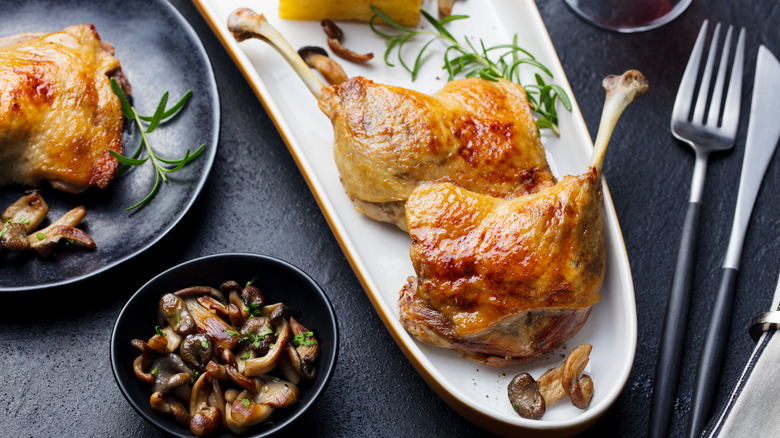
Duck confit may seem like a luxury reserved for French restaurants, but it's actually quite doable to make at home if you know the basics. The confit processes for food was created as a form of preservation, in fact the word "confit" comes from the French word "to preserve," so the actual cooking involved is fairly rudimentary and hands off. However one issue does stand out for home cooks: price. Duck alone is expensive, and getting your hands on enough fat makes preparing duck confit even more costly. So we decided to reach out to an expert, Garrett Brower, chef de cuisine of Bresca in Washington, D.C., to ask whether he thinks store-bought or from-scratch duck confit is the better financial move.
First off, Brower says you should always consider from-scratch no matter the price. He tells us, "I'm certain some wonderful store-bought brands of duck confit may exist, but, in my experience, the homemade product is always more tender and moist." And if you want something as indulgent as duck confit, why not go for the best? He also explains that it can be cheaper than store-bought, but notes that it matters how you are going to make it. According to Brower, "Making duck confit at home may be cheaper if you purchase the whole duck and utilize all of its parts." However he does add that if you are only buying duck legs by themselves, and then need to buy separate duck fat for cooking, it will likely be more expensive than store-bought options.
If you're willing to butcher a whole duck, from-scratch confit can be a better deal
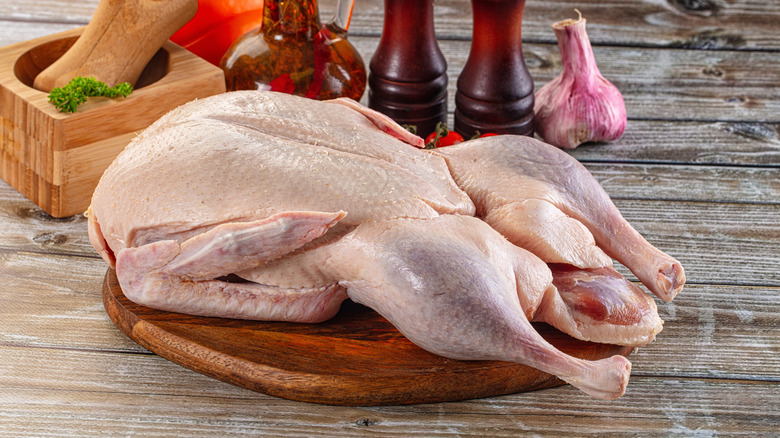
While buying a whole duck isn't necessarily cheap, like buying a whole chicken, it will cost much less per pound than separate butchered parts. More importantly, all those duck parts are also full of fat that you can render out to use in your homemade duck confit. You may still need to purchase some additional fat, but not nearly as much as you would starting with just legs. By purchasing a whole duck you'll have lots of extra meat for other delicious duck recipes on top of that.
Cost really is the only reason to consider buying premade confit, because it doesn't require much work. Brower says, "Duck confit does take time, but it's passive cooking. It involves curing and long, slow cooking, which requires relatively little attention and active time." It is basically a two-step process that involves curing the meat in a salt and herb mixture that sits overnight in the fridge, and then a giving it a low-and-slow poach in warm oil (which can happen in the oven) for around three hours. And because it's preserved, it can even be made ahead of time and stored in the fat for a month or more.
As for where you should start, Brower says, "My recommendation for a beginner making duck confit is to follow the recipe for confit de canard from the "Bouchon" cookbook by chef Thomas Keller. This is the recipe I would use if I were going to prepare duck confit at home." He doesn't need to tell anyone to listen to Thomas Keller twice, as we're sure that recipe is worth any price.