

Hiding In Your Kitchen Is A Natural Fertilizer That Makes Blueberry Plants Thrive
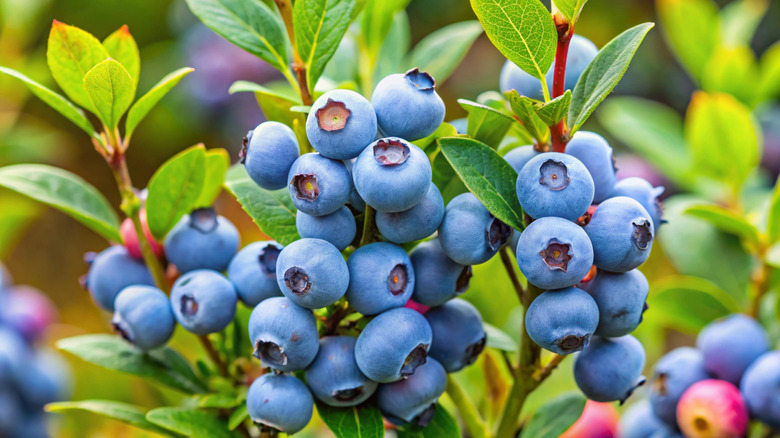
Blueberries are a delicious nutritional powerhouse, loaded with antioxidants, vitamins, and fiber. Including them in your diet is a great idea, except that the price can be dear at times. But with a little patience, anyone can grow a blueberry bush, even in a container. You can ensure the plant thrives by reusing your used up coffee grounds as fertilizer.
Coffee grounds contain potassium, magnesium, and nitrogen, all of which are essential nutrients plants require for developing and thriving. Blueberry plants have shallow roots which need good drainage, and coffee grounds provide organic matter that helps aerate and loosen the soil. They also aid in water retention, which means you won't have to water your blueberry shrub as often as the coffee grounds will help reduce evaporation.
Blueberry bushes are easy to grow and add interest to your garden, as large shrubs or as a focal point in a patio container. Experts recommend planting bare root specimens between two and three years old in full sun. You should expect a first harvest after three seasons, but you must wait at least six years for a more bountiful one.
While there are many unique types of blueberries, they prefer growing in an acidic soil — that's why some sources recommend using coffee grounds to acidify it. However, used coffee grounds have a pH closer to neutral, so you would need fresh grounds in order to balance an alkaline soil.
Other ways to use discarded coffee grounds in the garden
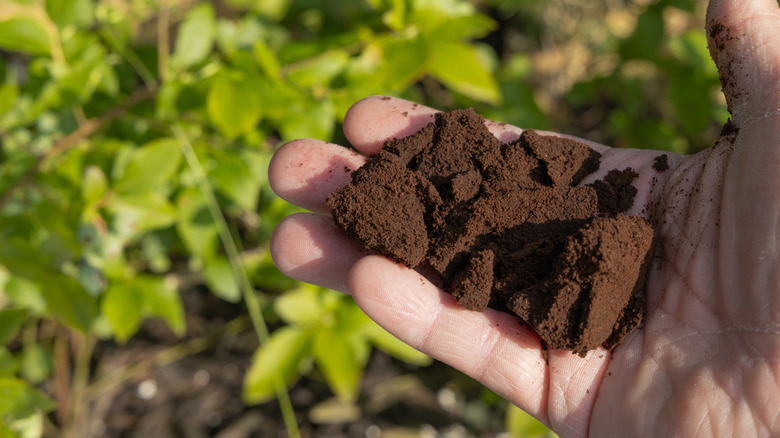
Coffee grounds are not only good for feeding blueberries — they have many other useful benefits in the garden, as long as they are used correctly. As we mentioned previously, used coffee grounds loose most of their acidity during brewing, but not all of it — they will retain a pH level around 6.5-6.8. This is good for plants that grow well in slightly acidic to neutral soils, but there are other plants that will not benefit from your spent coffee grounds.
Since they are an important source of nitrogen, coffee grounds can improve your compost pile. Add them alongside your other vegetable and fruit scraps and mix them in to boost the nitrogen content of the compost. You can also mix them directly into the soil when planting a new plant, but be careful not to add too much; a couple of teaspoons will do the trick.
After brewing, coffee grounds can still have up to 8 milligrams of caffeine per gram, which might actually kill some plants. So, another reason for composting coffee grounds is that earthworms, which are crucial to the process, love eating the grounds and can process out a lot of the caffeine, keeping it off the soil while producing beneficial worm castings. Other garden pests, however, are deterred by the strong smell and taste of coffee, so grounds can be lightly applied around the base of the plants to repel snails, slugs, and ants.