

Old-School, Coin-Operated Rides Were Once Grocery Store Staples. What Happened To Them?
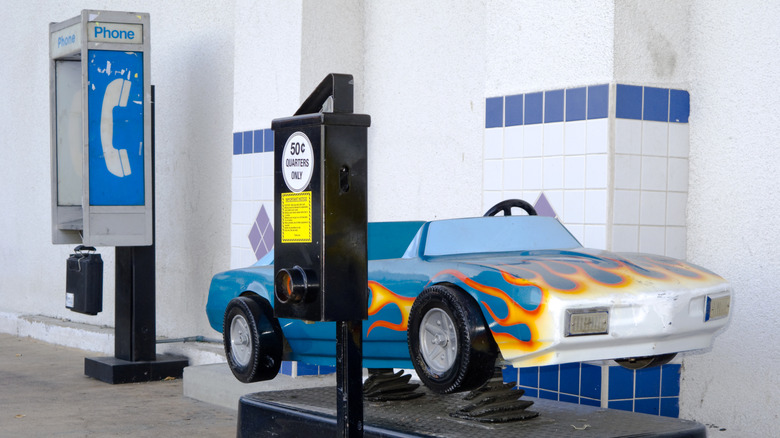
Throughout the mid-to-late 20th century, a trip to the grocery store — or supermarket, depending on your vernacular — was a very different experience than today. Parents almost always dragged their kids to the market with them, and whether it was because there were things to see that no longer exist or because we had to make the best of it, the old-school grocery experience seemed exciting. Some highlights for kiddos back in the day included a small toy aisle, bins and barrels of bulk foods, and Brach's candies, which no one seems to eat anymore. There was even often a tank of live lobsters. But the pièce de résistance was at the entrance: a coin-operated kiddie ride.
Considering the internet is often a hotbed of nostalgia, it's no surprise that many online have expressed their adoration for these grocery store kiddie rides. However, the eventual demise of these rides is most likely a result of a few key factors. For one thing, larger vending machine companies kept their focus heavily on snacks and drinks rather than maintaining the mechanics of the rides. They simply weren't something these brands were willing to put the additional funds into.
Safety of certain rides is also an issue, with some states seriously regulating coin-operated rides. Additionally, kids began to age out of the rides more quickly, possibly due to the draw of technology and video games. Nowadays, youngsters are more likely to be involved in the food aspect of grocery shopping, with parents focusing less on what type of entertainment they can drum up and more on trends like how to make a kid-approved charcuterie board.
The slow extinction of the kiddie ride
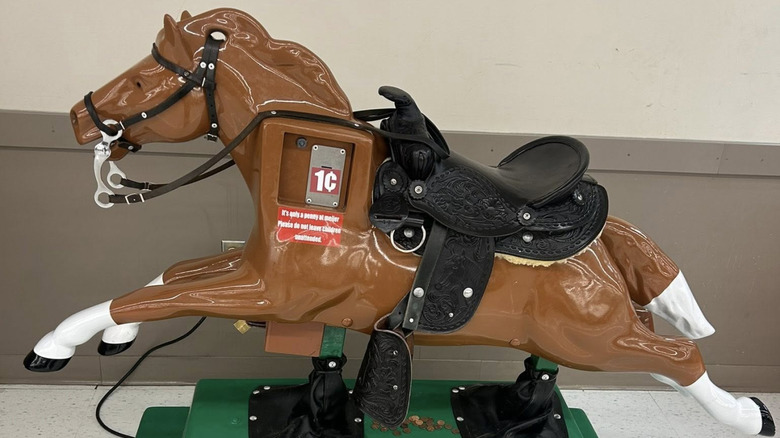
Coin-operated kiddie rides first made an appearance in the mid-20th century. Credit goes to inventor James Otto Hahs, who originally created the mechanical horse for his own children before manufacturing a coin-operated version that garnered attention at the 1935 World's Fair. Hahs collaborated with the Exhibit Supply Company to promote the rides commercially — and their placement in suburban shopping areas gave way to a lucrative marketing decision.
These kiddie rides were cheap to ride, costing a nickel or a dime initially. Parents were happy to fork over the coins, and kids left their parents to the shopping. While horses were largely representative of these rides, they would later take the form of other animals, cars, boats, or rocket ships. During the height of kiddie rides, as manufacturers kept up with the zeitgeist, rides like Flipper the Dolphin and Rudolph the Red-nosed Reindeer were proudly displayed at grocery store entrances. It would be decades before these rides disappeared from the grocery store landscape.
Today, few remain. With no U.S.-based manufacturers left, the majority of these vintage rides can only be procured from private suppliers. And, in a cashless society where loose change is no longer the norm, there is little reason for stores to invest in coin-operated rides. However, as of 2024, Meijer Grocery was still proudly displaying the Sandy the Pony ride after over 60 years. The coin-operated pony is a penny ride, and the cost hasn't increased.