

Why Is Cereal So Expensive Now?
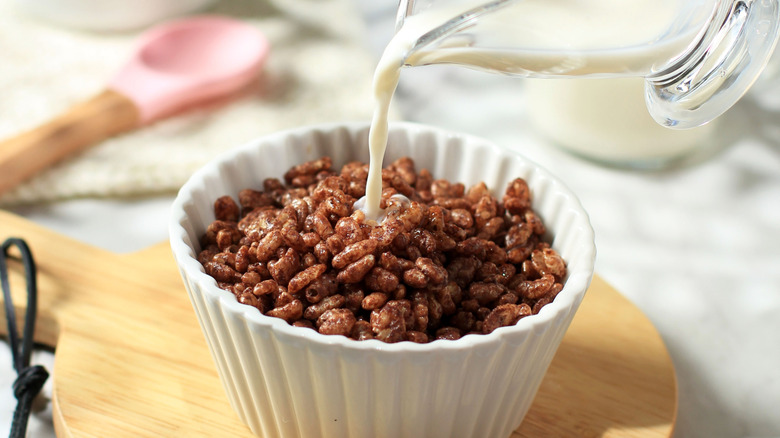
Cereal has been a breakfast staple for almost a century due to a combination of convenience and affordability. While sales have steadily dropped over the past few decades, more than two-thirds of Americans still buy cereal, and over half eat it at least once a week. It's no secret that grocery prices have been rising across the board, but one might assume something as simple as cereal would be safe from inflation. Shoppers are now realizing this isn't the case.
On sites like Reddit, folks are lamenting the soaring price of cereal, with some noting how regular-sized boxes are listed as high as $8 in their local grocery store. Others have spotted obvious shrinkflation – boxes of cereal that were once considered a standard size are now being labeled as large, often with a price hike. It turns out there are a few reasons behind this shift.
Part of the reason for the increased price is due to a drop in demand. Shoppers are drawn to even more convenient breakfast options, such as portable snack bars, while a greater focus on wellness means consumers are turning away from the highly processed, sugar-filled cereals of the past. However, production costs are also rising. Climate change is affecting crop yields. Global conflicts have caused issues with the supply of raw ingredients. Energy and fuel increases are making production and transportation more expensive, while packaging costs have also gone up. During a 2024 earnings call, General Mills – producer of Cheerios and Lucky Charms – claimed its input cost inflation had increased by 32% since the COVID-19 pandemic (per Seeking Alpha). And it appears that we're the ones paying for it.
How to save money on cereal as prices climb
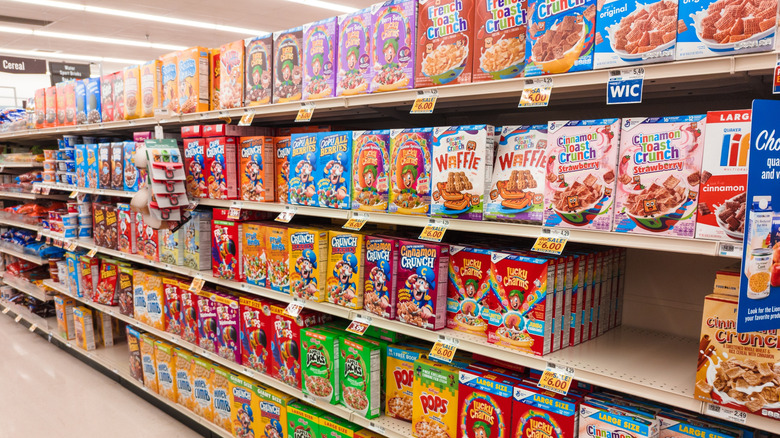
Fortunately, for those who need to start their day with a bowl of cereal, there are still ways to avoid paying too much money. The simplest solution is to wave goodbye to name-brand cereal and look for alternatives. There are many off-brand dupes out there, and some shoppers swear that budget-brand cereals taste better than the originals. In fact, there's a greater-than-zero chance that a well-known brand is making your store's private-label cereal.
If off-brand cereal isn't for you, there are still ways to save money on your favorite products. If you have access to a membership and enough food-storage space, try bulk-buying cereal from Costco or Sam's Club, as big-box warehouse retailers typically offer far more competitive pricing than regular supermarkets. That said, many shoppers also swear by Aldi, as the German retailer's ultra-efficient business model allows it to sell products for a lot less than its competitors. Another option is to take advantage of sales and store coupons whenever you can. "I usually stock up when stores have deals via their app coupons," shared one Redditor. " [I] typically can get four boxes of name brand cereal for $1.97 each using the virtual coupons."
Finally, while not the most convenient option, you could always try making your own granola mix. Another Reddit commenter explained how it costs them less than $5 to put together a large Tupperware container of homemade granola, nuts, dried fruit, and spices, and that it's far more nutritious than processed, store-bought cereal. Try our crunchy granola recipe as a starting point.