

Martha Stewart's 3-Garlic Trick That Gives Pasta Forkfuls Of Zesty Flavor

If you're someone who loves the aromatic punch that garlic brings to the table, then here's something you can whip up for dinner tonight. And while the words "garlic three ways" can sound a touch overwhelming even to its biggest fans, this recipe by Martha Stewart uses a trick that gives the dish a punchy flavor without letting the garlic take over. The best part is you can make Stewart's three garlic pasta using very few ingredients, all of which should be readily available in your pantry.
The first step is to roast a bulb of garlic in the oven. While your spaghetti cooks in a big pot of water — hopefully with the correct amount of salt — slice five cloves of garlic, and fry them in olive oil. "The sliced garlic is going to, kind of, bless the pan, flavor the oil," Stewart says in a YouTube video of her show, adding that she only uses the best quality olive oil for this recipe (there's one extra virgin olive oil she believes is worth the splurge). Once the sliced garlic turns golden brown, take it out of the pan and set it aside. In the "garlic-blessed oil," add the minced garlic, roasted garlic, and three-quarters of a cup of white wine.
Next, add the cooked pasta along with some chopped parsley, red pepper flakes, freshly ground black pepper, and salt. Stir in the fried garlic and top the dish off with some grated parmesan. "I like to serve this kind of supper in great big bowls with big forks and spoons," Stewart says, adding that it's a quick meal that your family will adore.
This method works so well because of what happens to garlic as it cooks
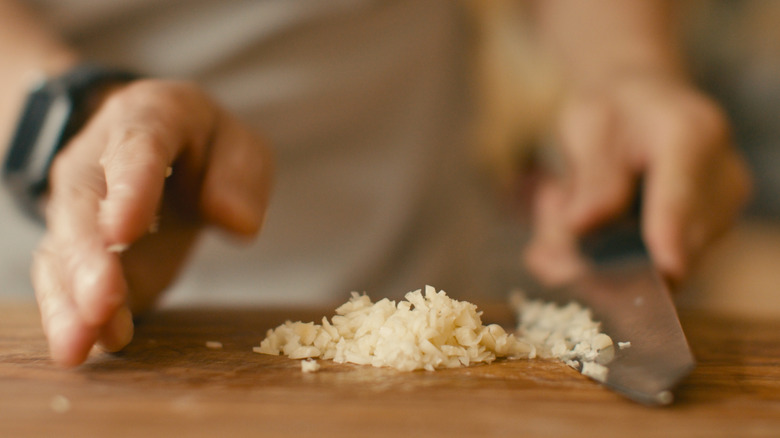
There are a couple of reasons why the combination of roasted, sauteed, and fried garlic isn't overwhelming. First, the dish balances out garlic's robust flavors with olive oil, parmesan, and fresh herbs. Second, the three types of garlic bring very different characteristics to the dish. The Sulphur compound that gives garlic its inherent garlickiness is called allicin, which is released as the cells in the clove are destroyed. Garlic is at its most pungent when fresh. But whole cloves will taste milder than crushed or minced garlic. Maximum cell destruction equals maximum allicin release.
Cooking with it can be tricky if you don't know what you're doing, though. Consider some quick tips for using garlic, including how you can confit and store it for a quick, versatile garlic hit. As garlic cooks, it starts mellowing. When you roast a whole pod of garlic, it tastes sweet and creamy. Sauteed garlic brings a savory intensity. Frying it adds nuttiness and crunch. So adding garlic cooked three ways ends up adding layers of flavor, texture, and depth to the dish.