

A Quick Sugar Test Can Tell You If Your Yeast Is Still Good
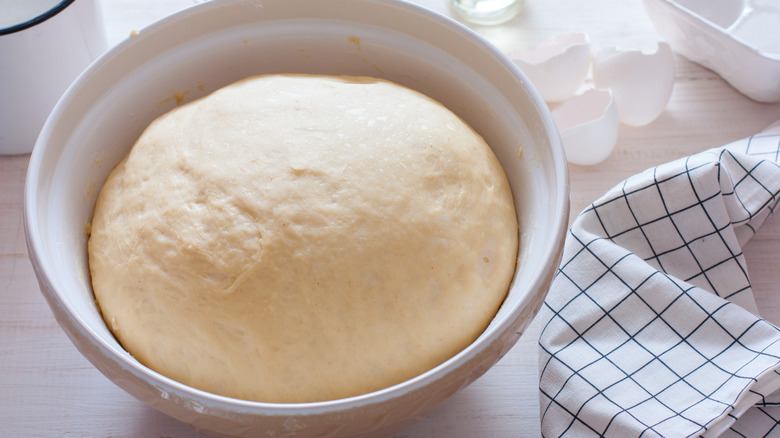
Baking with yeast is no easy feat. Sure, it always seems fine on paper — a few simple ingredients, some patience, and you should have a nice loaf of homemade sandwich bread or soft and fluffy dinner rolls by the end of the day. But so many things can go wrong when it comes to baking, and if the yeast you're using isn't active, then you really don't stand a chance. Instead of going through all the effort of mixing, kneading, rolling, and proofing for hours in the hopes that your dough might rise, the best thing to do is test the yeast before you start. It's an easy extra step, and all you need is a little water and some sugar.
To try it out, just whisk about one teaspoon of sugar or so in a small bowl (about ½ cup) of warm water. If you have a thermometer, you should definitely use it here. If the water is too hot, it can kill the yeast. If it's too cold, the yeast won't activate. You're looking for a temperature of about 110 to 115 degrees Fahrenheit, ideally. Once you have your warm sugar mixture ready to go, stir in a packet of the yeast (or just over two teaspoons) and wait about five to 10 minutes. If the mixture foams up and almost doubles in size, you're good to go. If not, it's probably time to discard it.
How long does yeast last?
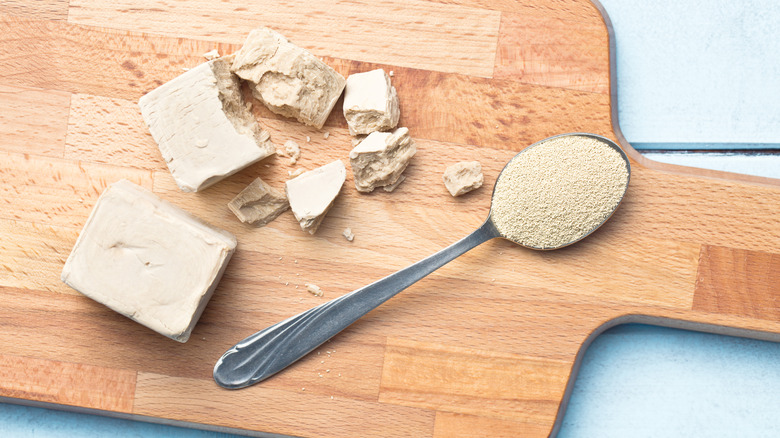
There are three common types of yeast used for baking: instant, dry active, and fresh. Dry active and instant are the most popular ones, mainly because they're easy to find and last a long time. An unopened pack of either type can actually stay fresh for up to two years in the pantry and an opened one will be good for about four months in the fridge. Fresh yeast has a much shorter lifespan, only a few weeks, so you'll definitely want to test it out before using if you've had it for more than seven days.
Once you've opened a sealed packet of any yeast, the refrigerator is the best place for it. But the freezer does allow for longer term storage of dry yeasts – up to six months, depending on the type. Fresh yeast, unfortunately, doesn't do well in the freezer.
It's important to remember that no matter what, yeast does have an expiry date and you need to follow it. When you're shopping, try to find the freshest one on the shelf. And if you don't feel like testing a full packet of it, you can just combine a small sprinkle of it with a pinch of sugar in less water. Whether you're making a no-knead bread dough or chef-worthy cinnamon rolls, testing the yeast beforehand is worth it.