

Avoid Ordering This Simple Pasta Dish At Italian Restaurants (An Expert Chef Says So)
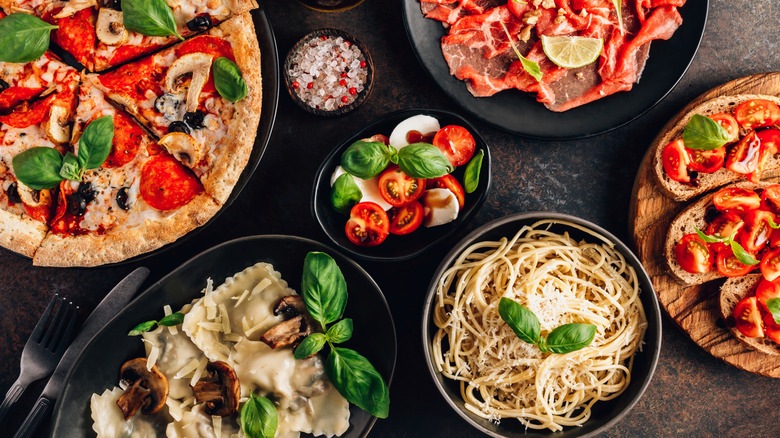
A good Italian eatery will typically feature a multi-course structure, and the primi course usually offers the pasta that we think of (and crave) the most when it comes to classic Italian. Lasagna, bolognese, and ravioli often come to mind, but the four types of classic Roman pasta are a draw for Italian cuisine purists. These dishes are surprisingly simple to the untrained eye, boasting only a handful of ingredients. However, just because a pasta dish looks simple, it isn't necessarily so. Cacio e pepe is one dish that, according to chef Davide Bugamelli of Il Gigante in New York City, should be avoided when dining out — or at least ordered with care at a restaurant that specializes in it.
Simply translated as "cheese and pepper," cacio e pepe typically consists of spaghetti with Pecorino Romano and black pepper. But, as Bugamelli told us in a Tasting Table feature highlighting the 8 dishes to skip at Italian restaurants (and 5 to try), the ingredients of this dish need to be top tier. Likewise, the pasta and sauce must be flawlessly cooked. "Because it has only three ingredients, it requires the absolute best ingredients and nearly perfect execution," says Bugamelli. "Many restaurants get it wrong."
If you've had it in its very best iteration, you may be tempted to order this dish anyway. However, some reasons that cacio e pepe can't be rushed include the need for the freshest ingredients. Likewise, the pasta requires an emulsified sauce worthy of this classic dish from Rome.
Tips for ordering other Italian classics (or try cacio e pepe at home)
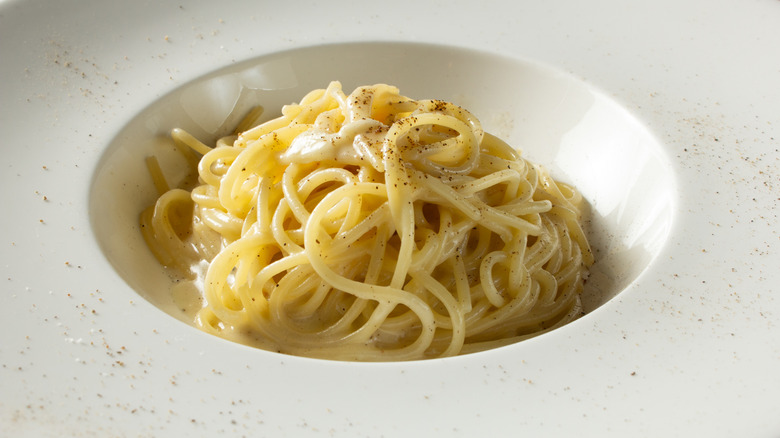
So, if you aren't going for cacio e pepe, what classic Italian dishes should you focus on? Look for restaurants that feature farm to table, seasonal ingredients. These will usually offer regional specials that are known for their fresh ingredients. They may be lesser-known dishes from a particular area of Italy, but this could be one way to stumble onto the best pasta you've ever had. Alternatively, opt for choosing another pasta that, like cacio e pepe, is known for its simplicity. As long as you're familiar with the classic ingredients in the preparation, and especially if the restaurant is known for the dish, avoid getting fancy and order something simple. According to Bugamelli, this could include a traditional, five-ingredient carbonara.
Of course, if your home chef skills are worthy, you can always attempt your own cacio e pepe recipe. You'll need a little butter and some olive oil for your sauté pan, and this is where you'll add the black pepper and cheese. Pecorino Romano is a dry, aged cheese that is difficult to emulsify in a sauce. One good tip is to use the starchy water from the cooked pasta to help the sauce become naturally creamy. If you're concerned about adding too much water, another foolproof secret to creamy, smooth, cacio e pepe is actually the addition of a little cornstarch. You can make a slurry (cornstarch and water mixed to create a paste), and rely on the this to help bind the ingredients.