

The Worst Seasoning Mistake To Make With Grilled Meat, According To Michael Symon
We may receive a commission on purchases made from links.
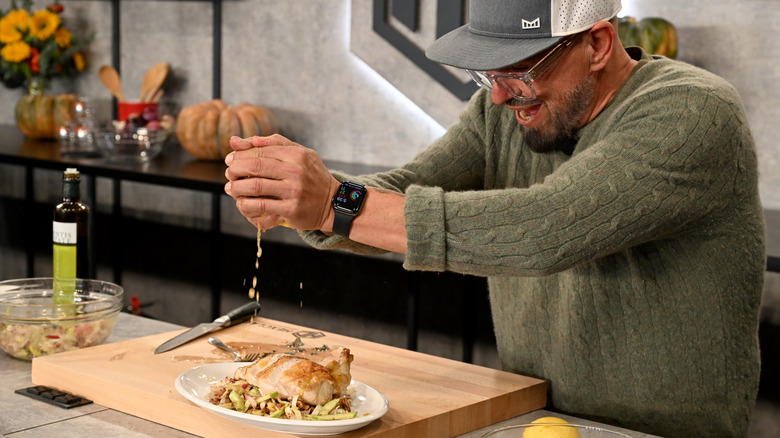
It's a name that you know. Michael Symon is a Cleveland-born chef who has educated and entertained across the small screen in roles ranging from hosting the Emmy-winning show "The Chew" to defending Kitchen Stadium as an Iron Chef. But in addition to those camera-facing roles, Symon is also an accomplished author with plenty of wisdom to share about all matters of the kitchen. Two of his books, "Michael Symon's Playing with Fire" and "Symon's Dinners Cooking Out," focus on grilling and barbecuing and are packed with useful information on the topic. Lucky for us, Symon also shared his ultimate grilling tips in an exclusive interview with Tasting Table. At the top of his list for common mistakes to avoid? Skipping the salt.
When it comes to grilling steaks in particular, Symon says that amateur grillers have a tendency to be frugal with the fleur de sel. "They under-season the meat," he says. "Steaks are usually thick. They don't put enough salt on the outside." The best cuts of steak for grilling tend to be nice and thick, allowing a beautiful sear around the outside while keeping the center pink and juicy. The trouble with this, of course, is that all of the seasoning for each bite needs to go on the outside of the meat, and adding that much salt to the meat can feel wrong to some.
In truth, it is almost impossible to over-salt a thick steak. Just think about how much of that seared crust actually makes it into each bite once it is sliced and skewered on a fork — not a lot. In fact, dry-brining is a steak upgrade that involves aging a raw steak in a coating of salt for hours or days before cooking it. So, salt your steaks liberally.
Michael Symon's other major grilling pet peeve
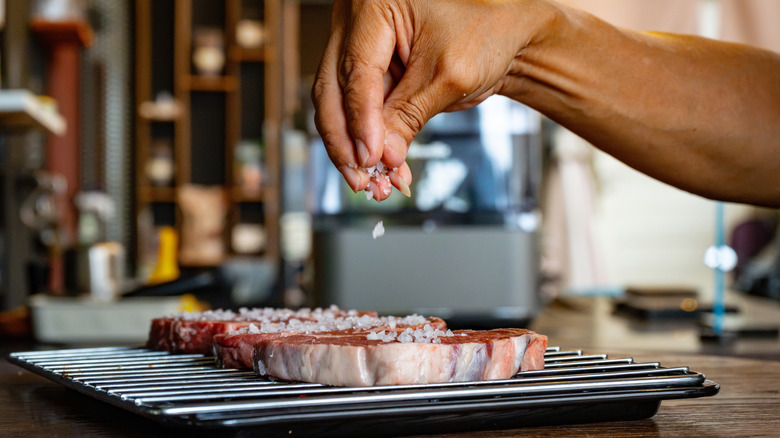
Should you find things a little under-seasoned after the meat is off the grill, of course, it isn't the end of the world. You can just hit the steak with a good finishing salt to get that salinity where it needs to be. There's more to grilling than just seasoning, however, and there's one more issue among amateur tong-wielders that Symon called out: too much fiddling around.
Even if it's seasoned correctly, an amateur's technique can still muck up a good steak. "When they put [the steak] on the grill," Symon says, "they move it too much. Let it char, then flip it. You don't have to move that thing all over the damn place." Just like new grillers feel nervous about properly seasoning a thick steak, so too do they start to sweat when they haven't used those tongs for a few minutes. One of the biggest tricks in the kitchen, however, is to just relax and let things cook.
Some of this anxiety may be down to the cooking shows that Symon himself stars in. On those programs, the camera is always facing the action, showing chefs flipping steaks on flaming grills or tossing sauteeing vegetables high out of the pan. But the whole time that they spend whipping up a sauce, the protein is quietly grilling in the background, getting that beautiful sear and perfect grill marks. A good steak only requires one flip at the right moment — halfway through the cook.
The biggest gift from Chef Symon's advice is that it takes some of the stress out of grilling. You don't really need to worry about over-salting a thick steak — add a lot. You also don't need to fiddle with the grill all the time — just let it cook.